A typical Bay Area landscape redo produces more debris than the homeowner expects, and the wrong disposal channel can turn a $400 dumpster into an $1,800 disaster. Yard waste is heavier than people think (a cubic yard of damp branches and stumps weighs 600 to 900 pounds), accumulates fast (one tree removal can fill a 10-yard bin), and follows different rules than household debris when it comes to pricing and overage.
This guide covers the practical sizing decisions for Bay Area yard-waste projects: what fits in a green-waste bin versus a general-debris bin, the weight math for tree removal and landscape redos, the storm-cleanup volumes that catch homeowners off-guard, and the routing differences that decide whether the load gets composted or landfilled.
How Much Yard Waste Are You Actually Generating?
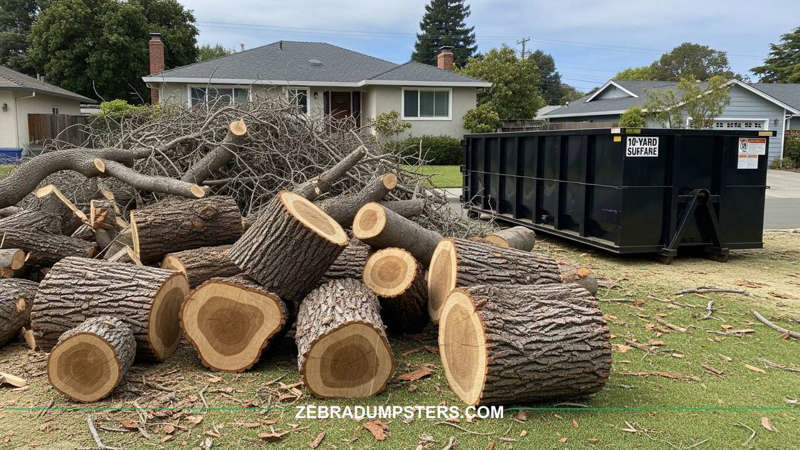 A mid-size shade tree produces 4 to 8 cubic yards of debris and 3 to 5 tons when fully removed.
Yard waste accumulates in three predictable patterns. The volume math depends on which pattern your project is.
Single tree removal. A mid-size shade tree (oak, elm, maple 30 to 50 feet tall) produces 4 to 8 cubic yards of debris when fully chipped. The trunk and root ball alone account for 30 to 40% of the weight. Volume varies dramatically with whether the wood is left as logs (denser, less volume) or chipped (looser, more volume but lower per-cubic-yard weight).
Full landscape redo. Replacing an entire front or back yard sod removal, hedge teardown, beds reworked produces 8 to 16 cubic yards of mixed debris. About 60% is sod and dirt (heavy, dense), 25% is woody plant material (medium density), and 15% is landscape rocks, edging, and decorative materials (variable). A typical 3-bedroom home's full backyard redo fills a 10-yard with the right size headroom.
Storm cleanup. The unpredictable one. A single fallen tree can produce 6 to 14 cubic yards of debris depending on size; a multi-tree windstorm event can hit 25 to 40 cubic yards. Bay Area atmospheric river events in 2023 and 2024 turned routine yard cleanups into multi-bin projects for crews working dumpster rental in San Jose and the surrounding cities.
The composition matters for pricing as much as the volume covered in the next section.
Green-Waste vs. General-Debris Bins
This is where yard-waste pricing gets interesting. Bay Area dumpster routing splits yard debris into two categories with very different cost structures.
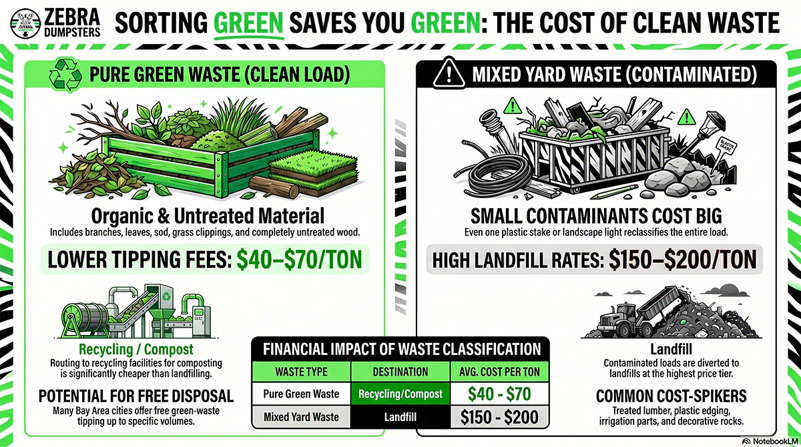
Pure green waste branches, leaves, sod, grass clippings, woody plant material, untreated wood routes to a green-waste recycling facility, which composts or grinds into mulch. Tipping fees at green-waste facilities run $40 to $70 per ton, meaningfully cheaper than landfill rates. Some Bay Area cities offer free green-waste tipping for residents up to a certain volume.
Mixed yard waste green waste mixed with treated lumber, plastic landscape edging, irrigation parts, decorative rocks, or any household debris routes to general-debris disposal at landfill rates ($150 to $200 per ton in most Bay Area tiers).
The clean-load distinction matters. A truly pure-green-waste load fits the cheaper routing; a load with even small contamination (a piece of plastic edging, a metal stake, a landscape light fixture) gets reclassified at the recycling facility's discretion. Crews handling routine yard cleanups in dumpster rental in Morgan Hill typically segregate strictly one bin for clean green waste, a separate small bin for the mixed contamination items.
Green waste
10-yard dumpster from $430 in San Jose, 1 ton included
Branches, sod and trimmings go in the general debris bin and get recycled. Soil and rock need the inert bin instead.
Picking the Right Dumpster Size
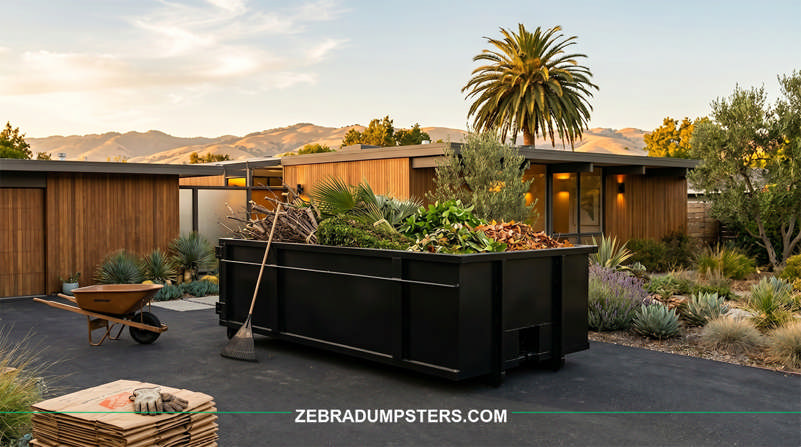
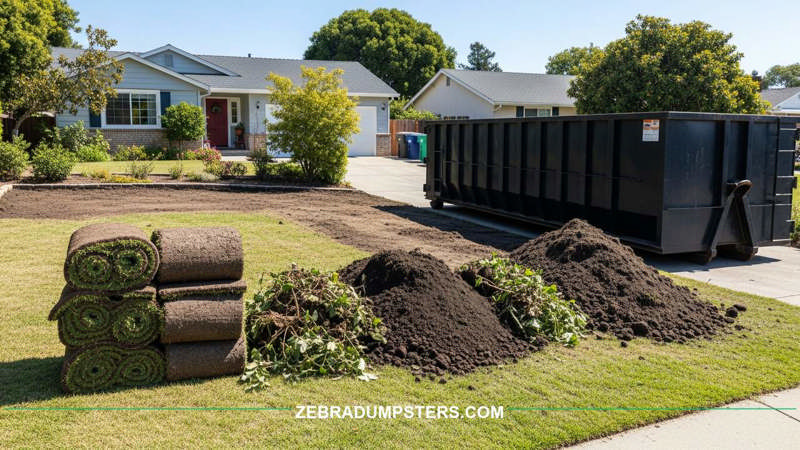 A whole-yard landscape redo with sod removal and bed reworking can fill a 20-yard quickly with dense, damp debris.
Yard-waste dumpster sizing is volume-driven for landscape redos and weight-driven for tree removal. Pick by the dominant factor:
| Project | Typical Volume | Typical Weight | Recommended Bin |
| Single small tree removal (under 25 ft) | 2–4 cubic yards | 1–2 tons | 5-yard or 10-yard general |
| Single large tree removal | 6–12 cubic yards | 3–5 tons | 10-yard general (1.0 ton) + overage, or 20-yard for headroom |
| Front-yard landscape redo | 5–10 cubic yards | 2–3 tons | 10-yard general |
| Whole-yard landscape redo | 12–18 cubic yards | 4–6 tons | 20-yard general + likely overage |
| Storm cleanup, single tree | 8–14 cubic yards | 3–6 tons | 20-yard general |
| Storm cleanup, multi-tree event | 20–40 cubic yards | 8–14 tons | 30-yard plus a follow-up 20, or two 30-yards staged |
Two practical notes. Tree-removal loads come in heavier than the cubic yardage suggests because tree wood, root balls, and damp branches are denser than landscape clippings. Plan for overage on any project that includes a large tree. And whole-yard redos that include sod removal where 6+ inches of dirt is being scraped along with the grass push past 4 tons quickly because dirt weighs ~2,500 pounds per cubic yard.
Bay Area Pricing for Yard-Waste Loads
The 10-yard general-debris dumpster is the workhorse for Bay Area yard projects. Base rental covers seven days plus 1.0 ton. Overage and add-on fees:
- Per-ton overage: $150/ton in most South Bay and East Bay cities, up to $200/ton in some far-East Bay cities. Worth budgeting 1 to 2 tons of overage on most yard projects.
- Same-day delivery: $100 outside San Jose and Campbell.
- Dead-run fee: $250 in South Bay/East Bay, $350 north of Millbrae or Oakland.
- 24-hour cancellation: $100. - Extra rental days beyond seven: $45 each.
A worked example. A Bay Area homeowner removes a single mid-size oak tree, generating ~8 cubic yards of debris and ~4 tons of wood. The 10-yard dumpster's 1.0 ton is included, so the 3-ton overage at $150/ton adds $450: $430 base plus $450 is $880 in San Jose. Compare to a 20-yard at $550 with 2.0 tons included, where 2 tons of overage at $150 adds $300 for $850. The 20 typically wins on total cost when debris weight exceeds 3 tons.
Prices subject to change. Verify current rates at zebradumpsters.com/weight-limits-and-fees.
Booking and Yard-Specific Logistics
Booking takes a five-minute call with three pieces of info: the delivery address (city sets pricing tier and same-day eligibility), the start date (deliver the morning of the project, not the day before yard waste exposed to overnight weather can soak and gain meaningful weight), and the project type (single-tree / landscape redo / storm cleanup / mixed).
Confirm placement. A 10-yard plus delivery truck needs about 22 feet of straight access from the street and 6.5 feet of width. Yard-waste projects often happen in backyards that the dumpster cannot reach plan the loading path with a wheelbarrow or tarp drag-route from the work site to the bin. Crews working storm-cleanup projects regularly stage 4×8 plywood paths across lawns to protect grass and let loaded wheelbarrows travel without sinking.
Standard rental covers seven days. Most yard projects finish in 3 to 5 work-days. Same-day pickup is free if you finish early; extra days $45.
Zebra Dumpsters services the South Bay, East Bay, and Peninsula corridor including same-day routing for dumpster rental in Hayward and the surrounding cities. Call (408) 495-3006 to book or to discuss multi-bin staging for storm cleanup. Prices subject to change. Verify current rates at zebradumpsters.com/weight-limits-and-fees.
Big landscaping job?
20-yard at $550 with 2 tons is the landscaper favorite
Book online with your delivery ZIP or call and we will size it from the square footage.
Frequently Asked Questions
What size dumpster do I need for a tree removal?
For a single small-to-medium tree (under 30 feet), a 10-yard general-debris dumpster is the standard call. It includes 1.0 ton under base rental, with overage typical for any tree above 25 feet. For larger trees or storm-fallen oaks, the 20-yard provides headroom; the included 2.0 tons covers most cases without overage. Multi-tree projects need a 30-yard or staged bins.
Can I put dirt and sod in a yard-waste dumpster?
Yes sod and small amounts of dirt go in a general-debris dumpster along with green waste. A FULL load of pure dirt (more than 500 pounds) is technically inert material and routes more cheaply to an inert dumpster, but most landscape redos mix sod, dirt, and woody material in the same load and stay in the general-debris bin. The exception: full driveway-strip projects (5+ tons of pure dirt and gravel) belong in an inert dumpster.
What can I NOT put in a yard-waste dumpster?
Treated lumber (pressure-treated, painted, or stained) is technically hazardous and may reroute the load. Pesticide containers, herbicide bottles, and any chemical-treated landscape material are prohibited. Large concrete pieces (broken patio stones, retaining-wall blocks) need an inert dumpster. Anything with refrigerant (an old chest freezer pulled from a yard cleanup) needs a separate handling fee.
Is yard waste cheaper than household trash to dispose of?
Per ton, yes when the load qualifies as pure green waste. Green-waste tipping is $40 to $70 per ton at Bay Area recycling facilities versus $150 to $200 per ton for general-debris landfill. The catch is that small contamination items (a single piece of plastic edging) reclassify the load at the facility's gate. A clean-segregated load is the difference between $300 and $700 in disposal cost on a typical 5-ton project.
How long does a tree-removal dumpster need to stay on site?
Most single-tree removals finish in 1 to 2 work-days. A 7-day rental window comfortably covers the project plus a few days for the homeowner to pick over the wood for firewood or mulch material. Same-day pickup is free if the project finishes early; extra days $45 each beyond seven. For multi-tree storm cleanups, plan a longer rental upfront chained 7-day rentals are no cheaper than a single 14-day window.