If you're planning a home renovation, yard cleanup, or major decluttering project in San Jose, you might think tossing everything into a dumpster is straightforward. But here's the problem: not all waste is created equal. Throwing prohibited items in your dumpster can lead to unexpected fines, delays, and additional disposal fees, and in 2026 California's updated e-waste and battery recycling laws make the consequences even more expensive than they used to be.
This guide is here to help you navigate acceptable dumpster waste, understand local rules, and make your cleanup project smooth and stress-free. Whether you're considering a 5 yard dumpster rental for a small home project or a 40 yard dumpster rental for commercial construction, knowing what you can put in a dumpster before you toss is critical to keeping your project on budget.
So what can you put in a dumpster? The short version: yes to furniture, wood, drywall, flooring, yard waste, cabinets, packaging, and most non-refrigerant appliances. No to anything with a battery, anything liquid, anything containing refrigerant, tires, mattresses without the recycling fee, and hazardous chemicals of any kind. Concrete, dirt, and brick are fine, but only in a dedicated inert bin. The 2026 twist is batteries: California now bans every battery type from every bin, including the sealed ones inside earbuds and toys. The full lists, the exceptions, and the fees for getting it wrong are below.
Listen to this article
--:-- · narrated
What Are the Rules for Dumpster Use?
When renting a dumpster in San Jose, there are some rules you need to follow:
- Weight Limits: Each dumpster size has a maximum weight allowance. Exceeding it may result in overage fees of $150 to $200 per ton depending on your delivery city.
- Timeframe: Most dumpsters are rented on a standard 7-day schedule. Some projects may need longer rentals, so check with your provider. Additional days cost $45 each.
- Placement: Dumpsters should be placed on your property or approved locations to avoid citations from the city. Street placements require a San Jose encroachment permit ($40-$160 in 2026).
- Materials: Not all items can go into a general waste dumpster. Always verify what is acceptable, especially after California's 2026 battery and e-waste rule updates.
- CALGreen documentation: Permitted construction projects must divert at least 65% of C&D debris from landfill, which means keeping inert and general waste separate.
For residents in San Jose or Oakland, make sure to choose the right service with providers like dumpster rental San Jose CA or dumpster rental Oakland CA. These services ensure legal compliance and hassle-free pickup, and a reputable hauler will catch most prohibited-item issues before they become fines.
What's New in 2026: California Dumpster Waste Rules You Should Know
Several California rules tightened in 2026 and directly affect what counts as acceptable dumpster waste:
- SB 1215 (effective January 1, 2026) expands California's Covered Electronic Waste Recycling Program to include battery-embedded products, meaning any electronic device with a battery that can't be easily removed with common tools. That covers items like wireless earbuds, e-cigarettes, electric toothbrushes, kids' toys with embedded batteries, and smart watches.
- New California battery recycling law (effective January 1, 2026) adds explicit recycling requirements for all consumer batteries, including alkaline, lithium-ion, and rechargeable types. None of these go in dumpsters.
- CALGreen 65% C&D diversion continues to be enforced on most permitted projects across the Bay Area.
- Green Halo digital reporting for Waste Management Plans is expanding to more Bay Area jurisdictions, including Contra Costa County and Woodland (April 2, 2026).
- Mattress recycling fees at California transfer stations are now standardized through the CalRecycle program. Most haulers charge $25-$50 per mattress.
Putting the bin on the street instead of the driveway? Permit rules and costs are in our San Jose street permit guide.
What Can I Throw Away in My Dumpster?
Here's a breakdown of what's generally accepted for residential and commercial projects, and which bin each stream belongs in:
| Bin | Takes | Typical use |
| 5-40 yard GENERAL debris | Household junk, furniture, wood, drywall, yard waste, roofing, packaging | Cleanouts, renovations, construction |
| 5-yard INERT | Concrete, dirt, brick, asphalt ONLY (no weight cap) | Chimney, patio, small slab demo |
| 10-yard INERT | Concrete, dirt, brick, asphalt ONLY (no weight cap) | Driveway, pool, large slab demo |
The routing rule that saves money: heavy inert material never goes in a general bin (it blows through the weight allowance immediately), and household debris never goes in an inert bin (it triggers the $300 reclassification fee). Two streams, two bins.
Common Acceptable Waste Items
These items can go in a standard general-debris dumpster without issue:
- Household debris: old furniture, carpeting, boxes, clothing, books, kitchenware
- Construction debris: wood, drywall, framing lumber, plaster, non-hazardous insulation
- Roofing materials: asphalt shingles (moderate quantities)
- Yard waste: tree branches, grass clippings, leaves, brush
- Appliances (non-hazardous): dishwashers, dryers, microwaves (without refrigerant or freon)
- Non-friable construction debris: concrete, brick, asphalt (in inert dumpsters only)
- Cabinets, doors, countertops
- Cardboard and packaging materials
What Materials Are Allowed in a Construction Dumpster?
For construction and demolition loads specifically: framing lumber, plywood, OSB, drywall, plaster, tile, flooring of every type, asphalt shingles, siding, doors, windows, cabinets, countertops, metal flashing, and fiberglass insulation all go in a general C&D bin. Concrete, brick, dirt, and asphalt chunks route to the inert bin. The three construction items that trip crews up: pressure-treated lumber is accepted (never burned), rebar can't protrude more than 3 inches from concrete pieces, and pieces over 3 feet need to be cut down before loading. One Zebra-specific advantage: water heaters, which most national haulers refuse outright, are accepted in our bins with the standard appliance fee ($25 in San Jose, $75 in other cities) once drained.
Items That Need Special Handling Before You Toss Them
These are accepted but require prep work first:
- Empty paint cans, fully dried out. Wet or partially full cans are not allowed. Mix leftover paint with kitty litter or paint hardener, let it dry completely, then toss the empty can.
- Refrigerators, freezers, AC units, only after the refrigerant has been removed by a licensed technician. Most appliance retailers haul old units away for free when they deliver new ones.
- Treated wood, accepted in moderate quantities, but pressure-treated or chemically treated wood may have separate disposal fees.
- Carpet padding, generally fine in general-debris bins, but very wet padding adds significant weight.
Know what goes in
General debris dumpsters from $439 in San Jose, 7 days included
Wood, drywall, furniture and yard waste in one bin. Concrete, dirt and brick go in the inert bin with no weight limit.
What Cannot Be Put in General Waste?
Even if it seems like "general debris," some items cannot be legally placed in a standard dumpster under California's 2026 rules:
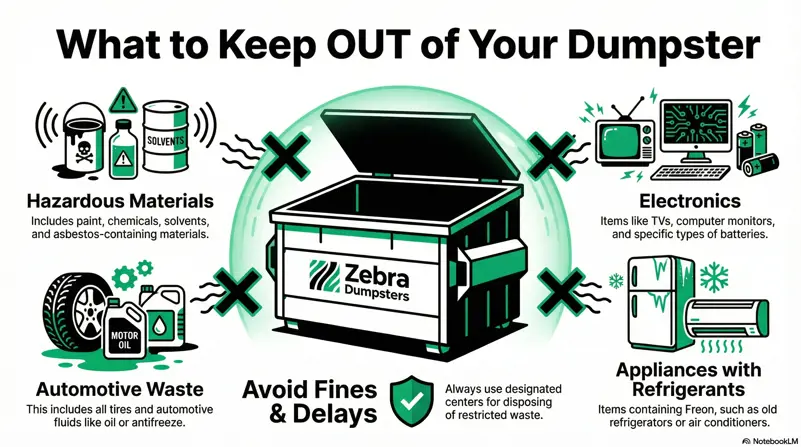
- Hazardous materials: paint (wet/partial), chemicals, solvents, pesticides, asbestos, mercury-containing items
- Electronics: TVs, monitors, computers, laptops, tablets, smartphones, and (new in 2026) battery-embedded products like wireless earbuds, toothbrushes, smart watches, e-cigarettes
- Batteries: car batteries, lithium-ion batteries, alkaline household batteries (all banned from dumpsters as of California's 2026 update)
- Tires: banned from California landfills. Recycle at tire shops or county centers for $3-$5 each
- Automotive fluids: motor oil, antifreeze, brake fluid, gasoline
- Refrigerants: Freon and other coolants from old appliances
- Medical waste: needles, syringes, biohazard materials, expired prescription drugs
- Propane tanks and other pressurized containers
- Large tree stumps
- Railroad ties (creosote-treated, banned from all bins)
- Mattresses (in most cases): subject to separate California mattress recycling fee ($25-$50)
- Liquids of any kind
Throwing these items into a dumpster can lead to fines, delays, or even legal issues. Always dispose of hazardous or restricted waste through designated centers in your area.
What Is Illegal to Throw Away?
San Jose and surrounding Bay Area cities have strict regulations regarding illegal dumping. Here's what you need to know in 2026:
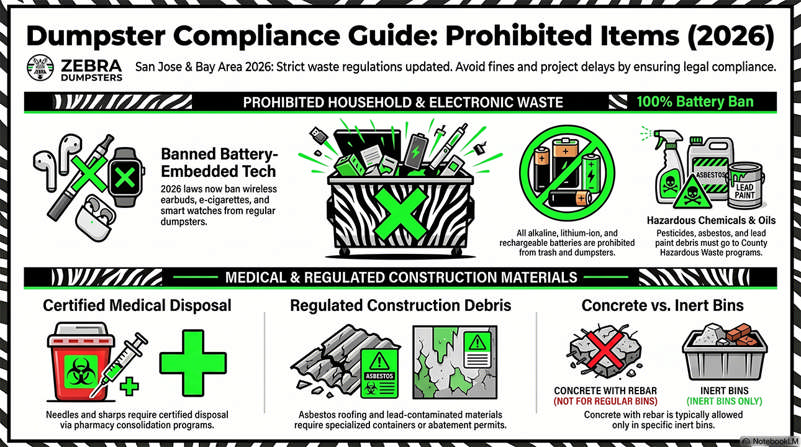
- Hazardous Waste: Chemicals, oils, pesticides, asbestos-containing materials, and friable lead paint debris. Never place them in a regular dumpster. Use the Santa Clara County Household Hazardous Waste program (free for residents by appointment).
- Electronic Waste (E-Waste): Certain electronics need special recycling under California's Covered Electronic Waste Recycling Program. As of January 1, 2026, this also covers battery-embedded products like wireless earbuds, e-cigarettes, electric toothbrushes, kids' toys with sealed batteries, and smart watches. Improper disposal can result in hefty fines.
- Medical Waste: Needles, syringes, sharps containers, and biohazard materials require certified disposal. Many California pharmacies accept sharps containers under the state's Home-Generated Sharps Consolidation Program.
- Regulated Construction Materials: Concrete with rebar may be allowed in inert bins, but roofing with asbestos, lead paint debris, or other specialized construction waste often require a separate dumpster, abatement contractor, or permit.
- All Batteries: California's 2026 battery recycling law explicitly bans alkaline, lithium-ion, and rechargeable batteries from regular trash and dumpsters. Bring them to designated battery recycling stations, which include many Bay Area hardware stores and Best Buy locations.
Tip: If in doubt, consult your dumpster rental provider. They can advise whether you need a special container or referral to a hazardous waste center. Using services like a reputable dumpster rental provider ensures compliance with local laws and keeps your project on schedule.
Prohibited Item Quick Reference Table
| Item | Allowed in Dumpster? | Proper Disposal Channel |
| Household furniture | Yes | General debris dumpster |
| Drywall, lumber, framing | Yes | General debris dumpster |
| Asphalt shingles | Yes (moderate) | General debris dumpster |
| Concrete, brick, dirt | Inert only (5/10 yd) | Inert dumpster |
| Refrigerator/freezer | Only after freon removal | Appliance recycler |
| Water heater (drained) | Yes, with $25/$75 appliance fee | General debris dumpster |
| TVs / computer monitors | No | CalRecycle e-waste program |
| Wireless earbuds, smart watches (new 2026) | No | E-waste under SB 1215 |
| Lithium-ion / alkaline batteries | No | Battery recycling station |
| Tires | No | Tire shop or county recycling |
| Motor oil / antifreeze | No | Auto parts store or HHW program |
| Paint (wet/partial) | No | Dry it out first, then dispose |
| Paint (fully dried, empty can) | Yes | General debris dumpster |
| Asbestos / lead paint debris | No | Licensed abatement contractor |
| Propane tanks | No | Tank exchange location |
| Medical waste / sharps | No | Pharmacy take-back program |
| Mattresses | Special fee | CalRecycle mattress program |
| Large tree stumps | No | Yard waste hauler or chipper |
| Railroad ties | No | Licensed hazardous waste hauler |
| Liquids of any kind | No | Hazardous waste program |
Avoiding Costly Mistakes
Run through this list before your first load:
- Remove all batteries (household, lithium-ion, car) and bag them for battery recycling
- Pull out electronics, including the new 2026 battery-embedded items (earbuds, toothbrushes, smart watches)
- Drain or set aside any liquids (paint, motor oil, cleaners, antifreeze)
- Confirm refrigerators and freezers have had refrigerant professionally removed
- Set aside tires, propane tanks, railroad ties, and large tree stumps for separate channels
- Check that mattresses are routed through the CalRecycle mattress program
- Separate inert materials (concrete, brick, dirt) for an inert dumpster
- Save weight tickets and disposal receipts for CALGreen-triggered projects
Popular Options in San Jose:
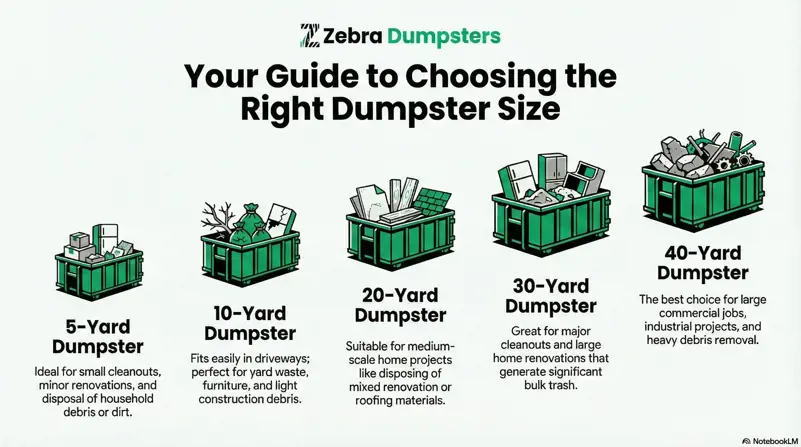
- Dumpster rental San Jose CA: ideal for residential and small commercial projects
- 10 yard dumpster rental: small projects like garage cleanouts
- 20 yard dumpster rental: medium renovations and yard waste
- 30 yard dumpster rental: large renovations or home construction
- 40 yard dumpster rental: commercial and industrial projects
Oakland Options: Dumpster rental Oakland CA: same professional service for Oakland residents
What Happens If You Toss Prohibited Items Anyway?
The consequences of slipping prohibited items into a dumpster have escalated in 2026:
- Sorting and removal fees: Most haulers will photograph violations and bill back the cost of removal and proper disposal, typically $75-$250 per item flagged.
- Trip charges: If the load is rejected at the transfer station, expect a re-route fee of $150-$300.
- California state fines: Illegal dumping of hazardous waste carries fines from $500 to $25,000 per occurrence under California Health & Safety Code §25189.5.
- Code Enforcement flags: San Jose Code Enforcement now coordinates with the Department of Environmental Services on permitted projects, which can delay your final inspection.
- Increased scrutiny on future rentals: Once your address is flagged, future deliveries may require pre-load inspections.
The cost of doing it right is almost always less than the cost of getting it wrong.
Conclusion
Understanding acceptable dumpster waste is essential for a smooth and legal cleanup or renovation project. Knowing what you can toss, what's restricted, and what's outright illegal prevents fines, delays, and extra costs, especially with California's 2026 battery and e-waste rule updates in effect. Whether you're tackling a small home declutter or a large commercial project, plan ahead, pick the right dumpster size, and consult with professional services to ensure compliance. For hassle-free disposal, explore options like dumpster rental to get your project done efficiently and safely. Call (408) 495-3006 with any is-this-allowed question before you toss.
FAQ
1. What can I put in a dumpster?
You can dispose of household debris, furniture, yard waste, light appliances (without refrigerant), and non-hazardous construction debris. Check size restrictions and weight limits before loading. Refer to our prohibited-item table above for items that need separate channels.
2. Can I put concrete, bricks, or dirt in my dumpster?
Yes, but only in 5 or 10 yard inert waste dumpsters. Inert materials are not allowed in 20, 30, or 40 yard general-debris bins because the weight quickly exceeds the bin's structural and transport limits.
3. What items are prohibited in a dumpster in 2026?
Hazardous materials, electronics (including 2026's expanded battery-embedded category like wireless earbuds and smart watches), all batteries, tires, automotive fluids, refrigerants like Freon, propane tanks, medical waste, railroad ties, and mattresses (subject to a separate fee). The list expanded under California's SB 1215 and the 2026 battery recycling law.
4. How do I know which dumpster size I need?
Use the table of common sizes and project types: 5-10 yards for small projects, 20-30 yards for medium to large, 40 yards for industrial projects. If you're unsure, our team can size by debris weight and volume to keep you out of overage territory.
5. How much does a dumpster rental cost in 2026?
Prices vary by size and waste type. A 5-yard general-debris dumpster starts at $439 in San Jose, while a 40-yard runs $910+. Contact Zebra for exact quotes based on your specific project and location.
6. Can a dumpster be placed on the street?
Only with a city encroachment permit. In San Jose, residential street permits cost $40-$160 in 2026. Otherwise, place it on your property (driveway or job-site pad) where it doesn't overhang the sidewalk or curb.
7. What happens if I exceed the weight limit?
Overage fees apply if the dumpster is heavier than allowed for its size. Overage runs $150 to $200 per extra ton depending on your delivery city. Always estimate weight before booking.
8. Can I mix general waste and inert waste in the same dumpster?
No. Inert waste dumpsters are only for specific heavy materials (concrete, brick, asphalt, dirt), while general waste dumpsters are for household and construction debris. Mixing the two can trigger overage fees and disqualify the load from recycling, which also breaks your CALGreen diversion documentation.
9. Are there any fines for illegal dumping?
Yes. Illegal or prohibited disposal can result in city fines, additional disposal fees, and project delays. California Health & Safety Code §25189.5 sets hazardous waste illegal dumping fines from $500 to $25,000 per occurrence. Most homeowner-scale violations land at $75-$300 in sorting/removal fees.
10. Are there environmentally friendly options?
Yes. Zebra Dumpsters sorts materials and recycles as much as possible, supporting California's CALGreen 65% C&D diversion goal. Inert dumpsters often route directly to recycling facilities, asphalt shingles route to hot-mix asphalt recycling, and clean wood routes to mulch operations.
11. Can I put a refrigerator or freezer in a dumpster?
Only after the refrigerant (Freon) has been removed by a licensed technician. Most appliance retailers haul away your old fridge for free when they deliver a new one. Putting a charged fridge in a dumpster is illegal under California's refrigerant management rules.
12. Can I toss paint cans in a dumpster?
Empty, fully dried-out paint cans are fine. Wet or partially full cans are not. Mix the leftover paint with kitty litter or paint hardener, let it dry completely, then dispose of the empty can. Liquid paint is hazardous waste in California.
13. What about all the small electronics I have lying around?
As of January 1, 2026, California's SB 1215 expanded the e-waste program to cover battery-embedded products. That means wireless earbuds, smart watches, e-cigarettes, electric toothbrushes, and kids' toys with sealed batteries should all go to a CalRecycle-approved e-waste channel, not your dumpster.
14. Can I throw away mattresses in a dumpster?
In most cases, no. California's Mattress Recycling Council program charges a separate recycling fee (typically $25-$50 per mattress) and routes mattresses to certified facilities. Most dumpster providers either charge a mattress fee or require you to route them through the CalRecycle program directly.
15. What if I'm not sure whether something is acceptable?
Call your dumpster provider before you toss it. At Zebra Dumpsters, our dispatch team can confirm in 30 seconds whether an item is allowed and, if not, point you to the right disposal channel. Catching it before delivery saves you sorting fees and re-route charges.
Not sure about an item?
Call before you load it and we will tell you
Appliances and electronics are $25 each in San Jose. Hazardous materials are never accepted.