Pool excavation is the heaviest residential project most homeowners will ever take on. A 14-by-28 foot in-ground pool removes 40 to 70 cubic yards of dirt roughly 50 to 90 tons of material plus the concrete shell of the pool itself if it's an existing pool being demolished. That weight number is the planning constraint: it doesn't fit in any one general-debris dumpster, it doesn't fit in many small inert bins, and the disposal route needs to be set up before the excavator arrives.
This guide covers the realistic disposal infrastructure for Bay Area pool projects: the bin (or bins) that fit the volume, the math that determines how many you need, the concrete demolition disposal for pool removals, and the timing that keeps the excavator from sitting idle.
Listen to this article
--:-- · narrated
How Much Material a Pool Excavation Generates
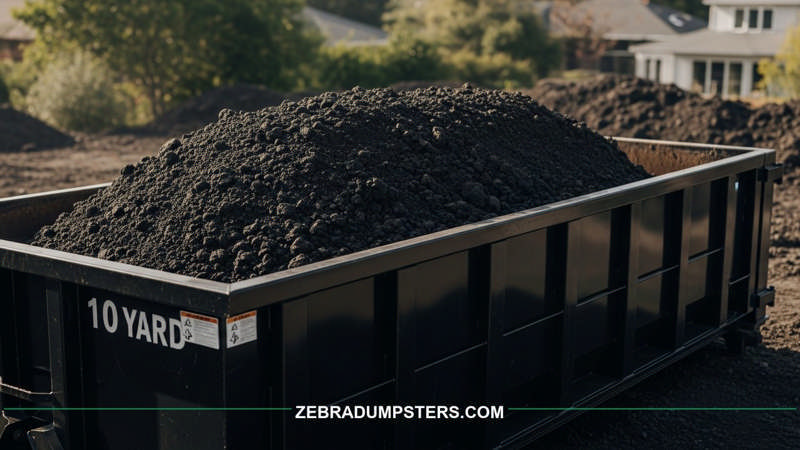 A fully-loaded 10-yard inert dumpster of pool excavation dirt — about 13 tons of clay-heavy Bay Area soil.
The math is volume × density, and pool dirt density is high.
A typical residential in-ground pool dig:
- 14 × 28 ft (small), 4 ft average depth → ~58 cubic yards of dirt → ~75 tons
- 16 × 32 ft (standard), 5 ft average depth → ~95 cubic yards → ~120 tons
- 20 × 40 ft (large), 5 ft average depth → ~148 cubic yards → ~190 tons
Bay Area soil is mostly clay-heavy with rocks, especially in the South Bay and East Bay foothills. Damp clay weighs about 2,500 to 3,000 lbs per cubic yard significantly heavier than sandy or loamy soil.
For pool removals (demolition of an existing pool):
- Concrete shell: 8 to 18 cubic yards (40 to 100 tons depending on shell thickness)
- Plus dirt fill if the hole is being backfilled: another 40 to 80 cubic yards delivered
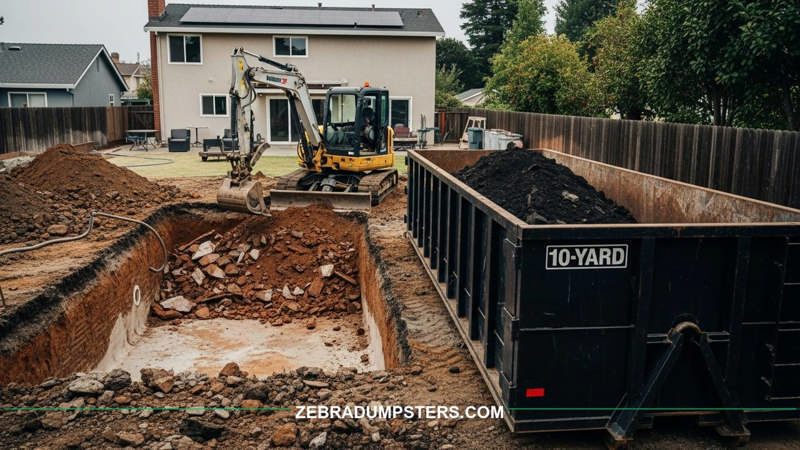
The dirt-out and concrete-out streams are separate and route to different facilities. Crews running pool excavations through dumpster rental in San Jose typically stage two bins: one for dirt, one for the concrete + rebar.
Partial vs. Full Removal: The Decision That Halves the Debris
Before running the bin math on a pool removal, settle which removal you're doing, because the debris volume changes by half. A partial removal breaks in the top 18 to 36 inches of the shell, punches drainage holes through the bottom, and buries the rest in place. Concrete-out drops to 3 to 6 cubic yards, one inert bin instead of two or three, and the total project runs roughly half the cost of full removal. A full removal pulls every piece of concrete, steel, and plumbing out of the ground and produces the 8 to 18 cubic yards in the table below.
Two California catches decide it for most homeowners. After a partial removal the pool footprint is non-buildable land, and the buried shell has to be disclosed when the house sells. If there's any chance of building over that spot later, an ADU, a garage, an addition, the county requires full removal. Landscaping-only plans can take the partial-removal savings.
Bin Size and Quantity Math
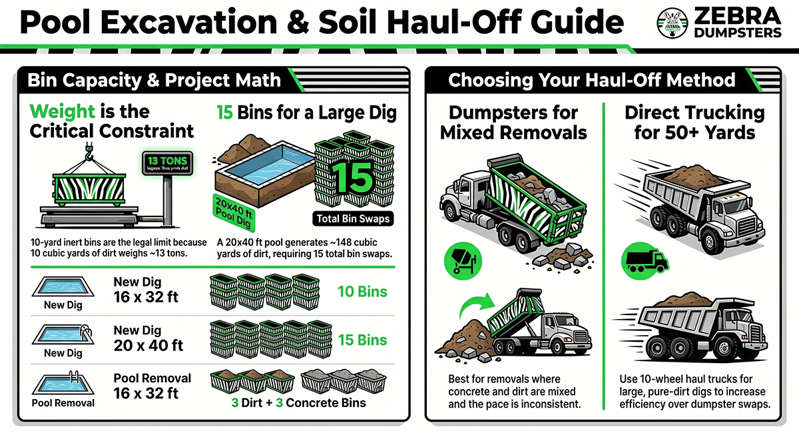
Pool dirt is heavier than other inert material per cubic yard, which means weight-cap is the constraint, not volume. The 10-yard inert dumpster (the largest legal road-haul size for inert material in California) holds:
- ~10 cubic yards of loose dirt = ~13 tons
- ~10 cubic yards of broken concrete = ~12 tons
Multiple bins are required for any pool dig. The math:
| Pool Project | Dirt Volume | 10-Yard Inert Bins Needed | Concrete (if removal) |
| 14 × 28 ft new dig | ~58 cu yd | 6 bins (staged or back-to-back) | — |
| 16 × 32 ft new dig | ~95 cu yd | 10 bins | — |
| 20 × 40 ft new dig | ~148 cu yd | 15 bins | — |
| 14 × 28 ft pool removal | ~25 cu yd (partial backfill) | 3 bins for dirt | 1–2 bins (10 yd inert) |
| 16 × 32 ft pool removal | ~30 cu yd | 3 bins for dirt | 2–3 bins |
The removal rows above assume full removal. For a partial removal, cut the concrete bins to one and the dirt bins stay similar, since the hole still gets compacted backfill.
For new digs above ~50 cubic yards, most Bay Area projects use soil haul-off direct trucking instead of staged dumpsters an excavation contractor brings 10-wheel haul trucks (each holding ~10 cubic yards) and runs material directly to the disposal facility. This is more efficient than dumpster swaps for pure-dirt loads of this scale.
For pool removals (which mix concrete demolition and dirt), the dumpster path makes more sense because the demolition pace doesn't match a haul-truck schedule.
Dirt and concrete
Inert dumpster with no weight limit, from $505 in San Jose
Soil, gunite and broken deck go in the 5 or 10-yard inert bin. Multiple hauls are scheduled back to back on excavation day.
The Disposal Routing Question
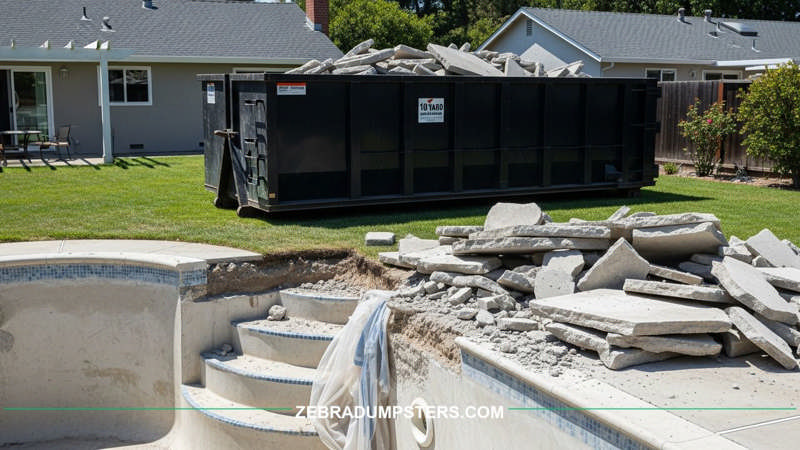 A pool removal mixes concrete and dirt — a 10-yard inert dumpster handles the concrete shell separately from the dirt loads.
Pool dirt and pool concrete go to different places, and the routing affects cost.
Clean dirt (no rocks larger than 6 inches, no roots, no construction debris) goes to inert recycling. Tipping fees in the Bay Area run $20 to $50 per ton for clean dirt meaningfully cheaper than mixed-load tipping. Some facilities even accept clean fill for free if they're actively backfilling a project.
Mixed dirt (with rocks, roots, or any construction debris) routes to general inert disposal at $60 to $90 per ton.
Concrete from pool removals routes to concrete recycling at $30 to $60 per ton also cheaper than landfill disposal of mixed concrete-and-rebar.
The clean-load distinction matters. A pool excavation that produces "mostly dirt" but has the occasional buried tree root or piece of buried construction debris from the original pool install gets reclassified at the gate. Crews running dirt-only loads through dumpster rental in Morgan Hill typically pre-screen during loading separate roots and construction debris into a small general-debris bin so the dirt stays clean and qualifies for the cheaper tipping rate.
Project Timing and Logistics
Pool excavation has two timing constraints that separate it from other dumpster projects.
The excavator can't wait. Excavator rental runs $400 to $800 per day with operator. Once the dig starts, every hour of excavator idle time costs money. The disposal capacity needs to be on-site BEFORE the excavator starts, and bin swaps need to be scheduled ahead — not "call when full." Most pool projects book the first bin for the morning of excavation start and pre-schedule the next 2-3 swaps based on expected progress.
Soil swelling. Excavated dirt expands 20 to 30% over its in-ground volume because of air pockets and broken-up structure. So a project calculated as "60 cubic yards of dirt to remove" actually generates 72 to 78 cubic yards of haul. Plan accordingly.
Access matters more than usual. Pool projects often have constrained back-yard access fence width, gate height, side-yard length. The excavator and the dumpster delivery truck both need to fit through. Pre-walk the route with both the excavation contractor and the dumpster company. Cost of getting this wrong: $250 dead-run fee per dumpster delivery that can't be placed, plus the excavator wait time.
Standard rental window doesn't apply. Most pool excavations finish in 2 to 4 days. Dumpster swaps happen on roughly the same schedule. Booking is per-bin rather than the standard 7-day rental window.
How to Book and What to Expect
Pool projects book differently than residential cleanouts. Three pieces of info that matter:
Project type new pool dig (dirt only), pool removal (concrete + dirt), or pool resurface (concrete only, smaller volume). Dictates which bins ship.
Soil type clay (heaviest), loam (medium), sand/gravel (lightest). Bay Area is mostly clay; confirm with the excavation contractor before booking.
Access driveway / side yard / back yard. The 10-yard inert dumpster plus delivery truck needs ~22 feet of straight access from the street and 6.5 feet of width. Tight back-yard pool sites often need a different access plan than the dumpster-on-driveway default.
The clean-load rule applies. Inert dumpsters take dirt, concrete, brick, and asphalt only. Mixing in tree roots, plastic pool liners, or construction debris reclassifies the load at the gate $300 cleaning fee plus general-debris weight pricing. Pre-screen during loading.
Standard rental covers seven days per bin but pool projects typically run multiple staged bins back-to-back. Same-day pickup is free; extra days $45 each.
Zebra Dumpsters services the South Bay, East Bay, and Peninsula corridor including same-day routing for dumpster rental in Oakland and the surrounding cities. Call (408) 495-3006 to book or to talk through multi-bin staging for pool projects. Prices subject to change. Verify current rates at zebradumpsters.com/weight-limits-and-fees.
Planning a pool removal?
Call and we will estimate the number of hauls from your pool size
Same-day swaps keep the excavator moving.
Frequently Asked Questions
How many dumpsters do I need for a pool excavation?
For a typical 16 × 32 ft new dig, plan on 8 to 12 staged 10-yard inert dumpsters across 2 to 4 work-days. For a pool removal, the number is smaller maybe 4 to 6 bins total depending on backfill plans. Always plan in dumpsters, not in cubic yards: dirt swells 20 to 30% during excavation, so the effective volume is meaningfully larger than the pool's in-ground volume.
Can I use a regular dumpster for pool dirt?
No. Pool dirt is too heavy for general-debris dumpsters a single 10-yard general bin filled with dirt would exceed both the included tonnage and the bin's structural rating. Use 10-yard inert dumpsters specifically rated for heavy material. The 10-yard inert is the largest legal road-haul size for inert material; there's no 20-yard or 30-yard inert option in California.
Is direct soil haul-off cheaper than staged dumpsters?
For pure-dirt new digs above ~50 cubic yards, yes direct haul trucks (operated by the excavation contractor) are typically 20 to 30% cheaper than staged dumpsters because there's no per-bin rental rate. For pool removals (mixed concrete and dirt) or smaller projects, dumpsters usually win because the project pace doesn't match a continuous haul-truck schedule.
What does pool removal disposal cost in the Bay Area?
A typical pool removal generates 8 to 18 cubic yards of concrete and 25 to 35 cubic yards of dirt. Total disposal cost runs $1,800 to $3,500 in dumpster rental + tipping fees, depending on size and how clean the loads are. Add 30 to 50% for combined excavation labor and demolition labor most homeowners budget $5,000 to $10,000 for full pool-removal disposal-and-labor combined.
Can I get a permit for a pool excavation dumpster on the street?
Yes, in any Bay Area city. Most cities require an encroachment permit if the bin sits in a public street parking spot. Permit costs run $75 to $250 and processing takes 3 to 10 business days. Pool excavations are heavy-equipment projects and most permit officers are familiar with the staging needs a clean application that explains the excavation timeline usually clears quickly. Plan to pull the permit at the same time you finalize the excavation contractor.
Do I need a permit to remove a pool in California?
Yes, two different ones on most projects. The demolition itself needs a building permit from your city, typically $100 to $500 in the Bay Area, and the application usually asks whether the removal is partial or full because it changes the inspection. The street-placement encroachment permit for the dumpster is separate and only applies if a bin sits in a public parking spot. The excavation contractor usually pulls the demolition permit. Confirm who's responsible before the dig date.
What about above-ground pool removal?
A different project entirely, and a much lighter one. No excavation, no inert bins: the liner, wall panels, frame, and any surrounding deck are general debris. Most above-ground removals fit in a single 10- or 20-yard general-debris dumpster and finish in a weekend with two people. If a concrete pad sits underneath, that pad routes to a 5-yard inert bin the same way a patio slab would.