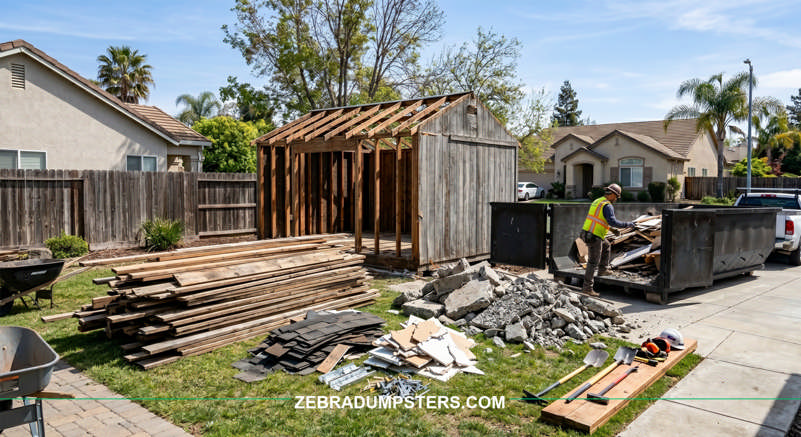
Removing an old fence is one of the few Bay Area home projects where the demolition is faster than the planning. The actual fence comes down in a weekend. The post holes take longer than expected, and the dumpster sizing depends on whether the concrete footings come up with the posts or stay in place. Plan it wrong and you're hauling 80-pound concrete cylinders by hand for an extra two days.
This guide covers Bay Area fence removal: the demo sequence for wood, vinyl, and chain-link fences, the dumpster size that fits a typical residential fence (it's bigger than people expect), the disposal channel for the concrete footings, and the cost of DIY versus hiring a contractor. Numbers calibrated for typical Bay Area residential property lines 100 to 300 linear feet of fence.
Fence Removal Volume and Weight by Type
Three common Bay Area fence types, each with different debris profiles:
Wood (cedar, redwood, pressure-treated pine): Most common. Fence boards, rails, and posts make up most of the volume. A typical 6-foot-tall wood fence generates about 0.3 cubic yards per linear foot, weighing 8 to 15 lbs per linear foot (the fence itself, before footings).
Vinyl (PVC): Lighter and less bulky than wood. About 0.2 cubic yards per linear foot, 4 to 7 lbs per linear foot.
Chain-link: Lightweight wire mesh + steel posts. About 0.15 cubic yards per linear foot (rolled), 3 to 5 lbs per linear foot.
Typical Bay Area residential property math:
- Side-yard only (50 linear feet): 10-15 cubic yards loose, 1-2 cubic yards once stacked. 400-750 lbs.
- Back property line (100 linear feet): 25-30 cubic yards loose, 3-4 cubic yards stacked. 800-1,500 lbs.
- Full perimeter (200-300 linear feet): Up to 60 cubic yards loose, 6-9 cubic yards stacked. 1,600-4,500 lbs.
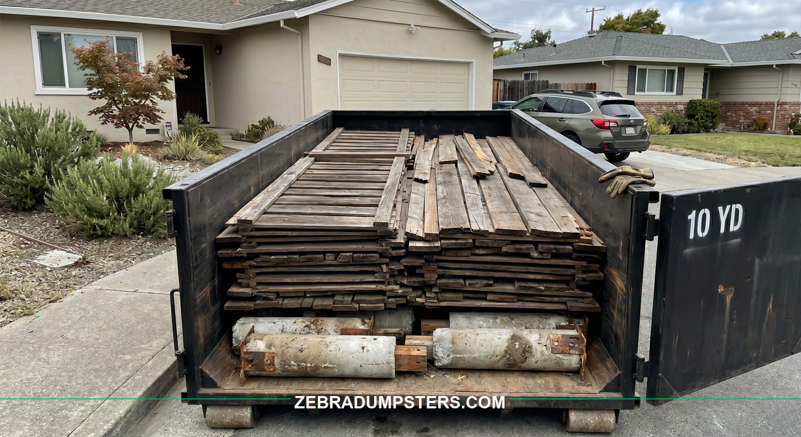
The key number is "stacked" wood fences come down in long, awkward sections that look enormous in volume but compress significantly when stacked properly in the dumpster. Most full-perimeter fence projects fit comfortably in a 10-yard dumpster.
The wildcard is concrete footings. Each post footing weighs 50 to 80 lbs (a typical 8-inch diameter, 24-inch deep footing). A 100-foot fence with posts every 8 feet has 12-13 footings 600 to 1,000 lbs of additional concrete if removed. For homes in dumpster rental in San Jose with full-perimeter fence projects, deciding whether to remove the footings is the key sizing decision.
Right Dumpster Size by Project Scope
| Project | Volume (stacked) | Weight (with footings) | Bin | Cost |
| Side-yard fence (50 ft) | 1-2 cubic yards | 0.4-0.8 ton | 10-yard general | From $430 |
| Back fence (100 ft) | 3-4 cubic yards | 0.8-1.5 tons | 10-yard general | From $430 |
| Full perimeter (200 ft, footings stay) | 6-9 cubic yards | 0.8-2.0 tons | 10-yard or 20-yard general | $430-$550 |
| Full perimeter (200 ft, footings out) | 8-12 cubic yards | 2.0-3.0 tons | 20-yard general or split | $550-$1,110 |
| Full perimeter (300+ ft, footings out) | 12-18 cubic yards | 3.0-4.5 tons | 20-yard + 10-yard inert split | $1,110 and up |
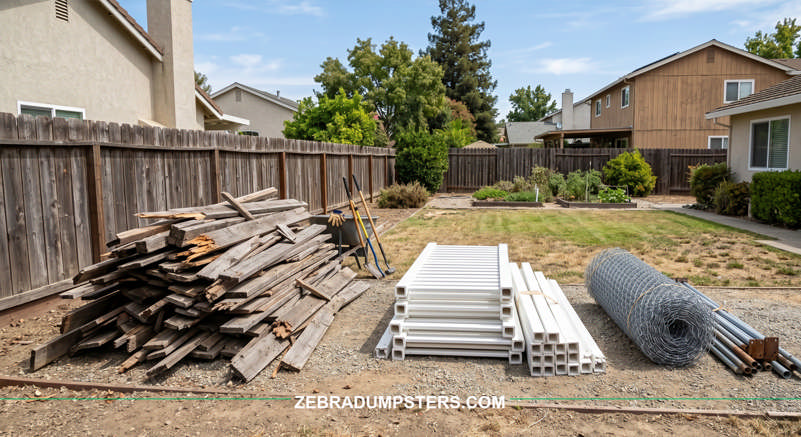
The split-bin approach for footing-removal projects: a 20-yard general for the wood/vinyl, plus a 10-yard inert for the concrete footings. The inert bin has no weight cap and routes the concrete to recycling cheaper than overage on the general bin.
For most fence projects where the footings stay in place (new fence going in the same holes), a 10-yard general handles even full-perimeter scopes. For projects where footings come out, plan the split. Crews working dumpster rental in Sunnyvale for full-property fence replacements typically pre-book the split.
Footings are what change the bin
Decide on the concrete before you book
Fence panels and posts are light and bulky, so a 10-yard at $430 handles most runs. Pull the footings and the load turns dense, which is where the split into an inert bin starts paying. Price both before demo day.
Demo Sequence That Actually Works
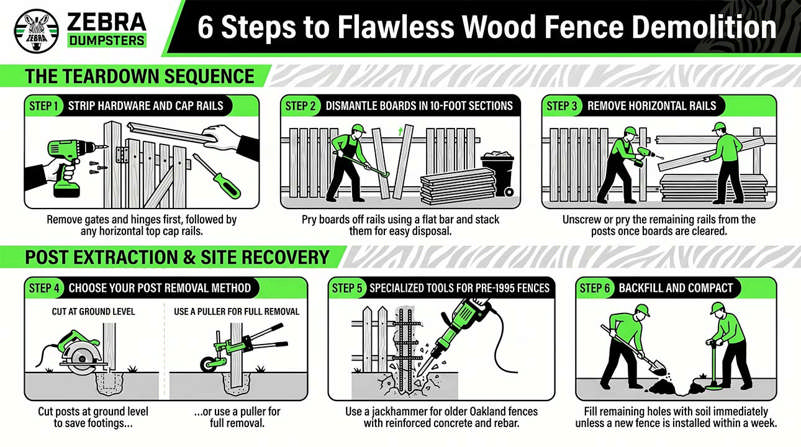 Fence demolition has three different sequences depending on type. The wood-fence sequence below is the most common.
Step 1: Remove gates and hardware. Gates come off first they're bolted to posts and removed independently. Save hardware (hinges, latches, gate-stop hardware) if reusing.
Step 2: Remove top cap rail (if present). Some fence styles have a top horizontal cap rail. Pry it off the posts first.
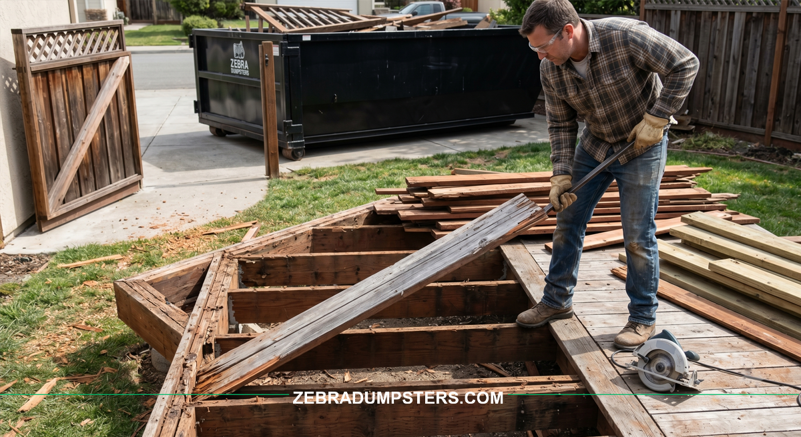
Step 3: Remove fence boards in 10-foot sections. Use a flat bar to pry each board off the rails. Boards either come off intact (reusable) or splinter (dumpster only). Stack boards as you go.
Step 4: Remove horizontal rails. Once boards are off, the two or three horizontal rails between posts come off they're typically nailed or screwed to the posts. Save these if reusable.
Step 5: Remove posts. Two methods depending on footing depth:
- Posts in concrete footings, staying in place: Cut posts off at ground level with a reciprocating saw. Saves the footing for the next fence.
- Posts and footings coming out: Use a fence-post puller (rentable for $30/day) or dig around the footing with a post-hole digger. Larger footings may need a small jackhammer or breaker bar to crack the concrete before lifting.
Step 6: Backfill or clean up holes. Once posts and footings are out, either backfill the holes with the original soil (compacted) or leave open if a new fence is going in within a week.
For homeowners booking dumpster rental in Oakland for older fences (pre-1995), expect some posts to be sleeved in concrete + rebar reinforcement a small jackhammer is the right tool, not a post puller.
Disposal Channels by Fence Material
Different fence materials route to different disposal channels.
Wood (cedar, redwood, pressure-treated): Standard general-debris dumpster. No special handling. Pressure-treated lumber (post-2003 ACQ or pre-2003 CCA) is landfill-acceptable for residential demolition volumes. Reclaim-quality redwood pieces (4 feet or longer, clean, no rot) can go to Bay Area salvage yards.
Vinyl (PVC): Standard general-debris dumpster. Not recyclable through standard channels (PVC is hard to recycle economically), but landfill-acceptable.
Chain-link wire + steel posts: Standard general-debris dumpster for residential volumes. Steel posts and wire have scrap-metal value Bay Area scrap-metal yards pay $0.05-$0.15 per pound for clean steel.
Concrete footings: Inert (heavy-material) dumpster, not general debris. The 50-80 lb footings count significantly toward weight allowances on general bins. Splitting to an inert bin saves overage costs.
The broader materials-routing context is in the heavy debris disposal guide and the deck-removal-specific workflow in the deck removal guide on the blog.
Bay Area Pricing and DIY vs Hire
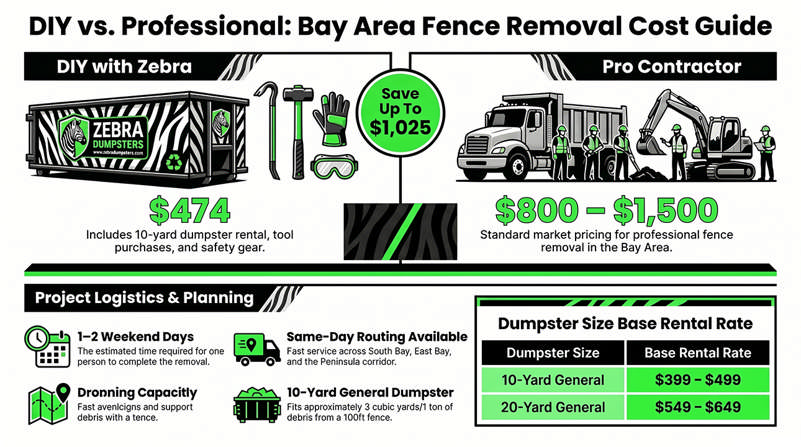
The 10-yard general starts at $430 in San Jose and the 20-yard at $550. Rates rise with distance from the yard, so check your own city.
Worked example. 100 linear foot back fence in San Jose, wood, footings staying in place. DIY:
- 10-yard general dumpster: $430 base
- Debris: 3 cubic yards, 1.0 ton
- No overage
- Reciprocating saw blades: $25
- Pry bar, flat bar: $30 (purchase or borrow)
- PPE: $20
- Time: 1-2 weekend days for one person
- DIY total: $505.
Hiring a fence-removal contractor runs $800-$1,500 for the same scope. DIY saves $295-$995 at the cost of one to two weekend days.
Standard fees: same-day delivery $100 outside San Jose/Campbell, dead-run $250 South Bay/East Bay, extra days $45/day. Prices subject to change. Verify current rates at zebradumpsters.com/weight-limits-and-fees.
Zebra Dumpsters services the South Bay, East Bay, and Peninsula corridor with same-day routing on 10-yards and 20-yards. Call (408) 495-3006 to book a fence-removal project.
A weekend job, one delivery
Get the fence gone in one drop
A hundred feet of back fence is a weekend for one person and fits a 10-yard with room to spare. Tell us where the bin can sit relative to the fence line and we will place it so you are not carrying panels around the house.
Frequently Asked Questions
What size dumpster do I need for fence removal?
For a side-yard or back fence (50-100 linear feet), a 10-yard general fits the 1-4 cubic yards of stacked wood with headroom on weight. For full-perimeter projects with footing removal (200+ linear feet), step up to a 20-yard general plus a 10-yard inert for the concrete footings.
How much does fence removal cost in the Bay Area?
DIY removal of a 100-foot back fence costs about $505 (10-yard dumpster + tools + PPE). Hiring a contractor runs $800-$1,500 depending on access and whether footings come out. DIY saves $295 to $995 over one to two weekend days of work.
Should I remove the concrete footings too?
Depends on the new fence. If the replacement fence will use the same post spacing, leaving footings saves significant cost you skip the heaviest demo step and the additional inert dumpster. If the new fence has different post spacing or no fence is going back, plan on full footing removal.
Can pressure-treated fence lumber go in a regular dumpster?
Yes. Modern ACQ-treated lumber (post-2003) is landfill-acceptable in residential demolition volumes. Older CCA-treated lumber (pre-2003) is also accepted in California for residential demolition never burned.
How long does fence removal take?
50 linear feet (side yard): 4-6 hours for one person. 100 linear feet back fence: 1-2 weekend days. Full perimeter (200-300 feet) with footings: 2-3 weekend days for one person or one weekend for two. Footing removal is the slowest part budget extra time if footings are pre-1995 with rebar.