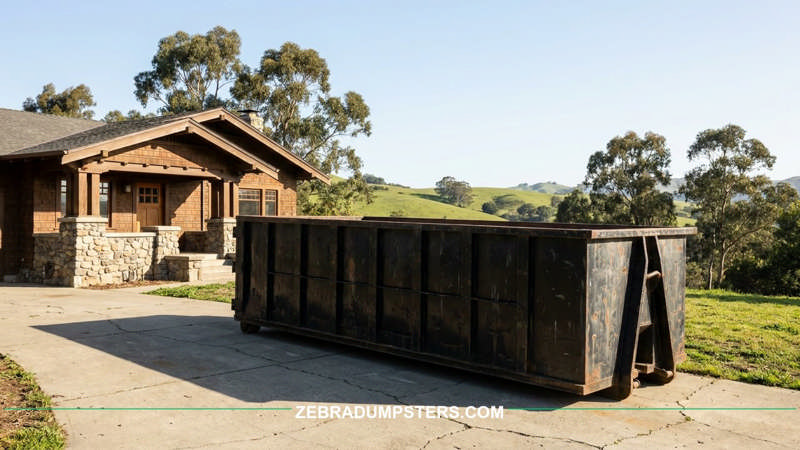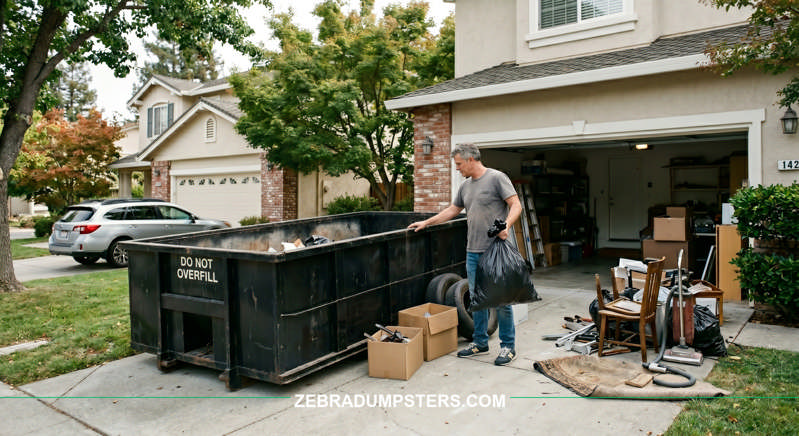
A two-car garage holds more than people think. By the time the boxes from a 2014 move are stacked next to old paint cans, broken patio furniture, the kids' outgrown bicycles, and that one piece of fitness equipment, the typical Bay Area garage cleanout fills 8 to 12 cubic yards of debris. That is enough to disqualify curbside pickup, enough to make multiple trips to a transfer station painful, and exactly the project size where a dumpster rental earns its price.
This guide covers the practical decisions for a Bay Area garage cleanout: what size dumpster fits the typical haul, what it actually costs, what the bin will and will not accept, and the timing that turns a weekend into a finished garage rather than half a garage and a pulled back.
How Much Stuff Is In a Typical Garage?
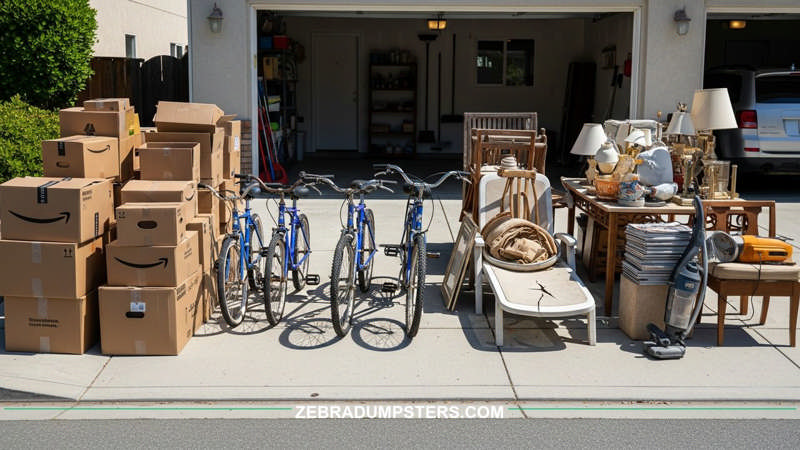 Sorting into keep, donate, sell, and dump piles is the slowest pass but it produces the cleanest result.
Garages accumulate at a steady rate over years and clear out in sudden bursts. The volume math depends on three things: how long the garage has been used as overflow storage, whether the household stages large items there before disposal, and whether the cleanout includes shed contents or attic spillover.
A typical single-car garage cleanout produces 4 to 7 cubic yards of debris about a 5-yard or 10-yard dumpster's worth, depending on what gets thrown out versus donated. A two-car garage runs 8 to 14 cubic yards. Three-car garages, or two-car garages plus a workshop or shed, can hit 16 to 22 cubic yards.
The composition matters more than the volume for picking the right bin. Furniture, bicycles, broken yard tools, cardboard, foam, and household goods belong in a general-debris dumpster. Concrete pieces from old patio repairs, a stack of broken pavers, or chunks of old driveway belong in an inert dumpster. Most garages produce general debris with a small amount of inert material. Homeowners who notice they have heavy material before booking save money by separating it. Crews booking dumpster rental in San Jose for whole-house cleanouts often run a small inert bin alongside the main one for this reason.
Picking the Right Dumpster Size
The 10-yard general-debris dumpster is the standard call for a single-car garage cleanout. It holds 10 cubic yards (~3 pickup-truck loads) and includes 1.0 ton of weight under standard service. For a two-car garage, the 20-yard is the better fit. It holds 20 cubic yards (~6 truck loads) with 2.0 tons included.
| Garage Size | Typical Volume | Dumpster Size | Tons Included |
| Single-car (light cleanout) | 3–5 cubic yards | 5-yard general | 0.75 tons |
| Single-car (full cleanout) | 5–8 cubic yards | 10-yard general | 1.0 ton |
| Two-car | 8–14 cubic yards | 20-yard general | 2.0 tons |
| Three-car or garage + shed | 14–22 cubic yards | 30-yard general | 3.0 tons |
Two practical notes. Garage cleanouts are weight-light per cubic yard most loads come in well under the included tonnage because so much of the volume is foam, cardboard, plastic, and air. That means overage fees are rare unless the garage hides something heavy (paving stones, ceramic tile, dense concrete). Sizing by volume rather than weight is the right approach. And the next size up usually beats the same size with a mid-cleanout swap call a 20 instead of a 10 if the garage has been collecting for more than a decade.
What You Can and Cannot Put in It
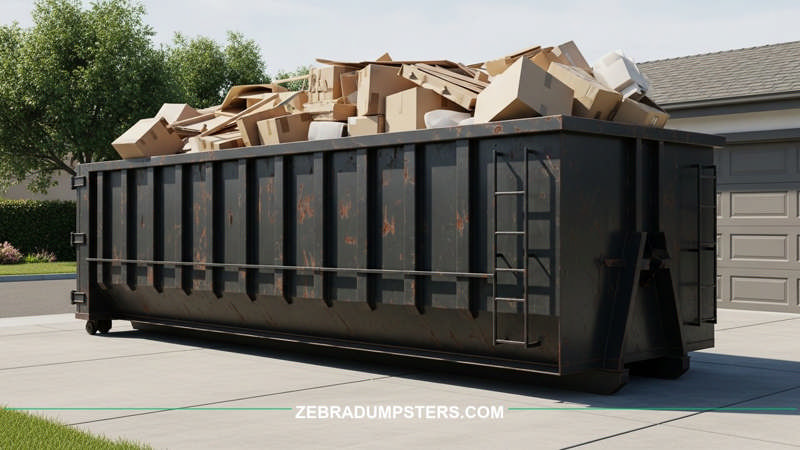 Heavy items first along the bottom, bulky-but-light items on top keep the load below the rim.
General-debris dumpsters take almost everything you would naturally pull out of a garage: furniture, mattresses, carpet, cardboard, books, household goods, broken yard tools, kids' toys, foam and plastic, and most household appliances. They do not take a small list of things, and the list matters because mixing prohibited items in triggers cleaning fees.
Not allowed in a general dumpster: liquid paint and pool chemicals (hazardous waste dried paint cans are fine), tires ($15 to $35 each in per-item fees), automotive batteries (recycle free at any auto-parts store), anything with a compressor (refrigerator, freezer, AC, dehumidifier refrigerant recovery needed), tube TVs and fluorescent tubes (e-waste, free at county drop-off), and meaningful piles of concrete, dirt, brick, or asphalt (those need an inert dumpster).
The clean-load rule applies. Mixing hazardous items in adds a $300 cleaning fee plus disposal at hazardous-waste rates, which more than doubles a typical cleanout bill. Homeowners booking dumpster rental in Sunnyvale for spring cleanouts often set up a small "hazardous corner" first and run those items separately to county drop-off saves real money on a meaningful percentage of jobs.
One or two-car garage
The 10-yard at $430 is the garage bin
About 50 to 60 bags and 1 ton of disposal, which covers boxes, shelving, old furniture and sports gear. Step up to a 20-yard if the garage has been the storage room for the whole house.
Cost and Booking Logistics
The 10-yard general-debris dumpster sits in a flat-rate range that covers seven days plus the included tonnage. Beyond that, fees scale by city tier and by add-on. The numbers that matter for a Bay Area garage cleanout:
- Same-day delivery: $100 outside San Jose and Campbell.
- Dead-run fee (truck arrives, can't place the bin): $250 in South Bay/East Bay, $350 north of Millbrae or Oakland.
- 24-hour cancellation: $100.
- Extra rental days beyond seven: $45 each.
- Per-ton overage: $150 in most South Bay cities, up to $200 in some far-East Bay cities. Garage loads rarely trigger overage.
Placement is the most common surprise on garage cleanouts. The 10-yard dumpster plus delivery truck needs about 22 feet of straight access from the street and 6.5 feet of width. Many older Bay Area homes have driveway aprons that are barely wider than that, especially with a parked car in the way. The 5-yard fits almost any driveway; the 20-yard usually fits but should be confirmed; the 30-yard is iffy on most older single-family lots and often gets staged on the street with a permit.
Standard rental covers seven days. Most garage cleanouts take a long weekend (3 to 4 days). Same-day pickup is free if you finish early; extra days $45.
The Garage Cleanout Workflow
A garage cleanout works best in three passes. Knowing this in advance saves a meaningful amount of frustration and at least one trip to a donation center.
- Pass 1: keep / sell / donate / dump. Pull everything out into the driveway or yard if weather allows and sort into four piles. The "dump" pile fills the dumpster; everything else gets a separate exit path. This is the slowest pass but produces the cleanest result.
- Pass 2: load the dumpster. Heavy items first along the bottom (furniture, appliances), bulky-but-light items on top (cardboard, foam, plastic). Keep the load below the rim overloaded dumpsters get refused at pickup.
- Pass 3: clean the empty space. Sweep, organize what is staying, install any storage solutions before the new layout fills back up.
Booking takes a five-minute call with three pieces of info: the delivery address (city sets pricing tier and same-day eligibility), the start date (pick the morning of pass 1), and a rough volume estimate (single-car / two-car / three-car / garage plus shed). Zebra Dumpsters services the South Bay, East Bay, and Peninsula corridor including same-day routing for dumpster rental in Oakland and the surrounding cities. Call (408) 495-3006 to book. Prices subject to change. Verify current rates at zebradumpsters.com/weight-limits-and-fees.
A Saturday job
Clear the driveway, then call
The truck needs the driveway empty and a straight run in. Move the cars the night before and the bin lands where you can throw straight into it from the garage door.
Frequently Asked Questions
What size dumpster is best for a garage cleanout?
The 10-yard general-debris dumpster is the standard call for a single-car garage and the 20-yard for a two-car garage. Three-car garages or two-car garages with attached sheds usually need a 30-yard. Size up if the garage has been used as overflow storage for more than 10 years most homeowners under-estimate accumulated volume and end up calling for a swap.
How much does a garage cleanout dumpster cost in the Bay Area?
Pricing varies by size, city, and rental length, but a 10-yard general-debris dumpster covering a typical single-car garage cleanout runs in the low-to-mid hundreds, including seven days and the standard tonnage allowance. A 20-yard for a two-car garage runs roughly 20 to 30% higher. Final cost depends on how clean the load is and whether any add-on fees (same-day, extra days) apply. Verify current rates at zebradumpsters.com/weight-limits-and-fees.
Is a dumpster cheaper than junk removal services?
For volumes above 4 cubic yards (about half a single-car garage), a dumpster rental is meaningfully cheaper than per-item or per-truckload junk removal. Junk removal services charge $400 to $800 for a half-truck load and double that for a full truck. A dumpster covers the same volume at a flat rate and gives you 7 days to load at your own pace. Junk removal wins on speed (one appointment, gone in 90 minutes) and effort (they do the lifting); a dumpster wins on cost and flexibility.
Can I throw away old paint cans and chemicals?
No. Liquid paint, pesticides, herbicides, pool chemicals, automotive fluids, and any pressurized container are all hazardous waste and prohibited in general-debris dumpsters. Most Bay Area counties offer free hazardous-waste drop-off for residents schedule a separate trip before the cleanout. Dried-out paint cans (lid off, fully solid) can go in the regular dumpster.
How long does the dumpster stay on my driveway?
Standard rental covers seven days, which is comfortable for a typical weekend cleanout plus a few weekday loading sessions. If you finish early, same-day pickup is free. Extra days beyond seven are $45 each. For longer projects (a full attic-plus-garage-plus-basement cleanout), book the rental upfront for the longer window rather than extending mid-project the per-day rate is the same either way but the scheduling is cleaner.