Providing accessible restroom facilities isn't just good business, it's the law. The Americans with Disabilities Act (ADA) establishes clear requirements for portable toilet accommodations at public events, construction sites, and commercial projects throughout California. Whether you're planning a festival in San Jose, managing a construction project in Hayward, or organizing a wedding in Burlingame, understanding ADA portable toilet requirements ensures you meet legal standards while serving all guests with dignity. With 2026 enforcement now more closely aligned with ANSI/PSAI Z4.3 industry standards and Cal/OSHA's stricter inspection routines, the cost of getting ADA portable restroom placement wrong has gone up.
This comprehensive guide covers everything you need to know about wheelchair-accessible portable toilets, from federal requirements and California-specific regulations to practical placement guidelines and updated 2026 cost considerations. By the end, you'll understand exactly how many ADA units you need, where to position them, what features to look for, and how to budget for the ADA portable toilet rental that fits your project.

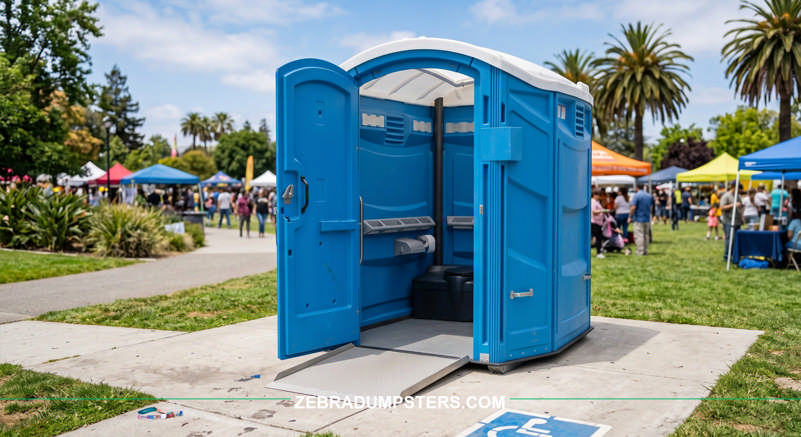
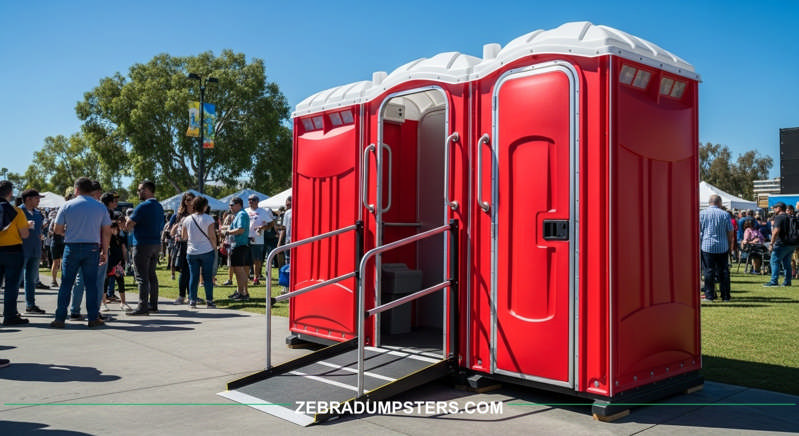
*An ADA-compliant portable toilet with wheelchair ramp and spacious interior design*
What Are ADA-Compliant Portable Toilets?
ADA-compliant portable toilets, often called wheelchair-accessible or handicap porta potties, are specially designed restroom units that meet the accessibility standards outlined in the Americans with Disabilities Act and the 2010 ADA Standards for Accessible Design. These units go far beyond standard portable toilets to accommodate individuals who use wheelchairs, walkers, or other mobility aids, including parents with strollers and elderly guests with limited mobility.
Key Features of ADA Portable Toilets
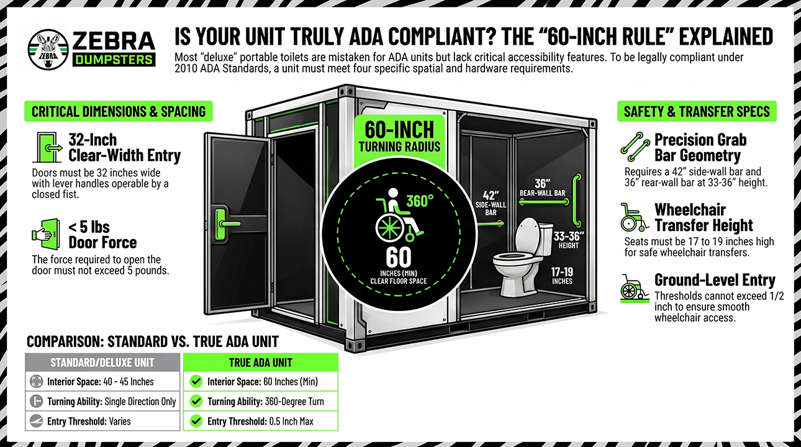
- Spacious Interior: At least 60 inches of clear floor space for 360-degree wheelchair turns (vs. 40–45 inches in standard units).
- Ground-Level Entry: Zero-step entry with maximum 1/2 inch threshold height.
- Grab Bars: Reinforced bars on two walls (33–36 inches high) supporting 250+ pounds.
- Door Specifications: Minimum 32-inch clear-width opening with lever handles operable with a closed fist (no tight pinching or twisting).
- Seat Height: 17–19 inches from floor for easier wheelchair transfers.
- Accessibility Accessories: Toilet paper dispensers under 36 inches, reachable coat hooks, and interior lighting.
- Maneuvering Clearance: Minimum 18 inches of clear floor space adjacent to the latch side of the door (interior and exterior).
- Operable Force: Interior latching and door pull force must not exceed 5 pounds, a 2026 inspection focus item across Bay Area events.
How ADA Portable Toilets Differ from "Family" or "Deluxe" Units
A common point of confusion in 2026 is that some vendors market "family" or "deluxe" units as accessible when they don't actually meet ADA standards. A true ADA-compliant portable toilet must be specifically certified and built to the 60-inch turning radius with the reinforced grab bars and ground-level threshold. A unit with extra space alone is not enough.
ADA Requirements for Events and Construction Sites

The ADA mandates specific ratios of accessible units based on total unit count and event type. These ratios are reinforced by ANSI/PSAI Z4.3 (the portable sanitation industry standard) and, on construction sites, by Cal/OSHA.
Event Requirements
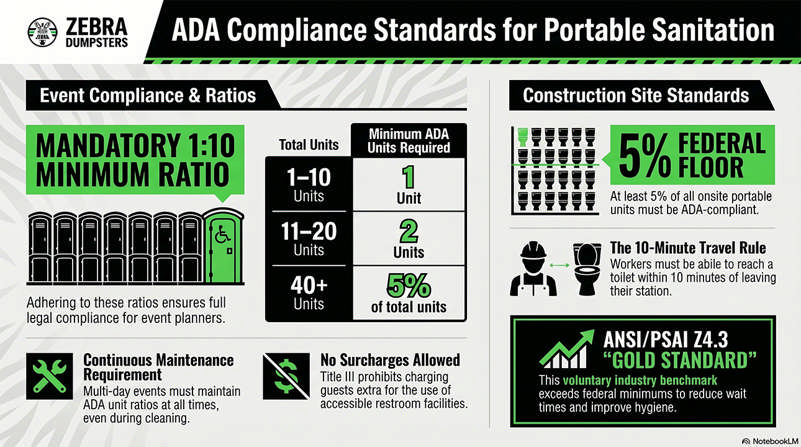
| Total Portable Toilets | Minimum ADA Units Required |
| 1–10 units | 1 ADA-compliant unit |
| 11–20 units | 2 ADA-compliant units |
| 21–30 units | 3 ADA-compliant units |
| 31–40 units | 4 ADA-compliant units |
| 40+ units | 5% of total (or minimum 4) |
Additional Considerations for Events:
- Public events must provide accessible units regardless of whether disabled attendance is expected.
- Private events open to the public (like weddings with invited guests only) may have different requirements, but providing accessibility is still best practice.
- Ticketed events cannot charge extra for accessible restroom access (Title III of the ADA prohibits surcharges).
- Toilet rental in San Jose projects should check local municipal codes, which may exceed federal minimums.
- Multi-day events must maintain ADA unit ratios continuously, even during service/cleaning windows.
Construction Site Requirements
Construction sites have distinct ADA requirements governed by Cal/OSHA regulations alongside ADA standards and the ANSI/PSAI Z4.3 voluntary industry benchmark.
Minimum Requirements (Cal/OSHA + ADA):
- 15 or fewer employees: 1 accessible unit
- 16+ employees: 1 unit per 20 workers (ANSI Z4.3 baseline of 1 per 10 if serviced once per week, or 1 per 15 if serviced more than once per week, applies to total unit count)
- Mixed-gender crews: accessible units must serve each gender's needs
- At least 5% of total units must be ADA-compliant (federal floor)
Placement Standards:
- Within 100 feet of worker areas where practical (OSHA preference)
- ANSI Z4.3 recommends placement within 200 feet of active work areas at minimum
- OSHA's 10-minute travel-time rule still applies: workers must be able to reach a toilet within 10 minutes of leaving their work station
- Accessible routes only (firm, stable surfaces with slopes under 5%)
- Away from storm drains, creeks, and water sources (a 2026 enforcement focus in the Bay Area due to watershed protection ordinances)
ANSI/PSAI Z4.3 Industry Standard
ANSI/PSAI Z4.3 is the voluntary portable sanitation industry standard that often goes beyond OSHA minimums. Many reputable rental companies, including Zebra Dumpsters, default to Z4.3 ratios because they reduce wait times, improve hygiene, and consistently exceed inspection thresholds. If your project documentation references "Z4.3 compliance," it generally means a higher unit count than the bare federal minimum.

*Proper placement of ADA-compliant portable toilet with accessible pathway*
Proper Placement and Installation Guidelines
Simply renting ADA-compliant portable toilets isn't enough; you must position them correctly to meet accessibility standards. Poor placement can render an otherwise compliant unit inaccessible and create liability issues, including ADA Title III lawsuits that have risen sharply in California since 2024.
Surface Requirements
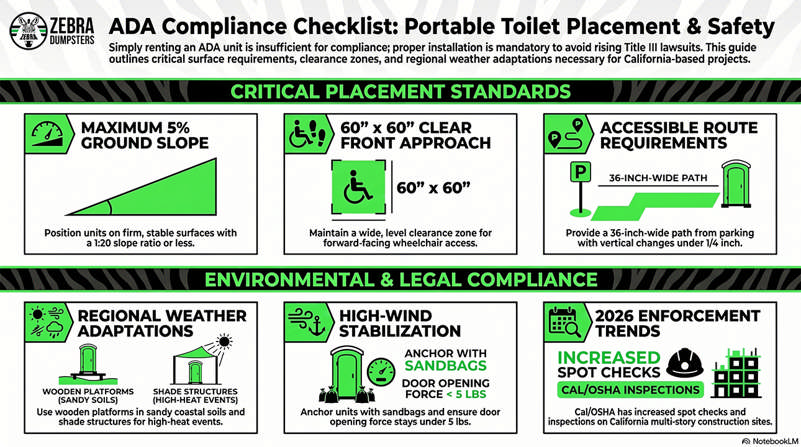
Position units on firm, stable surfaces with slopes under 5% (a 1:20 ratio, the same threshold used for ADA-compliant ramps and pedestrian paths).
- Acceptable: paved areas, compacted gravel, wooden platforms, decomposed granite with stabilizer
- Avoid: soft grass, loose gravel, sand, mud, or freshly tilled landscaping
- Bay Area note: Coastal sites with sandy soils (Half Moon Bay, San Mateo coastline) almost always require wooden platforms under ADA units.
Clearance Zones
Maintain adequate clearance around ADA units:
- Front approach: 60 inches wide × 60 inches deep (allows forward approach)
- Side approach: 48 inches wide × 60 inches deep minimum
- Door swing area: Clear space equal to door width (32+ inches) on the push side
- Adjacent space: Minimum 48 inches between multiple accessible units
- Accessible route: A 36-inch-wide path of travel from parking or main pedestrian area to the unit, with no abrupt vertical changes over 1/4 inch (or up to 1/2 inch if beveled)
Signage and Identification
Proper identification ensures users can locate accessible units easily:
- International Symbol of Accessibility (ISA) must be displayed on the door.
- Signs should be positioned 48–60 inches from the ground, measured to the centerline.
- Consider additional directional signage at large events with multiple restroom zones.
- Illuminated or reflective signs for nighttime visibility.
- Tactile (raised-character or Braille) signage is required where the ADA unit is the designated accessible unit for the venue.
Weather Considerations
California's climate varies significantly by region and season. Consider these weather adaptations:
Rain Protection:
- Position units away from drainage paths and natural runoff routes.
- Use tenting or canopies over accessible units for multi-day winter events.
- Ensure ramps remain slip-resistant when wet (look for diamond-tread or rubberized surfaces).
Heat Management:
- Shade structures for units at summer events (interior temps inside dark units can exceed 110°F in direct sun).
- Ventilation requirements increase in hot weather.
- Consider units with battery-powered ventilation fans.
Wind Protection:
- Secure units in high-wind areas (coastal and ridgeline sites in Daly City, Pacifica, and Skyline).
- Ensure door springs aren't set too strongly (a door requiring more than 5 lbs of opening force violates ADA, regardless of cause).
- Anchor with sandbags or stakes per the manufacturer's wind-load specs.

What's New in 2026: ADA Portable Toilet Placement Enforcement Trends
A few trends worth noting for any 2026 event or construction project:
- More ADA Title III lawsuits in California. Independent inspectors and "tester" plaintiffs are routinely visiting public events; missing or non-compliant ADA units are a common trigger.
- Cal/OSHA inspection cadence has increased on multi-story construction sites in San Francisco, Oakland, and the South Bay, including spot checks on portable sanitation.
- Watershed protection ordinances in Santa Clara, San Mateo, and Marin Counties now flag placements within 50 feet of storm drains.
- Battery and solar-vented ADA units are gaining adoption for long-running construction sites because they reduce odor complaints from neighbors.

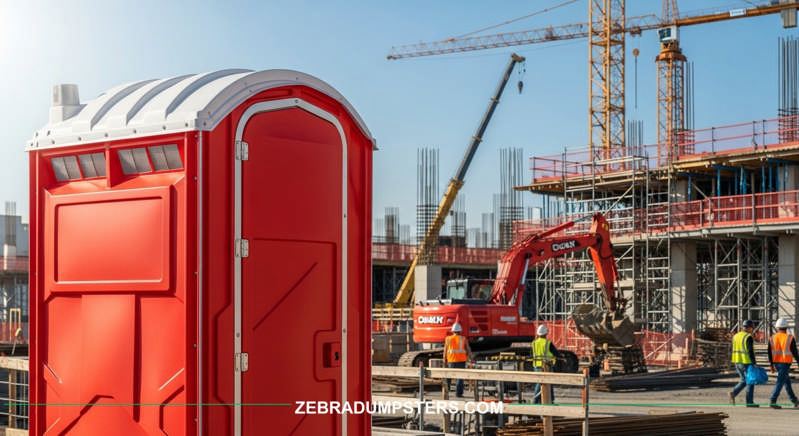
*ADA-compliant portable toilet at construction site meeting Cal/OSHA requirements*
How Many ADA Portable Toilets Do I Need? Quick Reference Table
A practical lookup table for the most common Bay Area scenarios:
| Event / Site Type | Total Attendees or Workers | Recommended ADA Units (Min) |
| Backyard wedding (private) | 50–100 guests | 1 (best practice; not always required) |
| Public outdoor wedding / reception | 100–200 guests | 1 |
| Small festival / community event | 250–500 attendees | 1–2 |
| Mid-sized festival | 500–1,500 attendees | 2–3 |
| Large festival or concert | 1,500–5,000 attendees | 3–6 |
| Major public event | 5,000+ attendees | 5% of total units (min 4) |
| Construction site, small crew | 1–15 workers | 1 |
| Construction site, medium | 16–40 workers | 2 |
| Construction site, large | 41–100 workers | 3–5 |
| Construction site, very large | 100+ workers | 5% of total (min 5) |
Always round up, and add one extra ADA unit if your event runs longer than 4 hours or your site operates multiple shifts.
ADA Portable Toilet Placement Checklist (Pre-Delivery)
Run through this checklist before delivery day:
- Confirm the surface is firm and level (under 5% slope, no loose grass or soft dirt).
- Measure clearances 60" front, 48" side, and 48" between adjacent ADA units.
- Plan the accessible route from parking, public sidewalk, or event entrance to the unit (36" wide minimum).
- Check signage placement and ISA visibility from main pathways.
- Verify lighting for any unit used at night.
- Position away from storm drains and natural drainage paths.
- Anchor for wind if the site is exposed.
- Confirm service access for the pump truck (firm route, 12-foot vertical clearance, no overhead wires).
- Brief site staff on ADA placement requirements so a well-meaning volunteer doesn't move the unit.
Document with photos for your compliance file (especially useful if a complaint is filed later).
Cost Considerations and Rental Tips
ADA-compliant portable toilets typically cost more than standard units due to their larger size, additional features, and specialized manufacturing. Understanding cost factors helps you budget appropriately while meeting compliance requirements.
2026 Pricing Factors
Base Rental Cost:
- Standard unit: $135–$185 per 4-week cycle in 2026 (up from $125–$155 in 2024, depending on cleaning frequency and handwash options).
- ADA unit: $245–$355 per 4-week cycle in 2026, with daily and weekly rates running roughly $240–$300/day and $295–$350/week for short rentals.
- ADA restroom trailers (upscale, climate controlled): $1,200–$3,500/day for premium event use.
Duration Impact:
- Short-term events (1–3 days): Premium rates apply
- Long-term construction (4+ weeks): Negotiated monthly rates available
- Multi-month projects (6+ months): Significant discounts possible, sometimes 25–35% off the standard 4-week cycle
Service Frequency:
- Weekly service included in base rate
- Twice-weekly service: +$30–$50 per service (up from $25–$40 in prior years)
- Daily service for high-traffic events: roughly +$95–$140 per visit
- Holiday and weekend service: surcharges of 15–25% apply across most Bay Area vendors
Geographic Variations:
- Toilet rental in San Jose and toilet rental in Hayward: Competitive urban pricing
- Rural and outlying locations like Gilroy or toilet rental in Half Moon Bay: May include delivery fees of $75–$185
- Coastal sites with sandy soil: Add $100–$250 for wooden platform setup

Money-Saving Strategies
Bundle with Standard Units:
- Renting 10+ units often qualifies for volume discounts.
- Package deals can reduce per-unit ADA costs by 15–25%.
- Bundling with dumpster rentals or handwash stations can unlock additional pricing.
Plan Ahead:
- Last-minute ADA unit rentals incur premium fees (often 20–40% over advance booking).
- Book 2+ weeks in advance for best rates.
- Off-peak seasons (November–February) offer discounts of up to 15%.
Consider Alternative Options:
- ADA-compliant restroom trailers offer an upscale experience for weddings and corporate events.
- Combination units (split standard/accessible) save space at tight construction sites.
- Long-term construction: Some firms purchase ADA units outright after 6+ months of continuous rental, often at a break-even point around month 9.
Hidden Costs to Watch For
A 2026 cost-control note: hidden line items are the biggest budget surprise for first-time renters. Ask any ADA portable toilet rental provider whether the quote includes:
- Delivery and pickup fees
- Damage waiver
- Holiday/weekend surcharges
- Pump-out cycles beyond the base rate
- Hand sanitizer and TP restock
- Platform or anchoring setup
California-Specific ADA Portable Toilet Regulations
California adds layers on top of federal ADA standards through the California Building Code (CBC), Title 24, and Cal/OSHA. Key California-specific rules:
- All portable toilets at public events must meet accessibility standards.
- San Jose, Berkeley, and San Francisco have stricter local ordinances; check city event permits for unit-count minimums that exceed federal ADA ratios.
- Cal/OSHA construction standards often exceed federal OSHA, especially around shift coverage and service frequency.
- Title 24 path-of-travel rules apply to permanent and temporary facilities alike when tied to a building permit (some long-term construction sites trigger this).
- AB 326 (Wage and Workplace Sanitation, 2024 update) sharpened expectations around documented service logs for construction sites, which most reputable rental companies now provide by default.
How to Avoid Common ADA Portable Toilet Mistakes
These are the mistakes we see again and again when reviewing events and construction sites:
- Renting standard units and adding "family" labels rather than booking certified ADA units
- Placing ADA units far from the main restroom cluster (a recipe for complaints and lawsuits)
- Skipping the accessible route from parking to the unit
- Using grass placement without a platform
- Forgetting overhead clearance for service truck access
- Not budgeting for holiday/weekend service surcharges
- Trusting verbal compliance claims rather than written certifications
- Placing the ISA sign too low or hidden behind another unit
- Allowing a unit's door to fall out of adjustment so opening force exceeds 5 lbs
- Letting attendees use the ADA unit as a "VIP" or "family" unit, restricting access
Frequently Asked Questions
How many ADA portable toilets do I need for my event?
The ADA requires minimum ratios based on total unit count. For events with 1–10 portable toilets, you need at least 1 ADA-compliant unit. Events with 11–20 units require 2 accessible units, and the requirement scales up from there. For construction sites, provide 1 accessible unit for every 20 employees, with at least 5% of total units being ADA-compliant. Always round up and consider that California municipalities may have stricter local requirements.
What makes a portable toilet ADA-compliant?
ADA-compliant portable toilets must feature a minimum 60-inch interior diameter for wheelchair turning, ground-level entry without steps, grab bars supporting 250+ pounds, doors at least 32 inches wide with lever handles, toilet seats 17–19 inches high, and accessible accessories like toilet paper dispensers positioned within reach. The unit must also display the International Symbol of Accessibility and meet a 5-pound maximum operating force on the door and latch.
Do I need ADA portable toilets for a private event?
For truly private events with invited guests only, ADA requirements may not technically apply. However, if your event is open to the public (even with tickets or registration), ADA compliance is mandatory. When in doubt, providing accessible facilities demonstrates inclusivity and protects against liability. Many venues in toilet rental in the Bay Area now require ADA units regardless of event type because of insurance and licensing conditions.
How much more do ADA portable toilets cost to rent?
ADA-compliant portable toilets in the Bay Area typically rent for $245–$355 per 4-week cycle, with short-term daily rates of $240–$300/day and weekly rates of $295–$350/week. Standard units rent for $135–$185 per 4-week cycle by comparison. ADA restroom trailers for upscale events run $1,200–$3,500 per day. Volume discounts, long-term construction rates, and package deals can significantly reduce per-unit costs. Contact Zebra Dumpsters for an exact quote based on your project size, location, and service frequency.
What are California's specific ADA portable toilet requirements?
California follows federal ADA standards but adds requirements through the California Building Code (CBC), Title 24, and Cal/OSHA. The state requires all portable toilets at public events to meet accessibility standards, and some municipalities like San Jose and Berkeley have stricter local ordinances. Construction sites must comply with Cal/OSHA regulations, which often exceed federal OSHA standards on service frequency and worker access. Always check local permit requirements when planning events or projects.
Can ADA portable toilets be used on uneven ground?
ADA units require firm, stable surfaces without slopes exceeding 5% (1:20 ratio). While they can be placed on compacted gravel, pavers, or wooden platforms, soft grass, loose gravel, or muddy terrain violates accessibility standards. Professional rental companies can provide wooden platforms or recommend suitable placement locations to ensure compliance while addressing site challenges.
What is ANSI/PSAI Z4.3 and does it matter for my event?
ANSI/PSAI Z4.3 is the portable sanitation industry's voluntary standard. It usually exceeds OSHA minimums (for example, 1 toilet per 10 workers serviced weekly, or 1 per 15 if serviced more often). Many California events and construction projects reference Z4.3 in their planning documents because it produces a more comfortable user experience and a safer compliance margin against ADA and Cal/OSHA inspections.
How far apart should ADA portable toilets be placed at large events?
At large events, distribute ADA units across the venue so a wheelchair user never has to travel more than 200 feet to reach one. Cluster a minimum of one ADA unit with each group of standard units rather than concentrating all accessible units in a single location.
Are ADA portable toilets required at one-day construction projects?
Yes. Cal/OSHA and ADA standards apply from the first day of work. Even one-day demolition or pre-construction jobs require at least one ADA-compliant unit if any worker may need accessible accommodation, and most reputable contractors include them by default to avoid same-day fines or stop-work orders.
What happens if my event doesn't have enough ADA units?
You could face ADA Title III lawsuits (which have been rising in California since 2024), city event permit revocation, complaints filed with the Department of Justice, and reputational damage on social media and review sites. Most cases settle for $4,000–$10,000 per violation plus attorney's fees, and repeat violations escalate quickly.
Ready to rent ADA-compliant portable toilets for your next event or project? Contact Zebra Dumpsters for competitive rates on toilet rentals, expert guidance on quantity requirements, and reliable delivery throughout the Bay Area. We serve toilet rental in San Jose, toilet rental in Hayward, toilet rental in Burlingame, and surrounding communities with accessible, well-maintained portable toilet solutions backed by 2026-compliant service documentation.