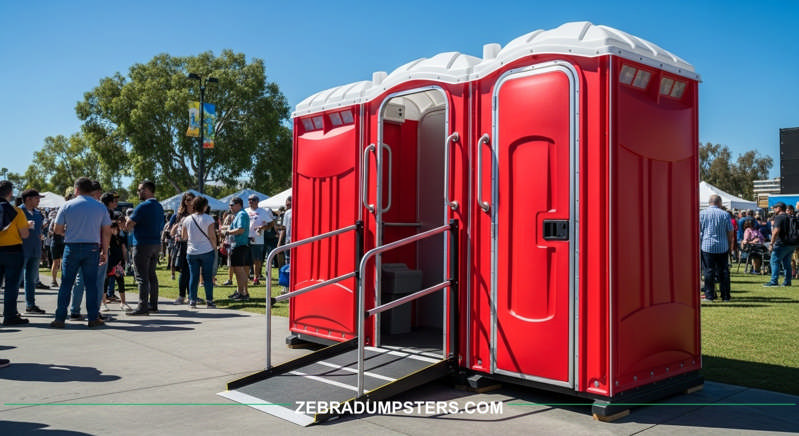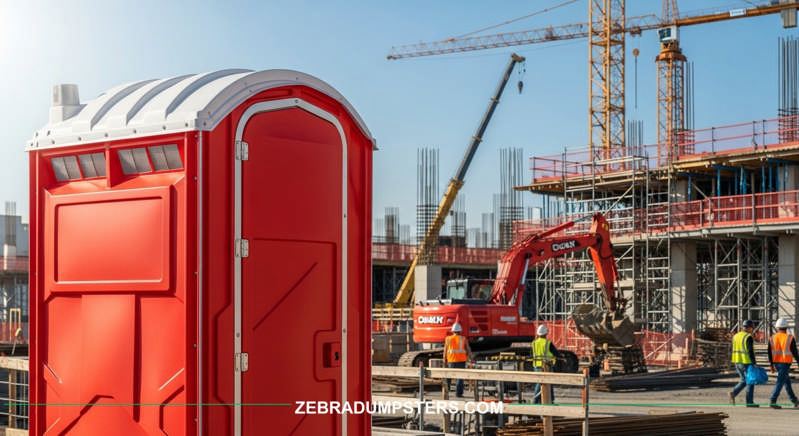
Running a construction site in California means juggling dozens of compliance requirements and portable toilet provision is one that can cost you thousands in fines if overlooked. The Occupational Safety and Health Administration (OSHA) establishes clear standards for sanitation facilities on job sites, but many contractors struggle with the math: How many units do you actually need, and where should they go?
This guide provides a definitive calculator for construction site portable toilets, breaks down federal and California-specific OSHA requirements, and shares best practices from experienced Bay Area contractors. Whether you're managing a small residential remodel requiring porta potty rental in San Jose or a multi-trade commercial job needing toilet rental in Santa Clara, this covers what you need to stay compliant.
Listen to this article
--:-- · narrated
How Many Portable Toilets Does Your Construction Site Need?
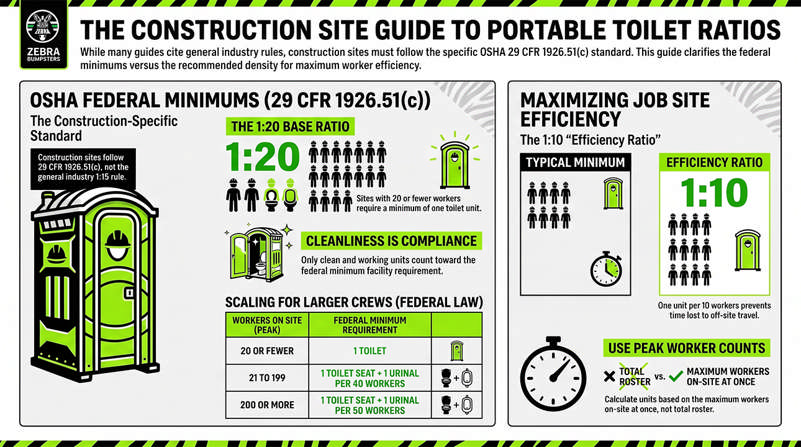
Here's the catch most guides miss: OSHA has two different toilet tables, and the one that floats around the internet (1 unit per 15 workers, 2 units for 16-35, and so on) is the general-industry rule for fixed workplaces, 29 CFR 1910.141. Construction sites run on a different standard, 29 CFR 1926.51(c), and the numbers are not close.
The Real Construction Ratio: One Toilet Per 20 Workers
| Workers on site (peak) | Federal minimum under 29 CFR 1926.51(c) |
| 20 or fewer | 1 toilet |
| 21 to 199 | 1 toilet seat + 1 urinal per 40 workers |
| 200 or more | 1 toilet seat + 1 urinal per 50 workers |
Use this quick lookup as your calculator. The right column follows the 1-per-10 density most Bay Area GCs order at.
| Peak crew | Federal minimum | What we'd actually send |
| 10 or fewer | 1 toilet | 1 unit, 2 if shifts overlap |
| 25 | 1 seat + 1 urinal | 3 units |
| 50 | 2 seats + 2 urinals | 5 units |
| 100 | 3 seats + 3 urinals | 10 units |
| 200 | 4 seats + 4 urinals | 20 units |
Two counting rules trip people up. First, the count is the most workers on site at any one time, not your total project roster. Second, a unit only counts toward the minimum if it's clean and working. An overflowing porta potty is a citation, not a facility.
In our experience, the federal minimum is too thin for real job sites anyway. One unit per 10 workers is the ratio that keeps trades from walking to the coffee shop, and most Bay Area GCs we deliver for order at that density.
California's Rule Is Stricter Than Federal OSHA
Cal/OSHA doesn't copy the federal schedule. Title 8 Section 1526 requires one toilet for every 20 employees or fraction thereof OF EACH SEX. A crew of 20 men and 5 women needs two units minimum, one designated per sex. Two exceptions matter: crews under 5 can share one lockable all-gender unit, and mobile crews with transportation to nearby facilities are exempt entirely. Units must assure privacy and stay stocked with toilet paper.
Need the units themselves rather than the rulebook? Our construction site toilet rentals in the Bay Area page lists every configuration with flat pricing, weekly cleaning from $145 per 28 days, and same-day delivery for sites that got flagged this morning.
OSHA Requirements for Construction Site Toilets
Federal OSHA regulations under 29 CFR 1926.51 establish baseline sanitation standards. Knowing what the standard actually says, versus what gets repeated online, is what keeps you out of citation territory.
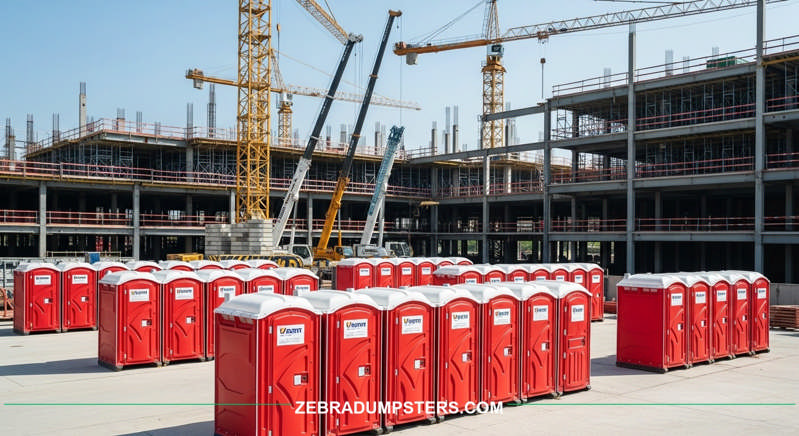
*Multiple portable toilets strategically placed for worker access at large construction site*
Placement and Accessibility Standards
What surprises most people is that the regulation sets no fixed distance. The "within 100 feet" and "within 200 feet" rules quoted around the internet aren't in the standard. What OSHA actually requires is ready access: workers must be able to reach a unit without leaving the site or crossing active traffic, and mobile crews are only exempt when transportation puts a facility within about 10 minutes. The same access test applies whatever form your construction site restrooms take, whether that's porta potties, a restroom trailer, or fixed job site bathrooms inside an existing building.
Units must sit on stable, level ground to prevent tipping, pathways must stay clear and unobstructed, and night lighting is needed for evening shift work.
Maintenance Standards
Federal OSHA doesn't fix a service interval either. The enforceable standard is that units stay sanitary, stocked, and working, and hand-washing or hand-sanitizer provisions are present. Weekly service is the industry baseline that keeps a normal crew's unit inside that standard, and high-traffic sites need 2-3 visits per week. Replace any unusable unit immediately, because it stops counting toward your minimum the moment it fails.
Documentation and Compliance
Keep service logs showing date and scope of cleaning, waste disposal records from licensed haulers, and daily inspection checklists. The most common citations are inadequate unit counts, unsanitary conditions, missing hand-washing provisions, and mixed-sex crews without the per-sex units §1526 requires.
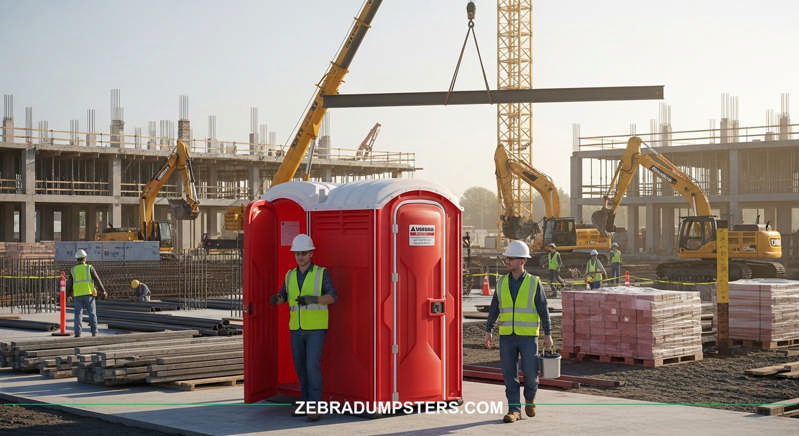
*Construction workers accessing OSHA-compliant sanitation facilities*
Best Practices for Construction Site Sanitation
Meeting the minimum keeps the inspector away. These habits are what keep the crew on site.
Strategic Placement Guidelines
Position units near break areas, and place separate clusters on multi-level projects (every 3-4 floors on high-rises). Ensure pump-truck access within about 20 feet of parking, and keep units out of active work zones where concrete dust and equipment traffic reach them. In the rainy season a canopy keeps doors and floors usable, and night shifts need lighting plus 24/7 access.
Service Scheduling and Logistics
Small sites with 1-2 units run fine on weekly service. Medium sites should book twice weekly, and large or high-traffic sites need 2-3 visits per week. Call for emergency service when a unit approaches 75% capacity, supplies drop below a quarter, or workers start complaining about odor. Waiting for the scheduled visit is how sites fail inspections.
Cost Considerations for Construction Sites
Budgeting for construction site restrooms means understanding both the base rental cost and the quieter cost of getting sanitation wrong.
Rental Cost Breakdown
Standard portable toilets (per 4-week / 28-day cycle):
- Biweekly cleaning, no handwash: $125
- Biweekly cleaning, with handwash: $135
- Weekly cleaning, no handwash: $145
- Weekly cleaning, with handwash: $155
- Mobile hand wash station (weekly cleaning): $140
Delivery is a one-time $80 flat fee covering both drop-off and pickup, with cleaning, toilet paper, and seat covers included in the cycle price. Need a unit today? Same-day delivery is available for a $100 expedited fee. Prices subject to change. Verify current rates at zebradumpsters.com/weight-limits-and-fees.
Contact Zebra Dumpsters at (408) 495-3006 for porta potty rental in Campbell or other South Bay locations for ADA-accessible unit pricing and availability.
The Cost of Non-Compliance
| Violation type | 2026 maximum penalty |
| Federal OSHA serious / other-than-serious | $16,550 per violation |
| Federal OSHA willful or repeated | $165,514 per violation |
| Federal OSHA failure to abate | $16,550 per day past the abatement date |
| Cal/OSHA serious | Up to $25,000 per violation |
On a California site you're dealing with Cal/OSHA enforcement, and sanitation is an easy checklist item for an inspector who showed up about something else. The math never favors cutting units: a year of one extra weekly-service toilet costs about $1,885, roughly a tenth of a single serious citation.
The productivity cost is quieter but real. Workers leaving the site for facilities burn 15 to 30 minutes per trip, and undersupplied sites feel it in morale and turnover first.
Frequently Asked Questions
How many porta potties per worker does OSHA require on construction sites?
Under 29 CFR 1926.51(c), construction sites need 1 toilet for 20 or fewer workers. From 21 to 199 workers, the requirement is 1 toilet seat and 1 urinal per 40 workers. At 200 and up, it's 1 of each per 50 workers. Count the most workers on site at any one time. In California, Title 8 §1526 layers on a per-sex requirement: one toilet per 20 employees of each sex.
How many portable toilets do I need for 25 construction workers?
Federally, a 25-person crew lands in the 21-199 band: 1 toilet seat plus 1 urinal. In California, if the crew includes both men and women you need at least one unit designated for each sex under Title 8 §1526. Best practice for a crew of 25 spread across a large site is 3 units, which keeps walk time down and covers a unit being out of service.
What are OSHA's minimum requirements for construction site toilets?
The construction standard requires the 1-per-20 / per-40 / per-50 ratio schedule, ready access for workers, units kept sanitary and in working order, adequate privacy, toilet paper, and hand-washing or sanitizing provisions. Mobile crews are exempt only when transportation to a nearby facility is immediately available. California adds the per-sex ratio and the under-5-crew all-gender exception.
Can portable toilets be placed on uneven ground?
Portable toilets must be on stable, level surfaces to prevent tipping. Soft ground, mud, or a visible slope will fail a site inspection even though no numeric slope limit appears in the standard. Most rental companies provide wooden platforms or blocks for uneven terrain.
How often should construction site toilets be serviced?
Neither federal OSHA nor Cal/OSHA fixes a numeric interval for construction sites. The enforceable rule is that units stay clean, stocked, and working at all times. Weekly service is the industry baseline, active sites do better at 2-3 visits per week, and a unit that stops being sanitary between visits stops counting toward your required minimum.
Do I need separate toilets for male and female workers?
In California, yes on most crews: Title 8 §1526 requires one toilet per 20 employees of each sex. The exceptions are crews under 5, where one lockable all-gender single-user unit is sufficient. Undersupplied mixed crews are one of the most common sanitation citations in California.