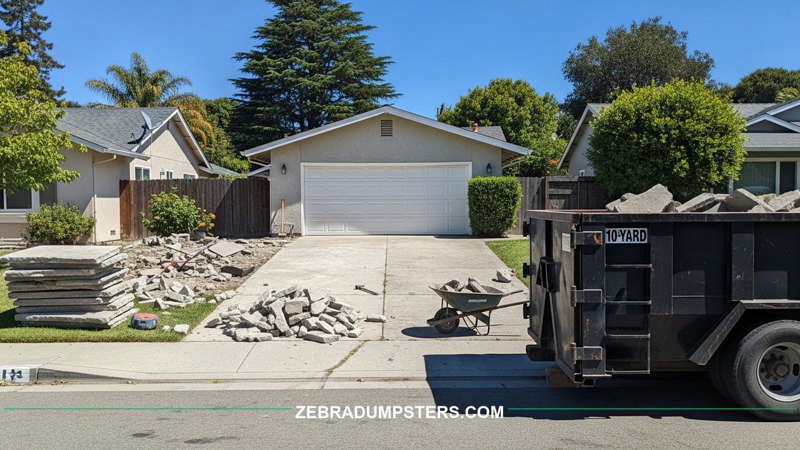
Old asphalt is one of the densest materials a Bay Area homeowner deals with. A 4-inch-thick asphalt driveway runs about 70 pounds per square foot meaning a 500 sq ft driveway demo produces 17.5 tons of debris in a footprint that looks deceptively small. Sizing the dumpster by volume instead of weight is the most common mistake, and it always ends in overage charges.
This guide covers Bay Area asphalt removal: the demo sequence for driveways and parking pads, the inert-dumpster sizing math (asphalt is heavy-material category different routing from general debris), the recycling channel for clean asphalt millings, and the realistic cost of DIY versus hiring out. Numbers calibrated for typical Bay Area residential driveway projects.
Listen to this article
--:-- · narrated
Asphalt Volume and Weight Math
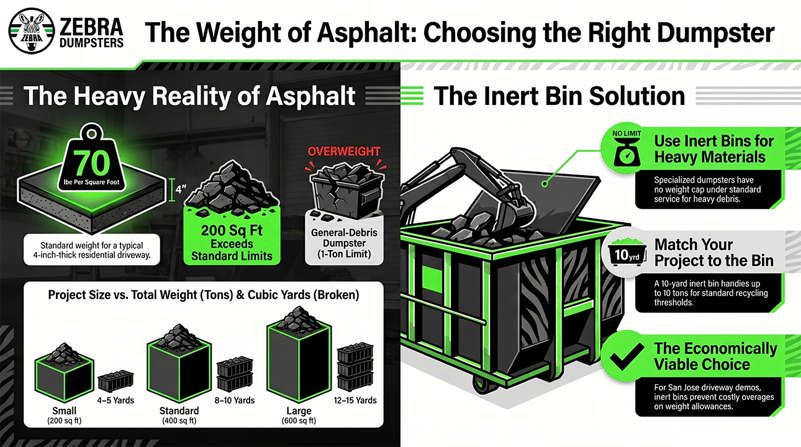
Asphalt is heavy. The density math:
- 4-inch-thick driveway asphalt: ~70 lbs per square foot, 4,000 lbs per cubic yard
- 2-inch-thick overlay: ~35 lbs per square foot, when removed separately from base
- 6-inch-thick commercial pavement: ~100 lbs per square foot
Typical Bay Area residential project math:
- Small driveway (200 sq ft): 14,000 lbs (7 tons), 4 to 5 cubic yards once broken
- Standard driveway (400 sq ft): 28,000 lbs (14 tons), 8 to 10 cubic yards
- Large driveway or RV pad (700 sq ft): 49,000 lbs (24 tons), 14 to 17 cubic yards
- Two-vehicle driveway + walkway: 600 sq ft, 21 tons, 12 to 15 cubic yards
The weight is what drives bin selection. A standard 10-yard general-debris dumpster has a 1.0-ton allowance exceeded by even the smallest 200 sq ft project. Asphalt routes through INERT (heavy-material) dumpsters, which have no weight cap under standard service. The 5-yard inert handles up to 5 tons; the 10-yard inert handles up to 10 tons before special-recycling thresholds kick in.
For homeowners booking dumpster rental in San Jose for a standard driveway demo, the inert bin is the only economically viable choice.
Right Inert Dumpster Size for the Project
| Project | Square Feet | Weight | Bin | Cost |
| Walkway or small pad | under 150 sq ft | under 5 tons | 5-yard inert | $495 |
| Small driveway | 150-300 sq ft | 5-10 tons | 10-yard inert | $550 |
| Standard driveway | 300-500 sq ft | 10-17 tons | 10-yard inert + swap OR two 10-yards | $1,100-$1,250 |
| Large driveway or pad | 500-700 sq ft | 17-24 tons | Two 10-yard inert bins | $1,100-$1,400 |
The 10-yard inert dumpster is the working unit for residential asphalt removal. Two key advantages over general-debris bins: no weight cap on standard service (asphalt is inert material), and per-ton overage above the 5-ton special-recycling threshold is only $95/ton in San Jose versus $150/ton for general debris.
For larger driveways (over 500 sq ft), the swap strategy beats a single oversized bin every time. A 10-yard inert at $550 base handles 10 tons; a second 10-yard inert swap (typically $550-$700 including the dispatch) gives you 20 tons of capacity for under $1,250. Compare to trying to fit it all in a single 10-yard with 10+ ton overage that's $1,500+.
For homes in dumpster rental in Santa Clara and other Peninsula cities, the swap typically happens mid-project once the first bin hits the 5-ton threshold.
Demolition Sequence That Actually Works
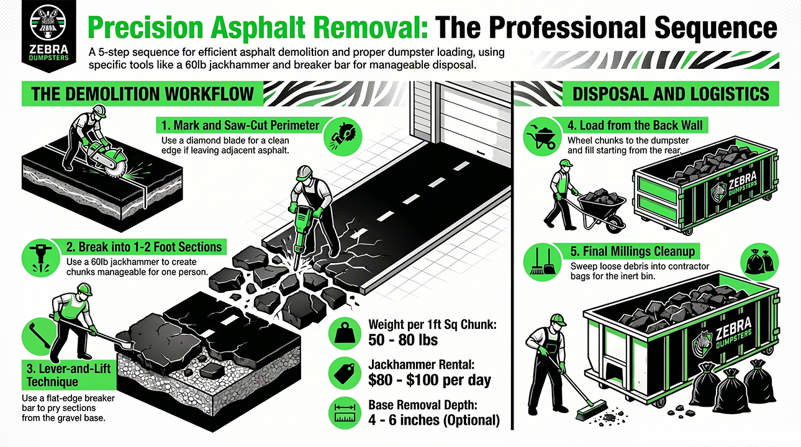
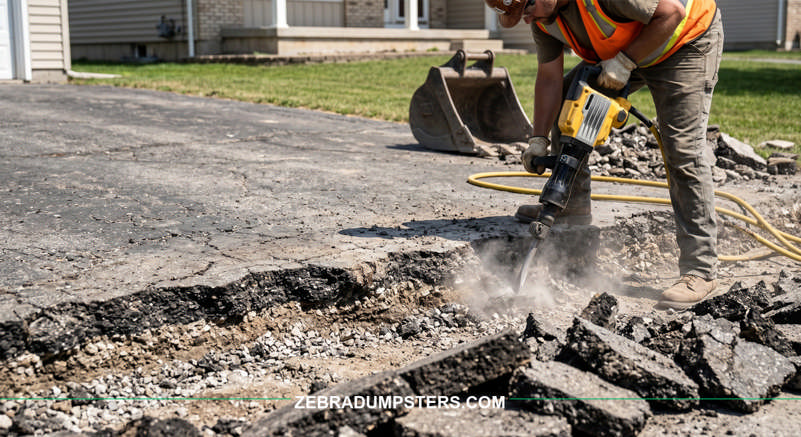
Asphalt demo runs on three tools: a jackhammer, a flat-edge breaker bar, and a wheelbarrow. The sequence matters because broken asphalt is unstable to walk on.
Step 1: Mark and saw-cut perimeter (if leaving adjacent asphalt). If part of the driveway is staying, use a concrete saw with a diamond blade to cut a clean perimeter line first. Saves clean edges for the patch later.
Step 2: Break perimeter into 1-2 foot sections. Use a rented electric jackhammer (60-pound class). Start at the cleanest edge and work toward the center, breaking asphalt into chunks small enough to lift 1 to 2 feet square. Heavier chunks won't fit in the dumpster opening cleanly.
Step 3: Lever-and-lift in 6-foot rows. Once perimeter is broken, use a flat-edge breaker bar to pry up sections. Asphalt over a compacted gravel base often releases in larger sheets break those further before loading.
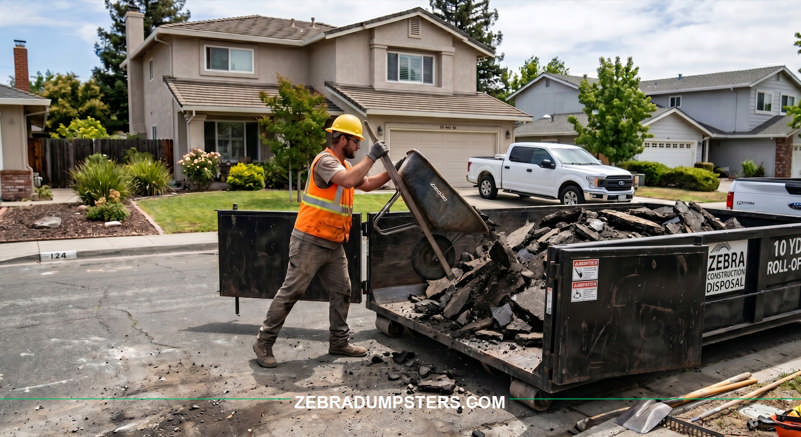
Step 4: Wheel chunks to the dumpster. Single 1-foot square asphalt chunks weigh 50-80 lbs manageable for one person with a wheelbarrow. Load the inert bin starting from the back wall.
Step 5: Remove the gravel base (optional). Many Bay Area driveway projects also remove the 4-6 inch gravel base under the asphalt. Gravel goes in the same inert bin no problem mixing with asphalt chunks.
Step 6: Final cleanup of dust and small debris. Sweep up loose asphalt millings into a contractor bag. These can go in the inert bin as long as they're not soaked with oil or other contaminants.
For projects in dumpster rental in Oakland and other East Bay cities, a 60-pound jackhammer rental runs $80-$100 per day at most home centers.
Recycling Channel for Clean Asphalt
Asphalt is one of the most-recycled construction materials in California. Bay Area asphalt recycling facilities (Vulcan Materials, Granite Rock, Reed & Graham) process millings and chunks into new asphalt mix or as base aggregate for new road projects.
What qualifies for recycling routing: Clean asphalt chunks and millings, no oil contamination, no garbage mixed in, no rebar or large metal pieces, no concrete mixed in. Most residential driveway demo qualifies if you keep the load clean.
What disqualifies: Oil-soaked asphalt (common around old vehicle drip zones), asphalt mixed with garbage or general debris, asphalt with sealcoat heavily applied (the sealcoat layer is technically a different material). Mixed loads route to standard landfill at higher per-ton fees.
Practical impact: The dumpster company handles routing automatically you don't drive the load to the facility. Just keep the bin contents pure asphalt (and optionally gravel base). The savings show up in the lower per-ton rate at inert dumpsters versus the per-ton rate at general debris.
The detail on inert routing is in the concrete disposal guide same routing logic applies to asphalt.
Bay Area Pricing and DIY vs Hire
The 10-yard inert base rental in the Bay Area runs $550 flat rate for inert material, no weight cap on standard service. Two-bin swap typically $1,100-$1,250 total.
Worked example. 400 sq ft standard driveway demo in San Jose. DIY:
- Two 10-yard inert dumpsters (sequential swap): $1,100
- Jackhammer rental: $100/day × 2 days = $200
- Diamond blade for perimeter saw cut: $40
- PPE (safety glasses, ear protection, gloves, dust mask): $30
- Wheelbarrow rental or borrowed: $0-$40
- Time: 2-3 full weekend days for one person
- DIY total: $1,370-$1,410.
Hiring a driveway demo contractor in the Bay Area runs $2,500 to $5,000 for the same 400 sq ft project most quotes include hauling. DIY saves $1,100 to $3,600 at the cost of one to two weekends of physical work plus equipment rental coordination.
Standard fees: same-day delivery $100 outside San Jose/Campbell, dead-run $250 in South Bay/East Bay, extra rental days $45/day. Prices subject to change. Verify current rates at zebradumpsters.com/weight-limits-and-fees.
Zebra Dumpsters services the South Bay, East Bay, and Peninsula corridor. Call (408) 495-3006 to discuss multi-bin scheduling for a driveway demo project.
Frequently Asked Questions
What size dumpster do I need for asphalt removal?
Use inert (heavy-material) dumpsters for asphalt, never general-debris bins. A 5-yard inert handles up to 5 tons (about 150 sq ft of 4-inch driveway). A 10-yard inert handles up to 10 tons (about 300 sq ft). Larger driveways (over 300 sq ft) need a 10-yard inert with a swap or two 10-yards back-to-back.
Can asphalt go in a regular general-debris dumpster?
Technically yes, but the math never works. A 200 sq ft driveway produces 7 tons far exceeding any general-debris bin's allowance. Per-ton overage at $150 would add $900+ on a 10-yard general. Inert dumpsters have no weight cap on standard service and route the material to recycling always the right choice.
How much does asphalt removal cost in the Bay Area?
DIY removal of a 400 sq ft standard driveway costs about $1,370 to $1,410 (two 10-yard inert bins + jackhammer rental + PPE). Hiring a contractor runs $2,500 to $5,000 for the same scope. DIY saves $1,100 to $3,600 at the cost of two to three weekend days.
Is asphalt recyclable in the Bay Area?
Yes. Bay Area asphalt recyclers (Vulcan Materials, Granite Rock, Reed & Graham) process clean asphalt into base aggregate or new mix. Clean loads (no garbage, no concrete mixed in, no oil contamination) automatically route to recycling via the inert dumpster. The dumpster company handles the routing you just keep the bin contents clean.
How long does asphalt removal take?
200 sq ft small driveway: 1 weekend day for two people. 400 sq ft standard: 2-3 weekend days for one person or 1 long day for two. The slowest part is breaking the perimeter into manageable chunks with the jackhammer.