Brick is the friendliest of the heavy demolition materials. It is dense enough to be a real disposal challenge but light enough that one person can carry a respectable load in a wheelbarrow. It recycles well. It often has reuse value. And unlike concrete broken brick from a residential demolition tends to stay clean, with most loads passing inert-recycling acceptance criteria without negotiation.
This guide walks through the realistic options for brick disposal in the Bay Area: dumpster rental sizing, direct recycling drop-off, salvage and reuse for usable bricks, and the cost math that decides which path fits your project. Plus the surprises that turn an easy disposal job into a billing dispute.
Listen to this article
--:-- · narrated
Brick Volumes and Why They Matter
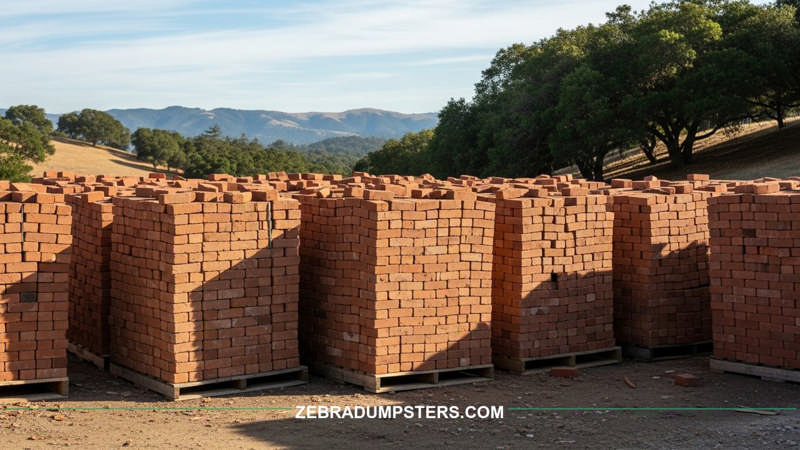 Cleaned, palletized salvaged brick — ready for resale or reuse.
A typical residential chimney teardown produces 1.5 to 2.5 tons of brick. A 30-foot backyard wall produces 3 to 5 tons. A 200 sq ft brick patio runs 2 to 3 tons. These numbers matter because brick weighs less per cubic yard than concrete (~3,000 lbs/yd vs concrete's 4,000) but almost always disqualifies a small dumpster on volume rather than weight.
The math: a single brick weighs 4 to 5 pounds. A standard pallet holds 500 bricks at ~2,500 lbs. A 5-yard inert holds 6 to 8 pallets of stacked brick, or 12 to 15 pallets of broken brick (broken pieces pack tighter).
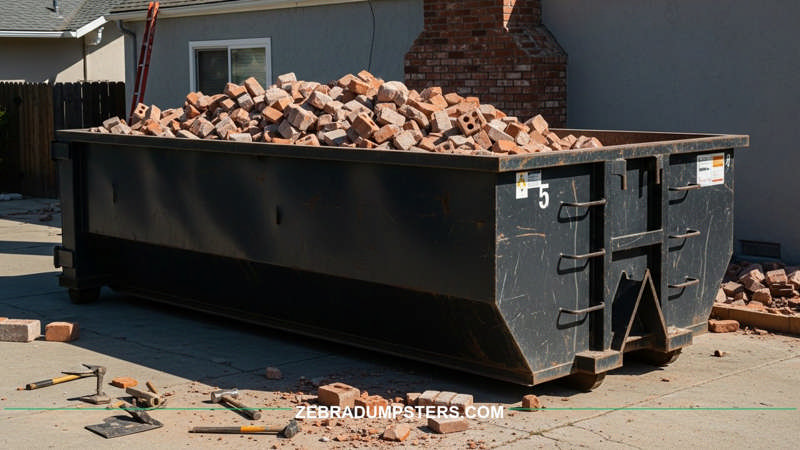
For homeowners booking dumpster rental in San Jose for chimney teardowns, the 5-yard inert is the standard call. It holds 1.5 to 2.5 tons comfortably and has no weight cap under standard service. Same bin works for most patio teardowns and small wall demolitions.
Disposal Options Ranked by Project Size
The right channel depends on volume and your willingness to do the moving yourself. Four realistic paths, smallest to largest.
- Under 500 pounds bag it and trash it. Most Bay Area municipal services accept small amounts of brick in curbside pickup, usually with a 50-lb per-bag limit. Works for a few broken pavers, not for meaningful volume.
- 500 lbs to 1.5 tons DIY drop-off at a recycling facility. Several Bay Area inert recyclers accept brick at free to $30 per pickup-truck load for clean material. If you're wondering where you can actually dump bricks in the South Bay, GreenWaste Zanker Road (675 Los Esteros Rd, San Jose, open Mon-Sat, 408-263-2384) takes clean brick as inert material. Call ahead, some facilities require commercial accounts.
- 1.5 to 6 tons 5-yard inert dumpster rental. The sweet spot for most residential brick demolition. A 5-yard inert (15' x 5.7' x 2.3') has no included weight cap under standard service. Bin lands in your driveway, you load over a few days, truck picks up. Covers ~80% of Bay Area brick projects.
- 6 tons and up 10-yard inert, or staged 5-yards. Larger walls and commercial demolitions push past the 5-yard. The 10-yard inert handles up to 12 tons of mixed brick and concrete with the same no-weight-cap rule.
Getting Rid of Bricks for Free
Whole, clean brick is one of the few demolition materials people will haul away for you. The fastest way to get rid of old bricks for free is a pile at the end of the driveway with a FREE sign, which in most Bay Area neighborhoods disappears in a weekend. The Craigslist free section, Facebook Marketplace, Nextdoor, and Buy Nothing groups all move brick fast because landscapers and DIY patio builders are always hunting for it. Palletized brick in good condition can also go to a Habitat for Humanity ReStore as a donation. The catch is condition: these channels only work for whole bricks. Broken, mortar-crusted material still needs the recycling or dumpster path below.
Brick Recycling vs. Salvage vs. Disposal
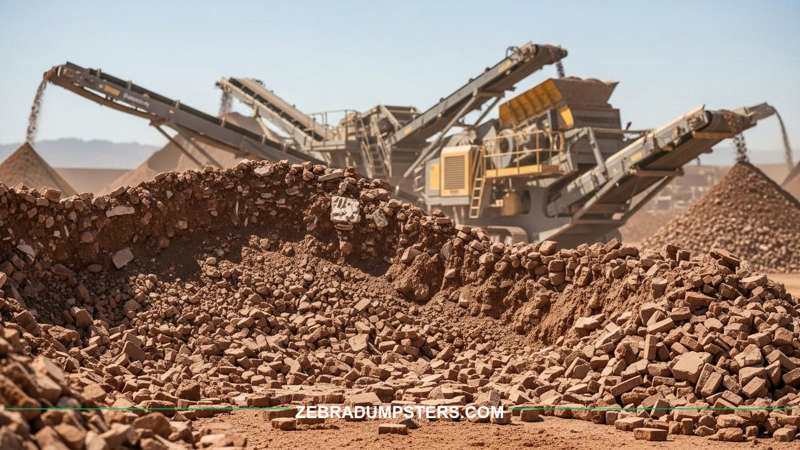 Broken brick at a recycling facility, headed for crushing into reusable aggregate.
Brick has more options than concrete because more of it is reusable. Three paths the broken-down brick can take, each with different economics.
| Path | Best For | Effort | Net Cost / Value |
| Disposal (recycling facility) | Broken, mortar-coated, mixed-condition | Low | $0 to ~$50/ton tipping |
| Salvage for sale | Whole, clean, antique or character brick | High | $0.50-$3 per brick |
| Salvage for reuse on-site | Whole, clean brick for a new project | Medium | Saves $0.40+ per brick |
Salvage works best for older brick. Modern (post-1980) commodity brick is cheap to buy new ($0.40 to $0.80 per brick), so cleaning mortar off used commodity brick rarely makes economic sense. Pre-1960 brick especially handmade or character brick sells for $1.50 to $5 per brick to renovators who need matching material.
The split-the-difference approach: separate whole bricks for salvage during demolition (two minutes of extra effort per brick), let the broken pieces go into the dumpster. A typical chimney teardown might yield 200 to 400 reusable bricks plus 1.5 tons of broken material. Selling 300 bricks at $2 each pays for the dumpster.
Cost Math for Bay Area Brick Disposal
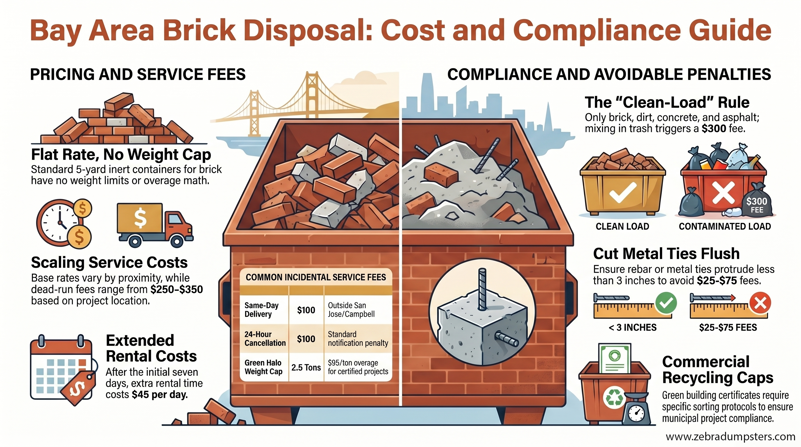
The 5-yard inert starts at $505 in San Jose and Campbell and climbs to $775 in the outer East Bay, with the 10-yard from $560. Check your own city rather than working from a Bay Area average. The no-weight-cap rule makes brick pricing simpler than general renovation: no overage math, one flat rental rate whether the load is half a ton or six.
Fees that do scale with complexity:
- Same-day delivery: $100 outside San Jose and Campbell.
- Dead-run fee: $250 in South Bay/East Bay, $350 north of Millbrae or Oakland.
- 24-hour cancellation: $100.
- Extra rental days beyond seven: $45 each.
- Special-recycling certificates (Green Halo for some commercial projects): caps weight at 2.5 tons (5-yard) before $150/ton overage in San Jose.
The clean-load rule applies. Inert dumpsters are for concrete, dirt, brick, and asphalt only. Mixing in mortar bags, plastic edging, or wood scraps reclassifies the load $300 cleaning fee plus general-debris weight pricing. Crews on construction dumpster rental in Santa Clara universally keep a separate trash bag on site.
One brick-specific surprise: rebar and metal ties. Older brick walls and chimneys often have galvanized ties or threaded rod connecting courses. If those protrude more than three inches after demolition, the facility can reject the load or reclassify it as general debris, which brings a $300 cleaning fee plus general-debris weight pricing. Cut metal flush during demolition.
How to Book and What to Expect
Booking takes three minutes with three pieces of info: the delivery address (city sets pricing tier and same-day eligibility), the start date, and a rough volume estimate (chimney / patio / wall / mixed brick + concrete). If you're comparing this against a brick removal or pickup service, the dumpster IS the pickup service: the bin lands in your driveway, you load at your pace, and the truck hauls it away. Junk-removal crews charge upwards of $800 for a large brick load and do the loading for you, which is the only part you're really paying for.
Confirm placement. The 5-yard inert plus delivery truck needs ~19 feet of straight access, 6.5 feet of width, and 8 feet of overhead clearance. Move cars, leave gates unlocked, lay plywood on hot asphalt or fresh concrete. Standard rental covers seven days, brick demolitions typically take 2 to 4 work-days, and same-day pickup is free if you finish early.
Zebra Dumpsters services the South Bay, East Bay, and Peninsula corridor including same-day routing for heavy debris dumpster rental in Oakland. Call (408) 495-3006 to book or confirm whether your project qualifies for standard inert pricing or a special-recycling rate. Prices subject to change. Verify current rates at zebradumpsters.com/weight-limits-and-fees.
Brick is heavy, not expensive
A 5-yard inert handles a whole chimney teardown
Brick goes in a heavy-material bin at a flat rate with no weight cap on standard service, which is why a 5-yard beats a 20-yard general bin for the same pile. Check the price for your own address before you book.
Frequently Asked Questions
How much does a brick chimney weigh?
A typical residential chimney (single-flue, two-story) weighs 1.5 to 2.5 tons. The brick itself is 80 to 90% of that mass, with the rest in mortar, ties, and the chimney cap. A larger fireplace-and-chimney combination can weigh 4 to 6 tons. Plan dumpster size accordingly: 5-yard inert for a typical chimney teardown, 10-yard inert for fireplace-included demolitions.
How much does brick removal cost in the Bay Area?
The DIY-with-dumpster path runs $505 in San Jose up to $775 in the outer East Bay for a 5-yard inert, flat, with no weight cap on standard service. Junk-removal crews that load for you charge upwards of $800 for a large brick load. Hiring out the demolition itself adds labor on top: a two-person crew for the 1-2 days a chimney takes. The salvage offset is real money too. Selling 300 whole bricks at $2 each covers the entire dumpster cost.
Can I put brick in a regular trash dumpster?
A small amount (a few broken pieces under 50 pounds) is fine in a general-debris dumpster. A demolition stream is not the weight will trigger overage, and the per-ton rate ($150 to $200) makes general-debris disposal of brick meaningfully more expensive than inert disposal. For any project producing more than a couple hundred pounds of brick, use an inert dumpster.
What is the difference between an inert dumpster and a general-debris dumpster?
Inert dumpsters are sized for concrete, dirt, brick, and asphalt only. They have heavier-gauge steel, reinforced floors, and lift hardware rated for the weight. The trade-off is strict load purity, since anything other than the four listed materials triggers reclassification fees. General-debris dumpsters take wood, drywall, and household goods, but have included weight caps and per-ton overage charges. Pick by load type, not size.
Can I sell salvaged brick instead of throwing it away?
Yes, and many Bay Area homeowners do. Older brick (pre-1960) sells for $1.50 to $5 per brick on Craigslist, OfferUp, and Facebook Marketplace. Modern commodity brick rarely justifies the labor of cleaning mortar. Separate whole bricks for salvage during demolition and let broken pieces go into the dumpster. A typical teardown might net $400 to $800 in brick sales while the dumpster handles the rest.
How long does a brick teardown take?
A typical residential chimney teardown runs one to two days for a two-person crew. A 30-foot brick wall takes two to three days. A 200 sq ft brick patio runs one day. Times vary based on mortar age (older mortar is softer and breaks easier), brick condition, and access. The dumpster's seven-day rental window comfortably covers all of these.