Hardwood floor removal is one of those projects that looks straightforward on YouTube and turns into a multi-day battle in practice. The wood is heavier than you expect, the underlayment fights back, and the disposal channel for damaged hardwood is different from new wood scraps. Bay Area homes built between the 1920s and 1970s often have original hardwood that's been refinished a few times and is now too thin to refinish again, which makes removal the only practical path.
This guide covers the demolition sequence for Bay Area hardwood removal, the dumpster sizing math (it's weight-driven, not volume-driven), the disposal-channel question (landfill vs. reclaim wood vs. mulch), and the realistic cost of doing it yourself versus hiring out. Numbers assume typical Bay Area single-family room sizes (10x12 to 14x18 feet).
Listen to this article
--:-- · narrated
Hardwood Removal Volume and Weight Math
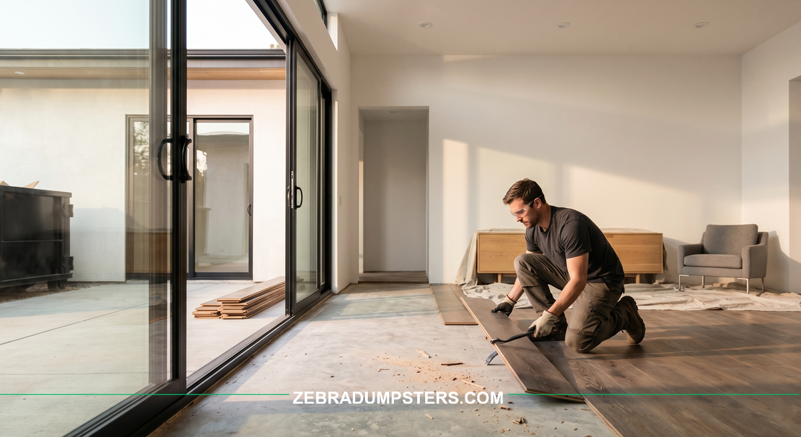
Hardwood debris is dense. A square foot of 3/4-inch solid hardwood weighs about 2.5 pounds (oak, maple), and 1/2-inch engineered hardwood about 1.5 pounds per square foot. Add subfloor and any underlayment if those come up with the wood, and the weight doubles.
Typical room math:
- Bedroom (120 sq ft): ~300 lbs of pure hardwood, ~600 lbs with subfloor
- Living room (250 sq ft): ~625 lbs hardwood, ~1,250 lbs with subfloor
- Full main level (1,200 sq ft): ~3,000 lbs hardwood, ~6,000 lbs with subfloor
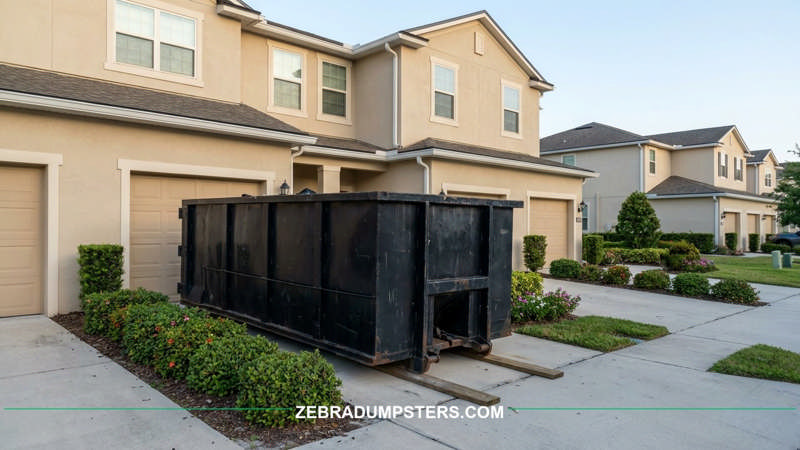
The 1,200 sq ft scenario above is the most common Bay Area whole-house removal and at 6,000 lbs (3 tons) of debris, it pushes a 10-yard dumpster past its 1.0-ton allowance immediately. This is a 20-yard project, sometimes a 30-yard if the subfloor also goes.
Volume math is easier. A square foot of removed hardwood (3/4 inch thick) compacts to roughly 0.06 cubic feet. A 1,200 sq ft removal generates ~72 cubic feet = 2.7 cubic yards of pure hardwood. With subfloor and underlayment, double it: ~5 cubic yards. With the staging/packing waste of the project, add another 1 cubic yard.
So a 1,200 sq ft whole-floor removal: 6 cubic yards by volume, 3 tons by weight. Weight is the limiting factor. The 20-yard dumpster with its 2.0-ton allowance plus 1.0 ton of overage at $150 = $550 base + $150 overage = $700 total. Cheaper than a 30-yard upfront.
Demolition Sequence That Actually Works
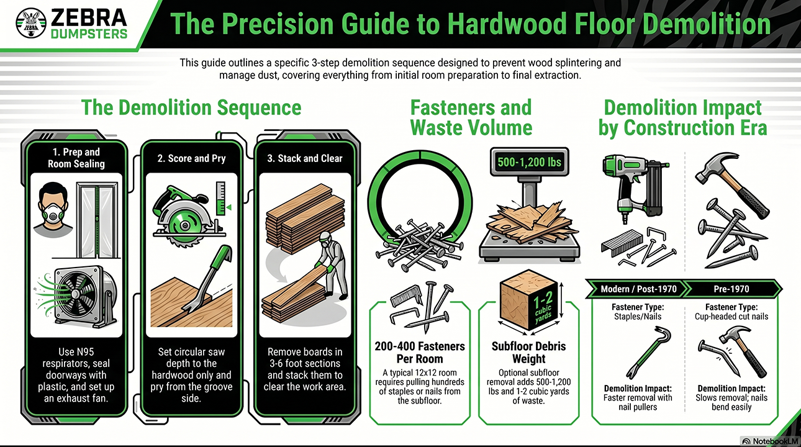
The cleanest hardwood removal goes in this order skipping steps causes the wood to splinter into a thousand small pieces that take longer to clean up than the wood itself.
Step 1: Set up the room. Remove all furniture, baseboards, and shoe molding. Cover doorways with plastic to contain dust. Set up an exhaust fan in a window to vent fine wood dust outside. Wear safety glasses, ear protection, and an N95 respirator old hardwood finishes can be polyurethane, shellac, or oil-based varnish, all of which release fine particles during demolition.
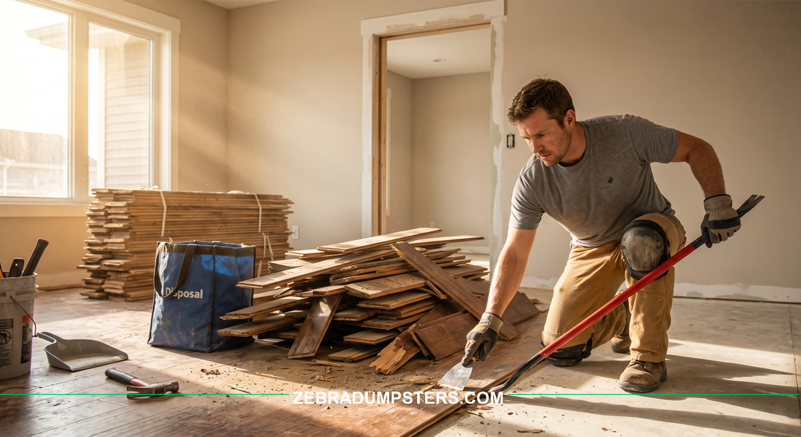
Step 2: Score the wood along one wall. Use a circular saw set to the depth of the hardwood (NOT through the subfloor). Make a straight cut along the most accessible wall. This gives you a starting edge to pry up.
Step 3: Pry up the first plank with a flat bar. The first plank is the hardest, because it's tongue-and-grooved into both adjacent planks. Once it's out, every plank after it is easier because you can pry against the groove side.
Step 4: Work parallel rows toward the opposite wall. Pry up 3-5 boards at a time, then stack them out of the work area. The boards come up in 3-6 foot sections (or longer if you're careful). Each section weighs 5-12 lbs.
Step 5: Remove staples and nails from the subfloor. This is the slowest part. A typical 12x12 room has 200-400 staples/nails. Use a cat's paw or nail puller. If you're replacing the subfloor anyway, skip this step entirely, since the subfloor comes up next.
Step 6: Remove subfloor (optional). If the subfloor is rotted, water-damaged, or too thin for the new flooring, remove it now. Cut along joists with a circular saw, pry up sections with a flat bar. Subfloor debris adds 1-2 cubic yards and 500-1,200 lbs per typical room.
For homes in dumpster rental in Sunnyvale and other Peninsula cities with older construction (pre-1970), expect cup-headed cut nails in the subfloor these were used through the 1960s and bend easily, slowing the staple-removal phase.
Weight-driven, not volume-driven
Check the tonnage before the size
Hardwood and subfloor together run about 2.5 pounds a square foot, so a whole house clears the 20-yard's two-ton allowance well before it fills the box. Overage is $150 a ton, which is why the sizing math here is worth doing.
Bay Area Pricing for a Hardwood Floor Removal
The 20-yard starts at $550 in San Jose. Rates rise with distance from the yard, so check your own city rather than working from a Bay Area average. For a 1,200 sq ft whole-house hardwood removal:
Worked example. Dumpster rental in San Jose, 1,200 sq ft single-story home, all rooms getting new flooring. Demo includes 3/4-inch oak hardwood plus subfloor replacement.
- Debris: 5 cubic yards hardwood + 2 cubic yards subfloor + 1 cubic yard staging = 8 cubic yards
- Weight: 1.5 tons hardwood + 1.0 ton subfloor + 0.2 ton staging = 2.7 tons
- Bin choice: 20-yard at $550 base, 2.0 tons included
- Overage: 0.7 tons × $150 = $105
- Demo runs 3-4 weekend days, no extra-day fees (7-day rental window)
- Total: $655
Compare to a single-room (250 sq ft living room) removal: 2 cubic yards, 1.0 ton total debris. Fits a 10-yard at $430 base with no overage. Total: $430.
Standard add-on fees: same-day delivery $100 outside San Jose/Campbell, extra rental days $45 each beyond seven, dead-run fee $250 South Bay/East Bay if the driver can't drop.
Prices subject to change. Verify current rates at zebradumpsters.com/weight-limits-and-fees.
Disposal Channels: Landfill vs. Reclaim vs. Mulch
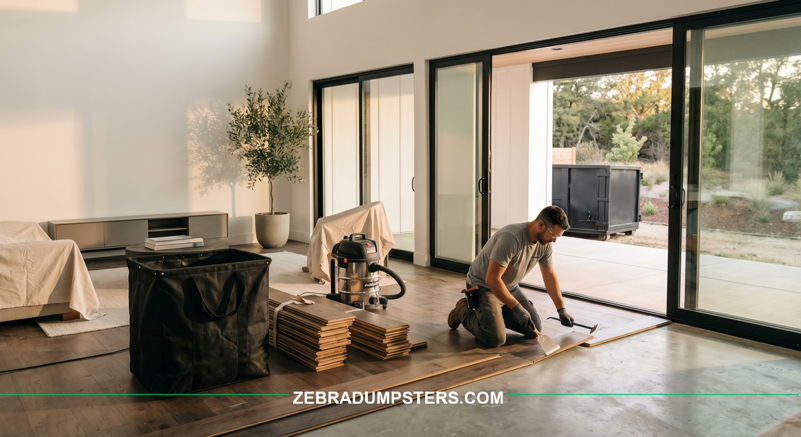
Not all hardwood ends up in the same place. The wood's condition determines the disposal channel.
Landfill (most common). Old hardwood with water damage, pet stains, glue residue from carpet underlayment, finish failure, or splinters from removal goes to standard general-debris landfill via the dumpster. This is 80-90% of Bay Area hardwood removal volume. Counts toward the 1.0-ton or 2.0-ton allowance on your bin.
Reclaim (the long planks). Hardwood pulled up carefully in 4-foot or longer sections, with intact tongue-and-groove and clean finish, has resale value. Bay Area reclaim yards (Heritage Salvage in Petaluma, Marin Material Bank, BarnLight in Berkeley) accept clean reclaimed hardwood. Some pay $0.50-$2.00 per board foot for desirable species (oak, maple, longleaf pine). Most don't pay much for typical 1960s-1970s strip oak, but they'll accept it as donation for a tax write-off.
The reality: reclaim only works if the demo team can extract 5-10% of the wood intact. The careful prying that produces reclaim-quality boards takes 3x longer than rip-and-tear demo. If you have the time and the wood is high-value species, reclaim it. Otherwise it goes landfill.
Mulch / wood chipping. Damaged hardwood with no salvage value but uncontaminated by paint, varnish, or glue can be chipped for mulch. Bay Area landscape supply yards (Lyngso Garden Materials, Bay Materials) sometimes accept clean unfinished wood for chipping. But: 99% of hardwood floor demo is FINISHED (polyurethane, varnish, shellac, urethane) — which makes it ineligible for mulch. Stick with landfill unless the home's hardwood is unfinished raw lumber underneath (rare).
The detail on heavy-debris routing is in the heavy debris disposal guide. The full kitchen + bathroom remodel debris workflow is in the garage cleanout guide.
DIY vs. Hire It Out
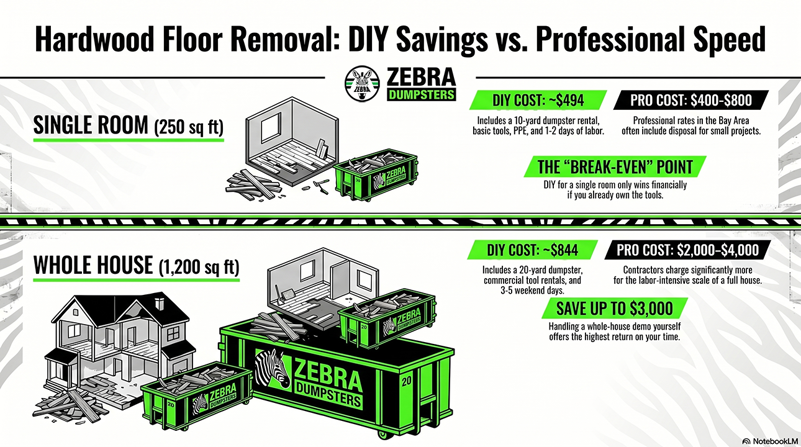
Hardwood floor removal is one of the most DIY-friendly demo projects there is: no plumbing, no electrical, no structural concerns. But it's physically demanding and slow.
DIY (single room, 250 sq ft):
- 10-yard dumpster rental: $430
- Circular saw blades (2): $30
- Pry bar + nail puller (rent or buy): $40
- PPE (respirator, glasses, gloves): $25
- Time: 1-2 weekend days for one person
- Total: $525
Hire it out (single room): Bay Area demo quotes for a 250 sq ft hardwood removal run $400-$800. Most contractors include disposal. Total: $400-$800.
DIY (whole house, 1,200 sq ft):
- 20-yard dumpster rental: $550 + ~$105 overage = $655
- Tool rentals (commercial pry bar, pneumatic stapler removal): $150
- PPE: $40
- Time: 3-5 weekend days for one or two people
- Total: $845
Hire it out (whole house): $2,000-$4,000 for a 1,200 sq ft whole-house removal including disposal. Total: $2,000-$4,000.
The whole-house scenario shows the real DIY savings: $1,155-$3,155 net for 3-5 weekend days of physical work. For a single room, DIY and hire-out are roughly the same DIY only wins if you already own the tools.
Zebra Dumpsters services the South Bay, East Bay, and Peninsula corridor with same-day routing on 10-yards and 20-yards. Call (408) 495-3006 to book a hardwood-removal project. Prices subject to change. Verify current rates at zebradumpsters.com/weight-limits-and-fees.
Single room or whole house
Two sizes cover almost every hardwood job
A 250 sq ft room fits a 10-yard at $430 with room to spare. A 1,200 sq ft whole house needs the 20-yard at $550 and will still run about $105 of overage. Open both with your delivery ZIP to see your own rates.
Frequently Asked Questions
How much does it cost to remove hardwood flooring in the Bay Area?
DIY removal of a single 250 sq ft room costs about $525 (10-yard dumpster + tools + PPE). Whole-house removal of 1,200 sq ft costs about $845 DIY (20-yard dumpster with overage + tools). Hiring a contractor runs $400-$800 per room or $2,000-$4,000 for whole-house — that price typically includes disposal.
What size dumpster do I need for hardwood floor removal?
For a single room (under 300 sq ft), a 10-yard general-debris dumpster fits the 1-2 cubic yards of hardwood + subfloor scrap. For 500-1,200 sq ft (multi-room or whole main level), the 20-yard handles 5-8 cubic yards and the 2.0-ton allowance covers most of the weight with some overage. Weight is the limiting factor hardwood is dense.
Can I recycle old hardwood flooring?
Maybe. Bay Area reclaim yards accept clean, intact hardwood in 4-foot-or-longer sections with no water damage or carpet glue residue but they only pay for desirable species (oak, maple, longleaf pine) and not much. Most 1960s-1970s home hardwood goes to landfill. Mulch chipping requires uncontaminated wood, which finished hardwood doesn't qualify as. Net: 80-90% of hardwood removal volume lands in standard general-debris disposal.
How long does hardwood removal take?
A 250 sq ft room takes 1-2 weekend days for one person (3-5 hours of demo + 1-2 hours of staple/nail cleanup). Whole-house 1,200 sq ft removal takes 3-5 weekend days for one or two people. The slowest part is removing the staples and nails from the subfloor — if the subfloor also goes, you skip that step.
Do I need to remove the subfloor too?
Depends on the condition. If the subfloor is plywood and in good shape (no water damage, no rot, structurally sound), most new flooring installs right on top. If the subfloor is older particleboard, has water damage, or doesn't meet the new flooring's thickness requirement, it has to come out. Adding subfloor removal doubles the debris weight but adds about 1 cubic yard of volume per typical room.