An estate cleanout is the largest residential cleanout most people will ever handle, and it usually arrives at the worst possible time. A parent passes, a long-time family home goes on the market, decades of accumulation needs to be sorted, donated, sold, or thrown away often on a probate timeline that does not allow for a slow pace.
This guide covers the practical infrastructure of a Bay Area estate cleanout: the dumpster size that fits a whole-house clearout, the volume math by house size, what to do with valuables versus debris, and the rental length that gives you room to work without stretching across a month. It is not a guide to the emotional work that takes whatever time it takes, but the logistics piece is solvable on a predictable schedule.
Estate Cleanout Volume by House Size
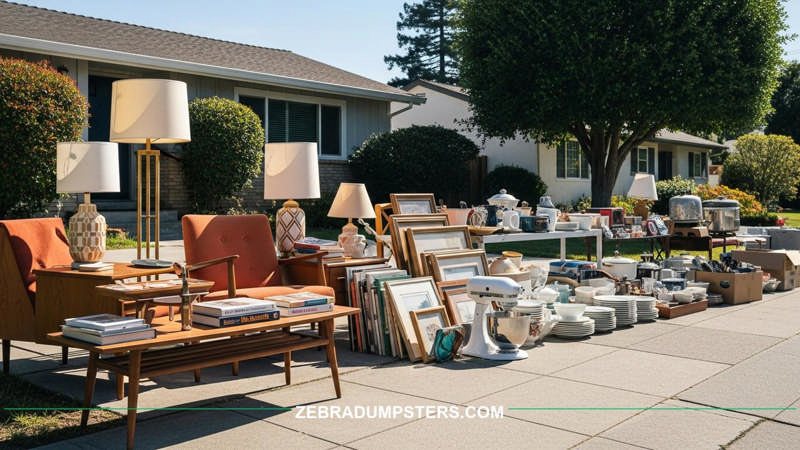 Sorting into family / sale / donation / disposal categories before the dumpster arrives is the highest-leverage step.
A fully-furnished single-family home produces more debris than people expect. Decades of household goods, furniture, kitchen equipment, paperwork, clothing, garage and shed contents, attic boxes, and the accumulated possessions of an entire life. Volume depends on house size, length of occupancy, and how much is donated versus discarded.
A typical 3-bedroom, 1,500 sq ft Bay Area home occupied for 30+ years produces 18 to 26 cubic yards of debris bound for the dumpster, after donations and family pickups have been pulled out. A 4-bedroom, 2,200 sq ft home runs 24 to 34 cubic yards. Larger homes, homes with finished basements or extensive workshops, or homes that were used as long-term storage for multiple generations push past 35 cubic yards and into the multi-bin range.
The breakdown is roughly 60% bulk household goods (furniture, mattresses, lamps, decor), 25% boxes and paper (clothing, books, documents, photos), and 15% kitchen and bathroom contents. The rest is the unpredictable middle layer workshop tools, hobby supplies, holiday decorations, the deep attic. Estate-cleanout crews working dumpster rental in Santa Clara typically estimate volume by counting bedrooms and adding 4 cubic yards per decade of occupancy.
Picking the Right Dumpster Size
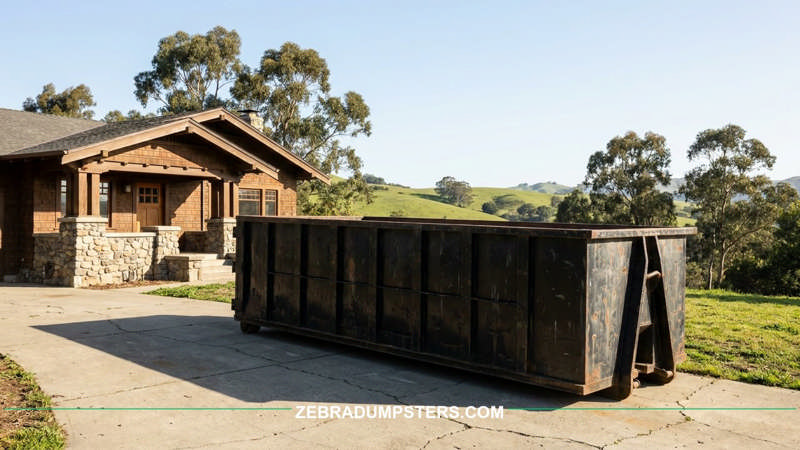
The 30-yard general-debris dumpster is the standard call for a whole-house estate cleanout in the Bay Area. It holds 30 cubic yards (about 9 pickup-truck loads) and includes 3.0 tons of weight allowance under standard service. A typical 3-bedroom estate cleanout fills it comfortably with room for a few last-day finds.
For larger homes (4+ bedrooms, basements, multi-decade occupancy with heavy storage), two 30-yards staged across the project schedule is the right call one delivered for the first phase, swapped out, and a second delivered for the long-tail items. Some crews stage a 40-yard plus a 10-yard inert (for the inevitable concrete patio chunks and tile from the bathroom).
Three-bedroom condos or townhomes that have been single-occupant fit a 20-yard. Smaller estates with significant donations already pulled out can fit a 20-yard too. Going below a 20 for any whole-house cleanout almost always forces a mid-project swap.
What Stays, What Goes, What Sells
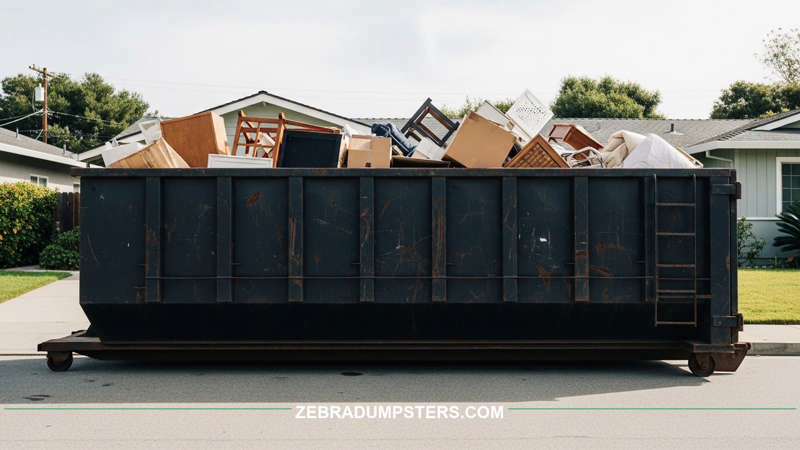
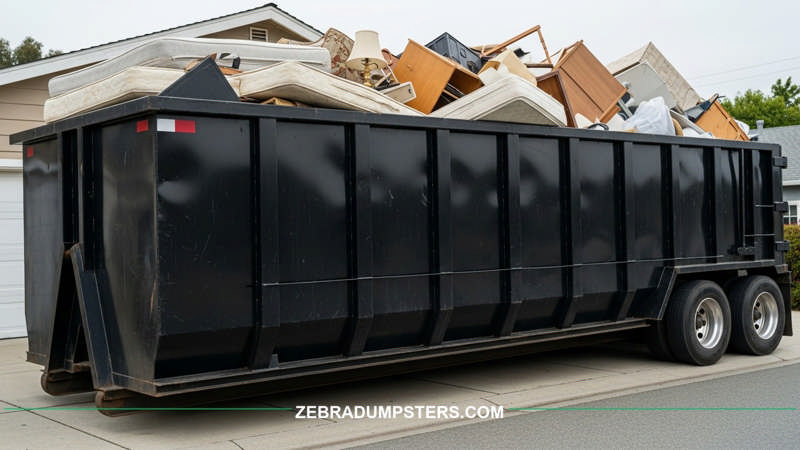 A 30-yard dumpster mid-cleanout with disposed furniture and household debris kept below the rim.
The single highest-leverage decision in an estate cleanout is the sorting framework. A typical whole-house clearout produces three categories with very different exit paths.
| Category | What It Includes | Exit Path | Time Investment |
| Family / valuables | Photos, documents, jewelry, antiques, family heirlooms, anything emotionally significant | Family pickup, safe storage, or estate sale | Slowest — touch each item |
| Sale / donation | Furniture in good condition, appliances, books, clothing, kitchen equipment | Estate sale, donation pickup, consignment, online listing | Medium — sort by category |
| Disposal | Damaged furniture, mattresses, broken appliances, expired food, old paperwork | Dumpster, hazardous-waste drop-off, e-waste recycling | Fastest — bulk sort |
The disposal category fills the dumpster. The sale and donation categories should leave the property before the dumpster arrives. Estate-sale companies will price and run a 1 to 2-day sale for 25 to 40% of revenue, taking the middle category off your hands. Donation services (Salvation Army, Goodwill, Habitat ReStore) will pick up a pre-staged pile of donatable items at no cost schedule the pickup BEFORE the dumpster arrives so the categories do not get mixed.
One specific surprise on most estate cleanouts: paperwork. Decades of bank statements, tax returns, medical records, insurance documents. Most go in the dumpster, but pull aside anything from the past 7 years for safe shredding (identity-theft risk on bank and medical paperwork). Many cities have free shred-event days; otherwise mobile shred services run roughly $15 per banker box.
A whole house, at your pace
A 30-yard at $680 covers most estates in one drop
Estate cleanouts fill by volume rather than weight: furniture, boxes and decades of storage. The 30-yard includes 3 tons and seven days in San Jose, and extra days are $45 each if the sorting takes longer than the hauling.
Rental Length and Project Pace
Estate cleanouts run longer than other residential projects. A standard 7-day dumpster rental is rarely enough; most estates run 10 to 21 days from first sort to last load. Plan the rental around your actual pace, not an aspirational one.
Three project paces to budget for:
- Sprint pace (one weekend, family on-site): 7-day rental. Works only for small estates, family fully present, no estate sale. Most ambitious teams under-estimate.
- Standard pace (2 to 3 weekends spread across 2 weeks): 14-day rental. The most common estate-cleanout schedule, especially when one family member is leading the project from out of town and visiting on weekends. Extra rental days at $45/day add up to a manageable total.
- Probate pace (3 to 6 weeks): keep the same dumpster on site for 21 to 28 days, OR plan two staged rentals with a 1 to 2-week gap. For longer projects, the second rental is usually cheaper than the per-day extension fees on a single long rental.
Crews handling estate cleanouts in the East Bay book with intentional buffer. Those working dumpster rental in Hayward and the surrounding cities typically request 14 days upfront with the option to extend. Same-day pickup is free if the project finishes early, so the longer booking is a downside-protected choice.
Cost, Booking, and Practical Logistics
The 30-yard general-debris dumpster sits at the upper end of the residential rental range. The base rate covers seven days plus 3.0 tons of included weight. Beyond that, fees scale by Bay Area city tier and by add-on:
- Same-day delivery: $100 outside San Jose and Campbell.
- Dead-run fee: $250 in South Bay/East Bay, $350 north of Millbrae or Oakland.
- 24-hour cancellation: $100.
- Extra rental days beyond seven: $45 each.
- Per-ton overage: $150/ton in most cities, up to $200/ton in some far-East Bay cities.
Estate cleanouts typically run 2-3 tons (light density per cubic yard), so overage is uncommon unless the estate includes heavy items.
Placement is a real consideration. The 30-yard plus delivery truck needs about 25 feet of straight access from the street and 8 feet of width. Many older Bay Area estates have driveways that are tight for the 30 — a quick walk of the site before booking saves the $250 dead-run fee. If the driveway will not work, most cities allow a street placement with a $50 to $150 encroachment permit (3 to 7 business days to process).
Booking takes a five-minute call with three pieces of info: the delivery address, the start date (pick the morning of the second sorting weekend), and a rough volume estimate (3-bedroom / 4-bedroom / multi-generational storage). Zebra Dumpsters services the South Bay, East Bay, and Peninsula corridor including dumpster rental in Palo Alto and the surrounding cities. Call (408) 495-3006 to book or to discuss multi-bin staging for larger estates. Prices subject to change. Verify current rates at zebradumpsters.com/weight-limits-and-fees.
Book the buffer up front
Ask for fourteen days when you book
Families rarely finish an estate in a week. Tell dispatch the timeline and the extra days go on the schedule from the start, instead of being added one phone call at a time.
Frequently Asked Questions
What size dumpster do I need for an estate cleanout?
The 30-yard general-debris dumpster is the standard call for a whole-house estate cleanout of a 3-bedroom Bay Area home. For 4-bedroom homes or estates with significant basement/workshop storage, plan two staged 30-yards or one 40-yard. Smaller condos and townhomes that have been single-occupant fit a 20-yard. Three-bedroom homes where most usable items are donated or sold beforehand can sometimes fit a 20-yard.
How long can I keep a dumpster for an estate cleanout?
Standard rental covers seven days. Most estate cleanouts run 10 to 21 days, so plan an extended rental upfront — extra days are $45 each beyond the standard 7. For projects running longer than 28 days, two staged rentals with a 1 to 2-week gap is usually cheaper than one continuous extended rental.
What can I NOT put in an estate cleanout dumpster?
Hazardous waste (paint, chemicals, automotive fluids, pool chemicals), tires (per-item disposal fees apply), automotive batteries (recycle free at auto-parts stores), refrigerants (anything with a compressor needs special handling), e-waste (tube TVs, fluorescent tubes), and large quantities of concrete, dirt, or brick (those need an inert dumpster). A dedicated hazardous-waste drop-off trip at the start of the project usually clears most of these.
Should I do an estate sale before or after the dumpster arrives?
Before. Estate-sale companies price and run sales over 1 to 2 days with the contents intact in their original setting; they can usually do this within 7 to 14 days of being called. Schedule the sale first, let it happen, then bring in the dumpster for whatever does not sell. Mixing the categories means good items end up in the bin and bad items end up at the sale.
Are estate cleanout dumpsters tax deductible?
Sometimes. If the property is being prepared for sale and is part of a probate process or estate, dumpster-rental costs are typically deductible as estate-administration expenses on the estate tax return. Check with the estate's tax preparer or attorney before assuming. Personal-use cleanouts (clearing a parent's house but keeping the property) are generally not deductible.