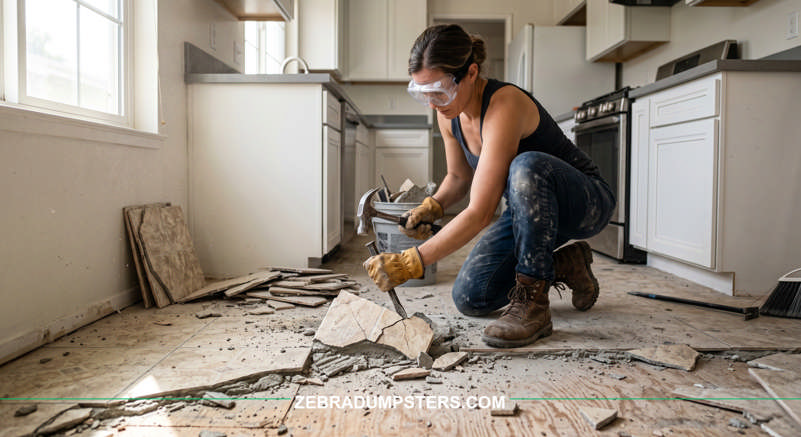
Old tile removal is one of the dustiest, dirtiest, hardest demo projects a Bay Area homeowner takes on. The tile itself comes up easily enough. It is the thinset mortar bonded to the subfloor underneath fights back, the dust is sharp and silica-bearing, and the weight per square foot is much higher than people expect. A typical 100 sq ft of ceramic floor tile generates about 1,200 lbs of debris once you include the thinset.
This guide covers Bay Area tile removal: the demo sequence and safety setup, the dumpster size math (weight-driven, not volume-driven), the disposal channel decision (inert dumpster vs general debris depending on tile type), and the project cost DIY versus hiring out. Numbers calibrated for typical Bay Area residential tile footprints bathroom floors, kitchen floors, and backsplashes.
Listen to this article
--:-- · narrated
Tile Volume and Weight Math
Ceramic and porcelain floor tile weighs about 5 to 8 lbs per square foot installed (the tile plus its underlying thinset mortar). Wall tile and backsplash run lighter, about 3 to 5 lbs/sq ft. Heavier natural stone (granite, slate, marble) hits 10 to 15 lbs/sq ft.
Typical residential project math:
- Bathroom floor (50 sq ft): 300 to 400 lbs of debris, 1 cubic yard
- Kitchen floor (200 sq ft): 1,200 to 1,600 lbs (0.6 to 0.8 ton), 2 to 3 cubic yards
- Whole-house floor (1,000 sq ft): 6,000 to 8,000 lbs (3 to 4 tons), 10 to 15 cubic yards
- Bathroom + kitchen + entryway combo: 1,500 to 2,500 lbs (0.75 to 1.25 tons), 4 to 6 cubic yards
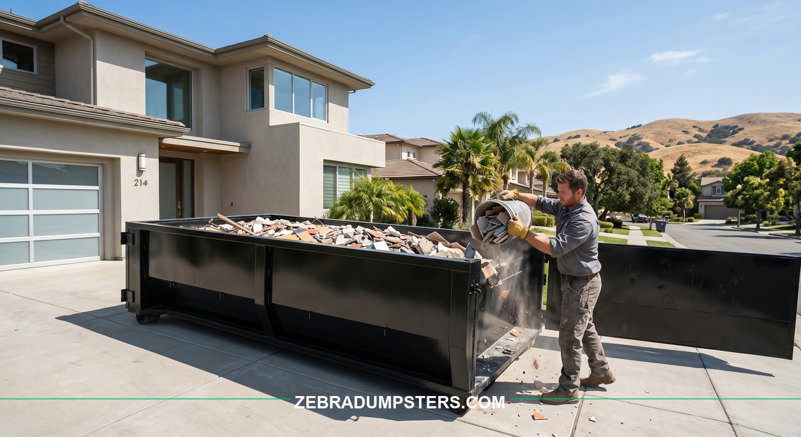
The weight number drives bin selection. A standard 10-yard general-debris dumpster has a 1.0-ton allowance exceeded by a 200 sq ft kitchen floor tile removal. For most multi-room tile projects, the 20-yard at 2.0 tons is the right call, or splitting the project across an inert dumpster (no weight cap) and a general bin for the rest of the renovation debris.
For homes in dumpster rental in San Jose with mixed renovation projects, the split-bin approach often saves 20-30% over a single oversized rental.
Right Dumpster Strategy by Tile Project
| Project | Volume | Weight | Bin Strategy | Cost |
| Bathroom floor only | 1 cubic yard | 0.2 ton | 10-yard general (overkill, cheapest min) | From $472 |
| Kitchen floor only | 2-3 cubic yards | 0.6-0.8 ton | 10-yard general | From $472 |
| Multi-room (bath + kitchen) | 4-6 cubic yards | 0.75-1.25 tons | 10-yard general (tight) or 20-yard | $472-$630 |
| Whole-house floor | 10-15 cubic yards | 3-4 tons | 20-yard + split inert OR 30-yard | $786-$1,270 |
| Tile + concrete demo | 15-25 cubic yards | 5-8 tons | 10-yard inert + 20-yard general | $1,110 and up |
Two split-bin scenarios worth knowing:
Whole-house tile removal (1,000 sq ft): 3-4 tons of debris in 10-15 cubic yards. A single 20-yard at $630 base hits 1.5-2.0 tons of overage at $155/ton, adding about $233-$310. Total: about $863-$940. A split (10-yard inert at $640 + 10-yard general at $472) totals $1,112, which is about $172 to $250 more on paper. The reason to pay it is that the inert bin has no weight cap on standard service, so the tile side cannot generate an overage at all.
Tile + concrete demo combined: Definitely split. The concrete pad or subfloor demo goes in a 10-yard inert with no weight cap. The tile, thinset and drywall scrap go in a 10-yard or 20-yard general. Total: $1,112-$1,270 for the split versus $1,200+ for a single 30-yard with overage.
For larger projects in dumpster rental in Oakland, the split-bin approach is documented in the heavy debris disposal guide.
Thinset is what decides the bin
Pick between inert and general before you book
Tile alone can ride in a 10-yard inert at $640 with no weight cap. Tile with thinset still attached is general debris at $472, and the mortar is what pushes a load over its tonnage. Open both and price them against your own address.
Removal Sequence and Safety Setup
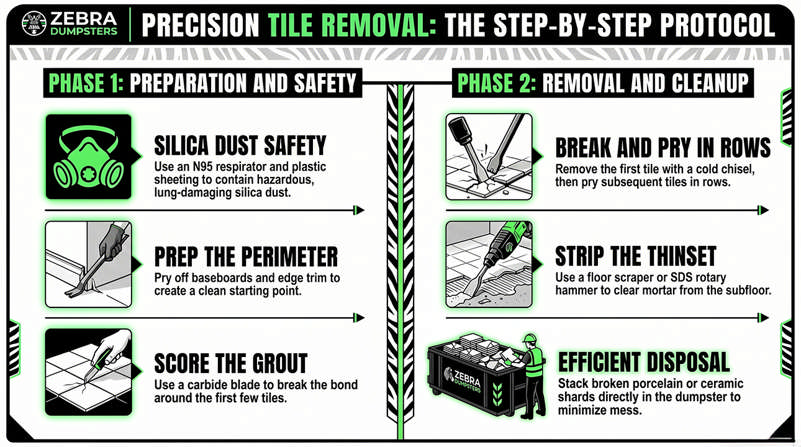
Tile removal generates fine silica dust that's hazardous to breathe. The safety setup matters more than for almost any other home-demo project.
Step 1: Safety setup. N95 or better respirator (silica dust is sharp and damages lungs over time). Safety glasses, ear protection, gloves. Tarp off doorways with plastic sheeting and painter's tape to contain dust to the work area. Open windows for ventilation if outside air quality allows.
Step 2: Remove baseboards and edge trim. Pry off baseboards along the perimeter of the tile area. This gives a clean edge to start tile removal and protects the baseboards if they're staying.
Step 3: Score grout lines. Use a grout-removal tool or carbide blade in a rotary tool to score the grout around the first few tiles. This breaks the bond between tiles and lets the first tile come up cleanly.
Step 4: Break out the first tile. Use a cold chisel and hammer (or a small SDS rotary hammer for faster work). The first tile is hardest, because it has no edge to lever against. Once it's out, every subsequent tile pries up against the open edge.
Step 5: Remove remaining tiles in rows. Work parallel rows. Stack removed tiles in the dumpster (or in piles for cleanup) as you go. Most ceramic and porcelain tiles break into 2-4 pieces during removal, which is fine for disposal.
Step 6: Remove the thinset. This is the slow part. The mortar bonded to the subfloor doesn't come up with the tile. It stays. Use a floor scraper, a rotary tool with a thinset-removal attachment, or an SDS rotary hammer with a flat chisel bit. For wood subfloor, work carefully to avoid gouging. For concrete subfloor, you can be more aggressive.
Disposal Channel: Inert vs General
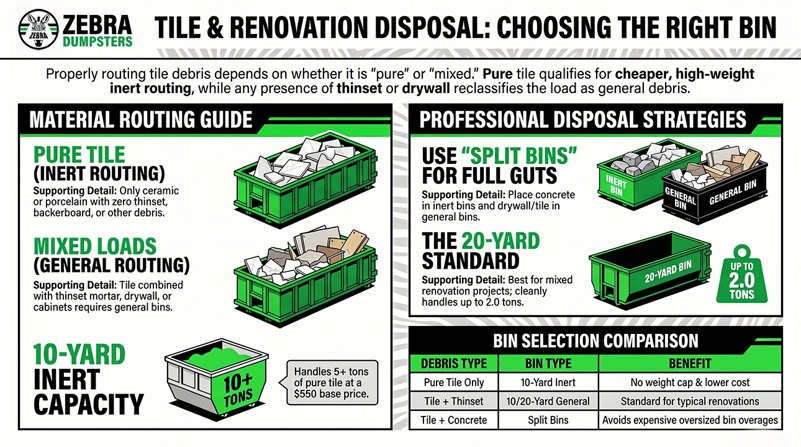
Tile is a borderline material. Pure ceramic and porcelain tile qualifies for inert (heavy-material) routing in California. Mixed loads with thinset mortar, drywall scrap, or other renovation debris reclassify as general debris.
Pure tile only (rare): If your project is JUST tile removal with no thinset, no backerboard, no other materials, the inert dumpster is the right call no weight cap, cheaper per ton. The 10-yard inert at $640 base handles 5+ tons of pure tile in 10 cubic yards.
Tile + thinset + minor renovation debris (typical): General debris. The thinset mortar disqualifies the load from inert routing. Use a 10-yard or 20-yard general, and plan for overage if the load exceeds the bin's tonnage allowance.
Tile + concrete demo (whole bathroom gut, kitchen with floor demo): Split bins. The concrete goes inert. The tile, drywall and everything else goes general. The split approach often costs less than a single oversized bin once you factor overage.
For homes in dumpster rental in Sunnyvale with mixed renovation projects (tile + drywall + cabinets all in one bin), the standard 20-yard general handles 2.0 tons cleanly. The full materials-routing context is in the concrete disposal guide.
Bay Area Pricing and Cost Comparison
The 10-yard general-debris bin starts at $472 in San Jose and the 10-yard inert at $640. Rates rise with distance from the yard, so check your own city rather than working from a Bay Area average.
Worked example. 200 sq ft kitchen floor tile removal in San Jose. DIY:
- 10-yard general dumpster: $472 base
- Debris: 3 cubic yards, 0.7 ton
- No overage (under 1.0 ton)
- Tools: cold chisel, rotary hammer rental ($60/day × 2 days = $120)
- PPE (respirator, glasses, gloves): $40
- Time: 2 weekend days for one person
- DIY total: $632.
Hiring a tile-removal contractor runs $800 to $1,800 for the same scope most quotes include disposal. DIY saves $168 to $1,168.
Standard fees: same-day delivery $100 outside San Jose/Campbell, dead-run $250 South Bay/East Bay, extra rental days $45/day. Prices subject to change. Verify current rates at zebradumpsters.com/weight-limits-and-fees.
Zebra Dumpsters services the South Bay, East Bay, and Peninsula corridor. Call (408) 495-3006 to book a tile-removal project ask about split-bin pricing if the project includes concrete or whole-house scope.
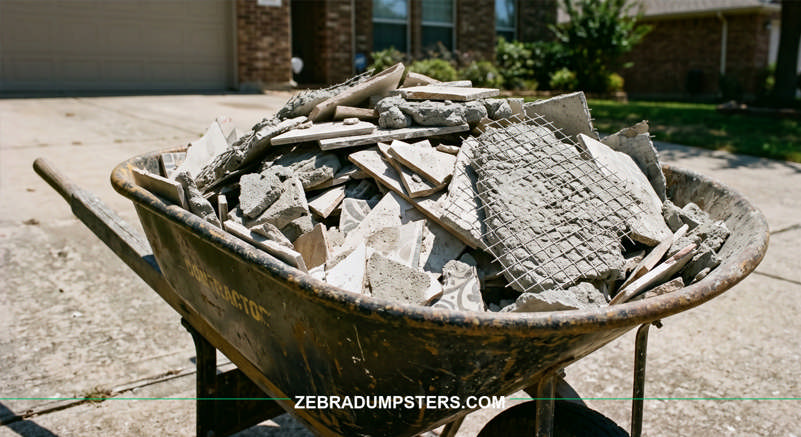
Dense load, small box
The 10-yard is the right size for most tile jobs
A bathroom or kitchen floor rarely fills more than three cubic yards, but it can weigh close to a ton. Volume is not what catches people out on tile. Check the included tonnage against your square footage before you book.
Frequently Asked Questions
What size dumpster do I need for tile removal?
For a bathroom or kitchen floor (under 200 sq ft), a 10-yard general fits the 1-3 cubic yards within the 1.0-ton allowance. For whole-house tile removal (1,000 sq ft, 3-4 tons), step up to either a 20-yard with overage budgeted or a split (10-yard inert + 10-yard general) which often costs the same and routes the tile to cheaper inert disposal.
Can tile go in a regular dumpster?
Yes. Ceramic, porcelain, and natural-stone tile all go in a standard general-debris dumpster without special handling. They count toward the bin's weight allowance tile is dense (5-8 lbs per square foot installed), so plan accordingly.
Why is tile removal so dusty?
Thinset mortar contains crystalline silica. Breaking it up releases fine silica dust that's hazardous to breathe and can cause silicosis with repeated exposure. Wear an N95-or-better respirator any time you're chipping out thinset; tarp off the work area to contain dust to one room.
How long does tile removal take?
Bathroom (50 sq ft): 4-6 hours for one person. Kitchen (200 sq ft): 2 weekend days. Whole-house (1,000 sq ft): 4-6 weekend days or a contractor week. The slowest part is removing the thinset mortar bonded to the subfloor, which is often longer than removing the tile itself.
What about cement-board or backerboard under the tile?
Cement board (HardieBacker, Durock) goes in a standard general-debris dumpster. It's heavier than drywall (about 3-4 lbs per square foot) and counts toward the bin's weight allowance. Don't put cement board in an inert dumpster: it has cellulose/fiber additives that disqualify it from inert routing.