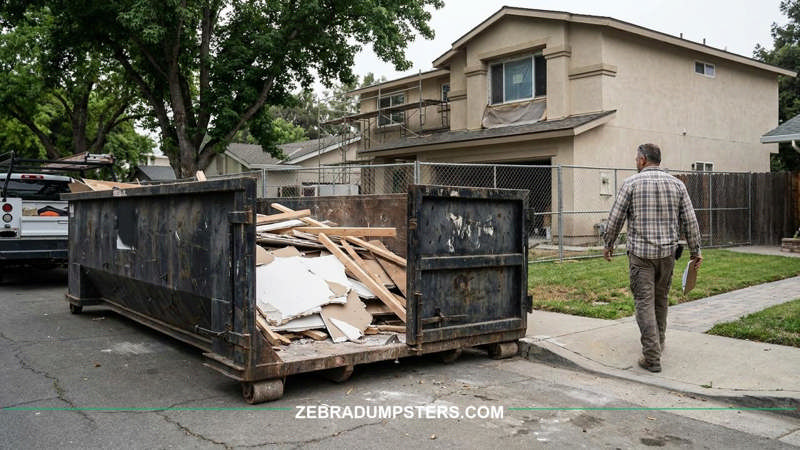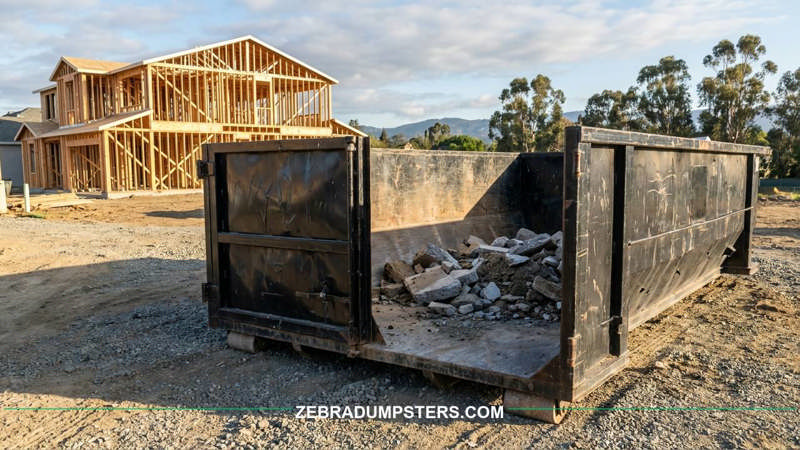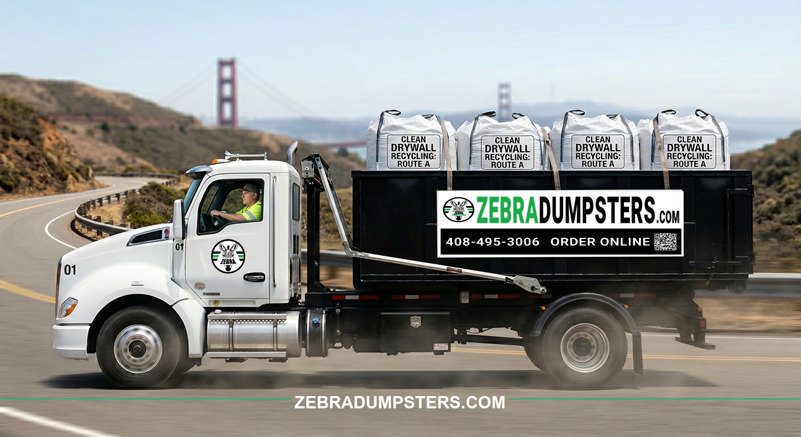
Drywall is one of the highest-volume materials in any renovation. A typical kitchen or bathroom remodel generates 200 to 600 square feet of drywall scrap. A whole-home gut produces 2,000+ square feet. The good news for Bay Area homeowners: most drywall goes in a standard general-debris dumpster without special handling. The better news: Bay Area recycling facilities now accept clean drywall for gypsum recovery, which keeps it out of landfill and may earn the project a green-halo certificate.
This guide covers Bay Area drywall disposal for residential and commercial renovations: how much weight drywall actually adds to a dumpster, the difference between landfill routing and recycling routing, the rules for painted versus unpainted drywall, and the cost of getting drywall to the right disposal channel. Numbers are calibrated for typical Bay Area residential project volumes.
Listen to this article
--:-- · narrated
Drywall Volume and Weight Math
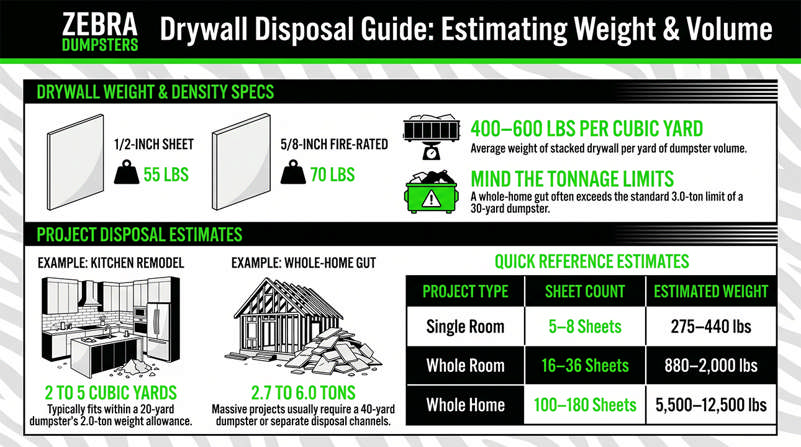
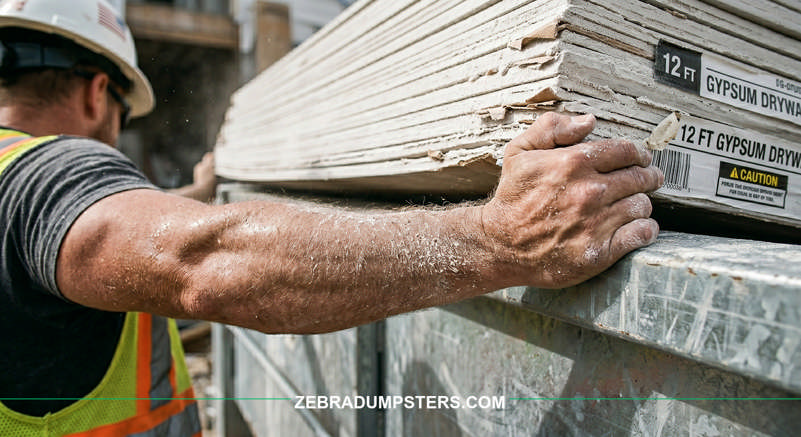
Drywall is heavier than people expect. A standard 4x8 sheet of 1/2-inch drywall weighs about 55 pounds, and a 5/8-inch fire-rated sheet about 70 pounds. Per cubic yard of dumpster volume (assuming standard stacking), drywall packs to roughly 400 to 600 pounds.
Typical project math:
- Single-room remodel (bedroom, bathroom 150 sq ft of drywall): 5 to 8 sheets, 275 to 440 pounds, 1 to 2 cubic yards
- Kitchen remodel with partial wall demo: 200 to 400 sq ft, 8 to 18 sheets, 440 to 990 pounds, 2 to 5 cubic yards
- Whole-room rebuild (master suite, family room): 400 to 800 sq ft, 16 to 36 sheets, 880 to 2,000 pounds, 4 to 10 cubic yards
- Whole-home gut to studs (1,500-2,500 sq ft house): 2,500 to 4,500 sq ft of drywall, 100 to 180 sheets, 5,500 to 12,500 pounds (2.7 to 6 tons), 25 to 60 cubic yards
The weight number matters because Bay Area dumpsters have included tonnage limits go over and per-ton overage applies. For a whole-home gut, drywall alone exceeds a 30-yard's 3.0-ton allowance, meaning either a 40-yard with overage or splitting drywall to a separate disposal channel.
For homeowners booking dumpster rental in San Jose for a kitchen remodel, the drywall component typically fits within the 20-yard's 2.0-ton allowance alongside cabinets, flooring, and other debris.
Drywall Routing: Landfill vs Recycling
Two paths for drywall in the Bay Area. The choice depends on volume, project type, and whether the material qualifies as "clean."
| Channel | Best For | Constraints | Cost Impact |
| General-debris landfill (default) | Mixed renovation debris | Counts toward bin weight allowance | Standard $150/ton overage if over allowance |
| Gypsum recycling (separate) | Whole-room or larger volumes of clean drywall | Must be unpainted on at least one face, no plaster, no fasteners visible | Free drop-off at some Bay Area transfer stations, small fee at others |
| LEED / Green Halo recycling | Commercial projects requiring documented diversion | Same as gypsum recycling + certified pickup with tracking documents | $50-$150 administrative fee for certificate |
Most Bay Area residential renovations route drywall through general-debris landfill via the dumpster. The drywall counts toward the bin's weight allowance, but residential drywall volumes rarely exceed the bin's capacity unless the project is a whole-home gut.
For larger projects whole-room or whole-home separating drywall to a dedicated recycling channel saves money on overage and reduces landfill impact. Bay Area gypsum recyclers (Zanker Resource Recovery in San Jose, Davis Street Resource Recovery in Oakland) accept clean drywall in 1,000+ pound volumes. The full heavy-material routing detail is in the heavy debris disposal guide.
Drywall is heavier than it looks
Weight is what decides the bin, not volume
A 4x8 sheet is about 55 pounds, so a whole-room rebuild can put a ton in the box before anything else goes in. The 20-yard includes two tons at $630 in San Jose, and anything past that is $155 a ton.
Painted vs Unpainted: Why It Matters for Recycling
Gypsum recyclers grind drywall into fine gypsum powder that's reused in new drywall manufacturing, agricultural soil amendment, or industrial filler. The grinding process can't tolerate certain contaminants.
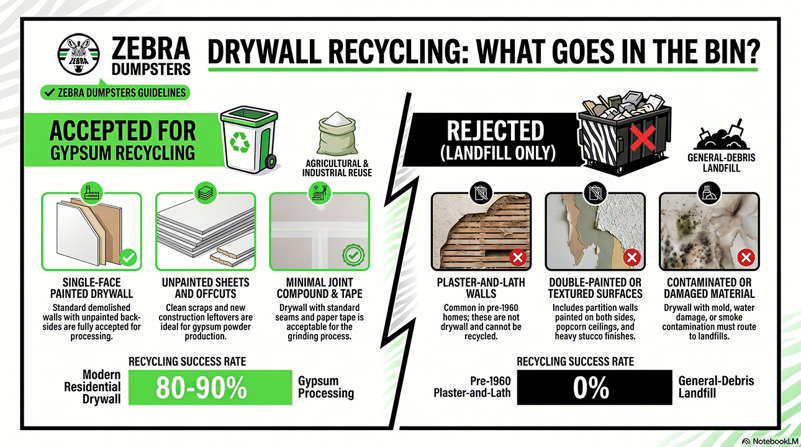
Accepted for recycling: Unpainted gypsum-board sheets and offcuts. Drywall painted on one face but unpainted on the back (the typical case for demolished walls the back side was inside the wall cavity, never painted). Drywall with minimal joint compound (mud) and paper tape on the seams.
Rejected for recycling (routes to landfill): Drywall painted on BOTH faces (rare happens with partition walls only). Drywall coated in popcorn ceiling texture or heavy stucco-like finishes. Drywall with mold, water damage, or smoke contamination. Plaster-and-lath walls (common in pre-1960 Bay Area homes), these are not drywall and don't qualify for gypsum recycling.
Practical impact: 80-90% of Bay Area residential remodel drywall qualifies for recycling. The exception is pre-1960 homes with plaster-and-lath, which are common in older Berkeley, Oakland, and San Francisco neighborhoods. For homes in dumpster rental in Berkeley with original plaster walls, drywall recycling isn't an option — those walls route to general-debris landfill via the standard dumpster.
Drywall in Mixed Loads When the Math Changes
The decision to separate drywall depends on the load composition. Below are three scenarios:
Scenario A: Single-room remodel, mixed debris. Drywall is 10-20% of total debris by weight. Don't separate. Throw drywall in with cabinets, flooring, fixtures. Standard 10-yard or 20-yard general-debris dumpster handles the whole load within the included tonnage.
Scenario B: Multi-room renovation, drywall-heavy. Drywall is 30-50% of total debris. Still don't separate unless the total weight pushes past the bin's allowance. Standard 20-yard handles 2.0 tons; if drywall plus other debris stays under that, no overage applies. Above 2.0 tons, separating drywall to recycling saves money on overage.
Scenario C: Whole-home gut to studs. Drywall is 40-60% of total debris by weight. Always separate. A typical 2,000 sq ft whole-home gut produces 3-5 tons of drywall — that's exceeding the 40-yard's 4.0-ton allowance from drywall alone. Routing drywall to gypsum recycling (separate truck pickup or homeowner haul to a recycling center) saves $300-$600 in overage and routes the material to beneficial reuse.
For commercial projects, the calculation also involves LEED credit eligibility and any green-halo certificate requirements built into the construction contract. The full commercial workflow is in construction dumpster rental guide for contractors.
Bay Area Pricing and Practical Recommendations
The 20-yard starts at $630 in San Jose, $740 in Mountain View and $880 in Oakland. Rates rise with distance from the yard, so the worked examples below use each city's own rate. For drywall-heavy projects:
Worked example. Kitchen remodel in Oakland with drywall demo of partial wall. Total debris: 11 cubic yards, 2.1 tons (cabinets + flooring + drywall). Bin: 20-yard at $880 base in Oakland, 2.0 tons included. Overage: 0.1 ton × $150 = $15. Total: $895.
Worked example for whole-home gut. 2,000 sq ft home in Mountain View. Drywall: 4 tons (separated to recycling, hauled by homeowner to Zanker Resource Recovery in San Jose for free drop-off). Remaining debris: 12 tons across cabinets, flooring, fixtures, framing. Two 40-yard rentals at $940 each in Mountain View ($1,880 base) with 8.0 tons allowance, 4-ton overage at $150/ton = $600 overage. Total dumpster cost: $2,480. Plus $50 in gas/time hauling drywall separately. Compare to single-bin scenario: three 40-yards needed to fit all 16 tons. Three 40-yards at $940 = $2,820, with included 12-ton allowance, 4-ton overage = $3,420. Splitting drywall to recycling saves about $890 after the hauling trip.
Standard fees: same-day delivery $100 outside San Jose/Campbell, dead-run $250 South Bay/East Bay, extra rental days $45/day. For homes in dumpster rental in Mountain View and other Peninsula cities, the Zanker recycling drop-off in San Jose is 30-45 minutes away — worth a Saturday morning for a whole-home gut. Prices subject to change. Verify current rates at zebradumpsters.com/weight-limits-and-fees.
Zebra Dumpsters services the South Bay, East Bay, and Peninsula corridor. Call (408) 495-3006 to discuss a drywall-heavy renovation project.
Separating pays on big jobs
Price the bins for your own city
On a whole-home gut, routing clean drywall to recycling took the Mountain View example from $3,360 down to $2,440. On a kitchen remodel it is rarely worth the trip. Open the catalogue with your delivery ZIP and check the tonnage against your debris.
Frequently Asked Questions
Can drywall go in a regular dumpster?
Yes. Drywall is standard general-debris material no special handling required. It counts toward the bin's included tonnage allowance ($150/ton overage if exceeded). Most Bay Area renovations route drywall through the dumpster without issues.
How much does drywall add to dumpster weight?
A standard 4x8 sheet of 1/2-inch drywall weighs about 55 pounds. A kitchen remodel with partial wall demo generates 200-400 sq ft of drywall (8-18 sheets), adding 440-990 pounds (0.2-0.5 tons) to the load. A whole-room rebuild generates 4-10 cubic yards and 0.5-1.0 ton. A whole-home gut produces 2.7-6 tons of drywall alone.
Can I recycle drywall in the Bay Area?
Yes. Bay Area gypsum recyclers (Zanker Resource Recovery in San Jose, Davis Street Resource Recovery in Oakland) accept clean drywall in 1,000+ pound volumes. The drywall must be unpainted on at least one face, free of plaster, and not contaminated with mold or water damage. Most residential remodel drywall qualifies.
What about painted drywall?
Drywall painted on one face only (the typical case from demo) still qualifies for recycling because the back side was inside the wall cavity. Drywall painted on both faces is rejected and routes to general-debris landfill.
What if my house has plaster walls instead of drywall?
Plaster-and-lath walls, common in pre-1960 Bay Area homes, are not drywall and don't qualify for gypsum recycling. They route to general-debris landfill via the standard dumpster. Plaster is also heavier than drywall (roughly 50% more weight per square foot), so weight allowances matter more on plaster-wall projects.