Most people decide to pull their attic insulation on the day they climb up for something else. A cable run, a new bathroom fan, a look at why the upstairs bedroom never cools down. Then they see it: gray, flattened fluff, a trail of droppings along a joist, maybe a water stain from a roof leak that was fixed years ago. The question that follows is always the same. Can I get this out myself, what will it cost, and where does all of it go?
We rent the dumpsters that the old insulation ends up in, so we see the last part of that question more than anyone. This guide covers all three, with Bay Area prices and the disposal rules that apply here.
Check What's Up There Before Anyone Pulls It
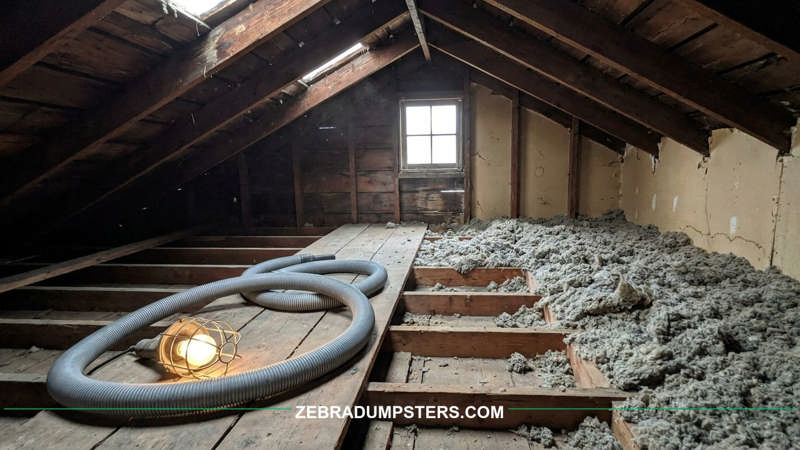
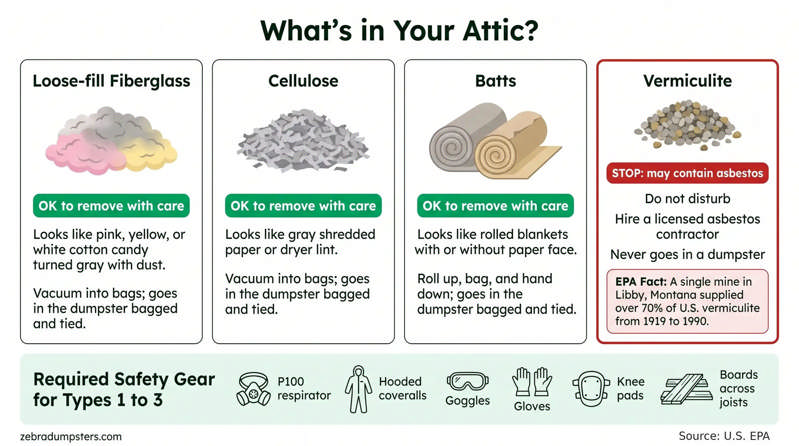
Before you price anything, figure out what kind of insulation you have. It changes the method, the cost and whether the job is yours to do at all.
Loose-fill fiberglass looks like pink, yellow or white cotton candy that has gone gray with dust. It is very light. Cellulose is shredded paper treated with fire retardant, gray and denser, a bit like dryer lint. Batts are the rolled blankets with or without a paper face. Any of these three can come out with ordinary care.
Vermiculite is the exception. It looks like small pebbles of gray-brown or gold, almost like coarse kitty litter, and it pours. The EPA says a single mine in Libby, Montana supplied more than 70% of the vermiculite sold in the U.S. from 1919 to 1990, and that ore was contaminated with asbestos. The agency's advice is blunt: assume it contains asbestos, do not disturb it, and hire a professional asbestos contractor if a remodel will touch it. Read the EPA guidance on vermiculite insulation before anyone goes up with a shovel.
Is it worth removing old attic insulation?
Not always. Insulation does not expire. Fiberglass or cellulose that is dry, clean and still deep enough does its job, and the cheaper fix is often to add a new layer on top. Removal makes sense when the old material is the problem:
- Rodents nested in it or left droppings and urine behind.
- It got wet from a roof or pipe leak, or smells of mildew.
- Smoke or fire damage reached the attic.
- You need clear access to air seal the ceiling, rewire, or replace ducts.
In our opinion the most common good reason in Bay Area homes is the first one on that list. Roof rats are a familiar attic problem across the region, and contaminated insulation keeps the smell, and the attraction for the next family of rats, long after the animals are gone.
How often should attic insulation be replaced?
There is no schedule. Replace it when it is damaged, compressed, contaminated or simply too thin to meet the R-value you want, not because a certain number of years has passed. A quick check is depth: blown fiberglass at R-30 is installed at roughly 10 to 11 inches, so a layer that has settled to four or five inches is not doing much.
Can You Remove Attic Insulation Yourself?
Yes, if it is fiberglass, cellulose or batts and you are willing to spend a hot, itchy day or two in the attic. Batts are the easiest: roll them up, bag them and hand them down. Blown-in insulation is the harder job, and it is where most people either rent a machine or call a contractor.
Is there a vacuum to remove blown-in insulation?
There is, and it is the only sane way to move a full attic of loose fill. An insulation removal vacuum is a gas or electric unit that sits outside, with a long hose running up into the attic. It pulls the insulation through the hose and blows it straight into large removal bags. Some people rake the insulation into contractor bags by hand instead. It works for a small section, but on a whole attic it doubles the time and fills the house with dust.
Where can I rent an insulation removal vacuum?
Equipment rental yards carry them, not most home centers. Bay Area rental yards such as A Tool Shed in Campbell and AAA Rentals on the Peninsula listed insulation vacuums at about $200 to $300 a day when we checked in October 2026. Sunbelt Rentals also carries them. Call ahead: there are few units, and they go out fast on weekends.
How long does it take?
Longer than most people plan for. One insulation contractor puts a 1,500 square foot attic at 6 to 15 hours of removal, and that is with experienced hands. A homeowner with a rented vacuum should block out a full weekend with two people, one in the attic and one outside swapping bags. Low-pitched roofs, ducts and stored boxes stretch it further.
The gear you actually need
A fitted respirator with P100 filters, not a paper mask. Disposable coveralls with a hood, goggles, gloves and knee pads. A few boards to lay across the joists so nobody steps through the drywall ceiling, and a work light. Go up early: by early afternoon on a summer day, a Bay Area attic is too hot to work in safely.
What Attic Insulation Removal Costs
Here is how the numbers break down, with published contractor rates next to what the same job costs if you do it yourself and rent the equipment.
How much does it cost to have insulation removed?
Contractors usually charge by the square foot. Angi puts attic insulation removal at $1 to $2 per square foot, with an average of about $900, and HomeGuide and Yelp report similar ranges. One insulation company publishes $1.50 to $1.75 per square foot. Expect the top of the range, and more, when the insulation is contaminated by rodents, wet, or hard to reach. You can read the full Angi attic insulation removal cost breakdown for the national data.
How much does it cost to vacuum out insulation yourself?
Here's the catch with the do-it-yourself route: the rental vacuum is the small line. The bags, the protective gear and getting rid of the material add up. This is what a 1,000 square foot attic looks like in San Jose, side by side.
| Cost line | Do it yourself | Hire a contractor |
|---|---|---|
| Labor | Your weekend | $1,000 to $2,000 total at $1 to $2 per sq ft |
| Removal vacuum | About $200 to $600 (one or two days) | Included |
| Removal bags | About $8 each from bag suppliers, plan on dozens | Included |
| Respirator, suits, gloves | About $60 to $120 | Included |
| Disposal | 40-yard dumpster, $910 in San Jose | Usually included, ask |
| Typical total | About $1,400 to $2,100 | About $1,000 to $2,000 |
Prices subject to change. Verify current rates at zebradumpsters.com/weight-limits-and-fees.
What surprises most people is how close those two columns are. On a small, clean attic the savings from doing it yourself are modest, and a contractor's quote usually includes hauling the bags away. The math swings toward doing it yourself when you are already renting a dumpster for a bigger job, such as a remodel or a re-roof, and the insulation simply rides along in the same bin.
How much does it cost to insulate a 1,500 sq ft attic after removal?
Removal is usually the first half of a bigger project. HomeGuide puts removing and replacing attic insulation at $2 to $6 per square foot, which works out to roughly $3,000 to $9,000 for a 1,500 square foot attic depending on the material, the R-value and how much air sealing is done in between. Angi's figures for a typical attic land near $3,000 for removal plus new blown-in insulation. Get two or three quotes that list removal, air sealing and the new insulation as separate lines.
Attic cleanout
20-yard dumpster in San Jose, $630 with 7 days included
Bagged fiberglass and cellulose are accepted as general debris. Enter your delivery ZIP to see your city's price and pick the size that fits your attic.
How to Get Rid of Old Insulation in the Bay Area
This is the part most removal guides skip. Once the insulation is out of the attic, it is sitting in bags on your driveway, and there is a lot of it.
What is the best way to get rid of insulation?
Treat it as construction and demolition debris, because that is what Bay Area cities and facilities call it. San Jose's recycling guide says to put loose-fill fiberglass in thick contractor bags, then place each full bag inside a second one, and dispose of it as C&D waste. GreenWaste, which runs the Zanker facility in San Jose, accepts clean fiberglass batts and blown fiberglass from renovations and attic removal as part of mixed C&D loads, and treats removed cellulose the same way. Their guide to disposing of insulation in California covers foam board and spray foam too.
Can you put insulation in a dumpster?
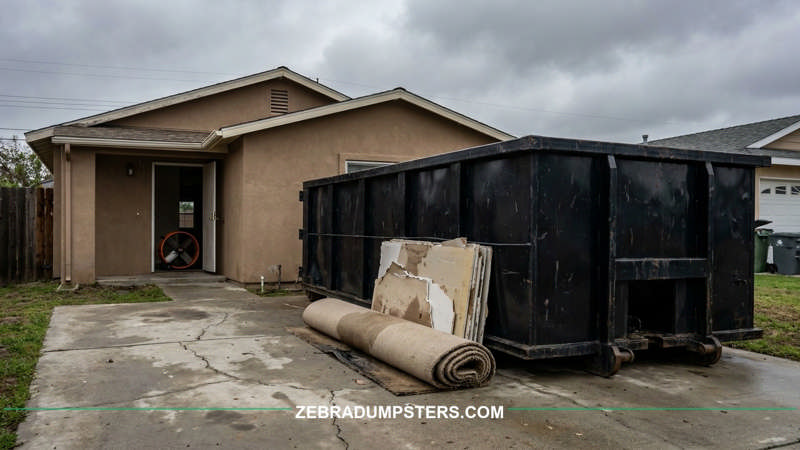
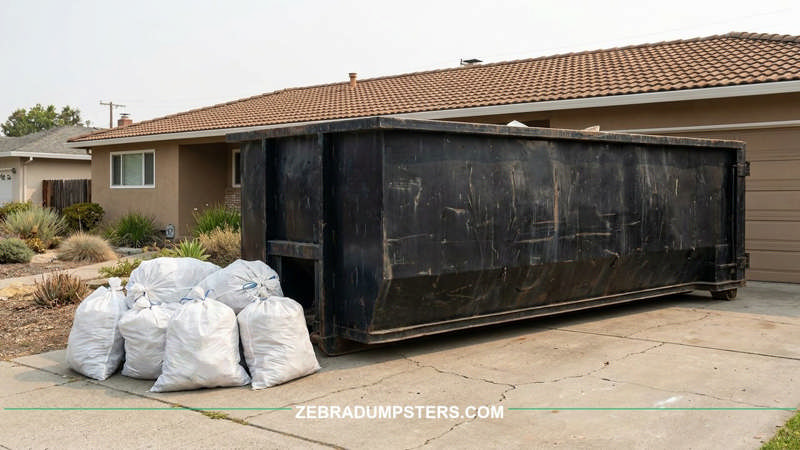
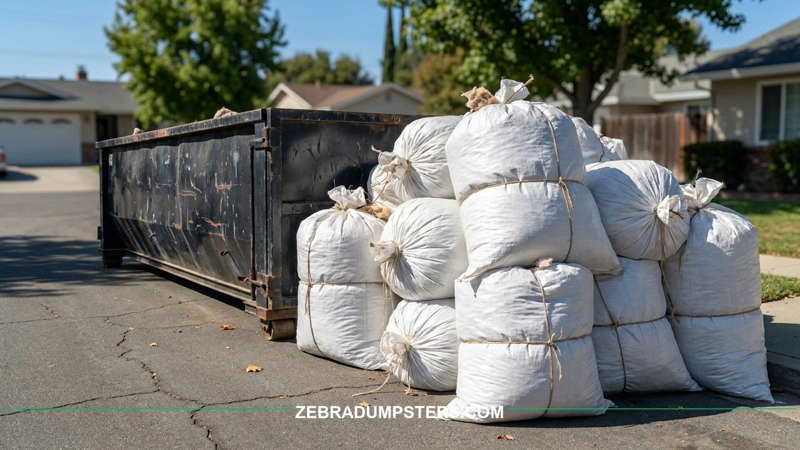
Yes. Fiberglass, cellulose and batts are general debris in our bins, the same as drywall or old carpet. Keep it bagged and tied. Loose insulation blows out of an open bin on the drive to the transfer station, sticks to everything around it and gives your neighbors a reason to call the city. Our page on what can go in a dumpster lists the rest of the rules.
Can you throw it in the trash or take it to the landfill?
A bag or two from a small repair can usually go in your regular cart if it fits with the lid closed. A whole attic cannot. Thirty or forty large removal bags are a load, and most residential garbage service will not take that volume. Your options are a self-haul trip to a transfer station, which means several trips in a pickup, or a dumpster that sits in the driveway while you work.
What gets refused
Vermiculite and anything else that might contain asbestos never goes in a roll-off. GreenWaste does not accept vermiculite at its standard C&D facilities, and our bins prohibit asbestos outright. Uncured spray foam is also out. If the bags hold vermiculite, they leave with a licensed abatement contractor and go to a permitted facility.
Sizing the Dumpster: Attic Insulation Fills Space, Not Tons
This is the opposite of most of the jobs we see. With concrete, roofing or wet drywall, the weight limit decides the bin. With dry attic insulation, the volume does. Owens Corning's data for its AttiCat blown fiberglass lists about 0.40 pounds per square foot of attic at R-30, installed about 10.75 inches deep. Settled cellulose runs about 2.3 pounds per cubic foot. Even a full 40-yard bin of cellulose stays well under the weight allowance.
We worked out how much attic each of our bins can take, assuming old insulation about 10 inches deep and loaded in bags:
| Bin size | Attic area it holds (about 10 in deep) | Fiberglass weight | Cellulose weight | San Jose price |
|---|---|---|---|---|
| 10-yard | Up to about 250 sq ft | About 100 lb | About 500 lb | $472 |
| 20-yard | Up to about 500 sq ft | About 200 lb | About 950 lb | $630 |
| 30-yard | Up to about 750 sq ft | About 300 lb | About 1,450 lb | $786 |
| 40-yard | Up to about 1,000 sq ft | About 400 lb | About 1,900 lb | $910 |
Prices subject to change. Verify current rates at zebradumpsters.com/weight-limits-and-fees.
Two notes on reading that table. First, the table already allows about 15% for bags that do not stack tight, so each bin is rated for less attic than its raw volume would hold. If your insulation is only five or six inches deep, a bin covers nearly twice the area. Second, wet insulation breaks the rule. Cellulose that soaked up a roof leak can weigh several times its dry weight, and then the weight allowance matters again, as it does on water damage debris.
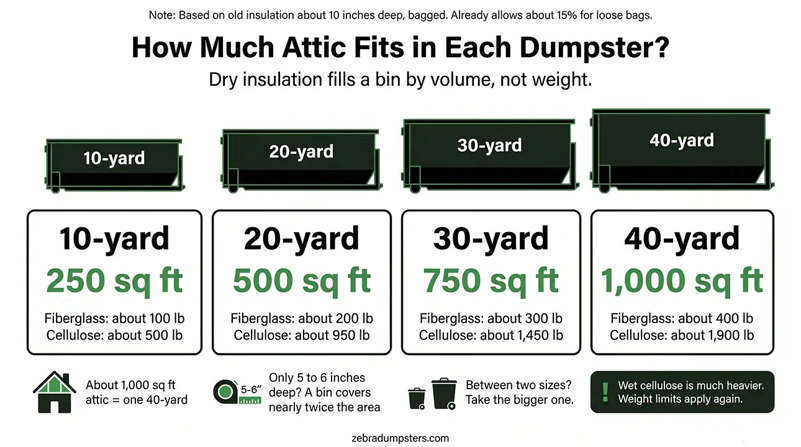
For a typical attic of about 1,000 square feet, that means one 40-yard bin, or a 30 yard dumpster if the old layer is thin. Bigger attics with a deep layer can fill two bins, so plan the second delivery before you start. Leave room either way for the old duct runs and the attic junk that always comes down with the insulation.
Mistakes That Turn a One-Day Job Into a Week
The reality is that the vacuuming is rarely what goes wrong. These are the problems that come up most often on attic removal jobs.
Starting before anyone identifies the material. If there is any chance of vermiculite under the fiberglass, stop and test. Disturbing it turns a cleanup into an abatement job.
Ordering the bin by guessing at the pile. Insulation looks like nothing in the attic and like a mountain on the driveway. Use the table above, and if you are between two sizes, take the bigger one. A second bin costs more than the extra yards.
Leaving bags on the driveway overnight. Rain soaks cardboard boxes and torn bags, wind spreads loose fiber, and raccoons open anything that smells of the rodents that were living in it. Load as you go.
Overfilling the bin. Bags have to stay level with the top edge. A heaped load cannot be hauled safely, and the driver will ask you to level it before pickup.
Forgetting the second half of the job. Once the attic is empty is the cheapest moment to seal gaps around lights, vents and top plates. Book the reinsulation before you start removal, so the house is not sitting with bare joists for a month.
Removal weekend
Get the bin there before the vacuum arrives
Every rental includes delivery, pickup, seven days and a weight allowance. Same-day delivery when capacity allows. Outside San Jose and Campbell, same-day service adds a $100 fee.
Frequently Asked Questions
Does Home Depot rent an insulation removal vacuum?
Home Depot rents insulation blowers for installing new loose-fill insulation. When we checked in October 2026, its rental pages did not list a removal vacuum. For removal, call an equipment rental yard such as A Tool Shed, AAA Rentals or Sunbelt.
What time of year is best for attic insulation removal?
In the Bay Area, fall through spring. Attics get dangerously hot on summer afternoons, and contractors are often busier in the hottest and coldest months. Avoid the rainiest weeks if the bags will sit outside before they go in the bin.
Is it okay to leave old insulation in the attic?
Yes, if it is dry, clean and free of pests. You can add new insulation on top. Remove it when it is contaminated, wet, smoke damaged, or in the way of air sealing or other work.
Can blown-in insulation be removed without a vacuum?
For a small area, yes: rake it into contractor bags by hand while wearing a respirator. For a whole attic a removal vacuum is faster and far less messy.
What size dumpster do I need for attic insulation?
Size it by area. At about 10 inches deep, a 20-yard holds roughly 500 square feet of attic and a 40-yard roughly 1,000. Most whole-attic jobs in single-story Bay Area homes need a 30 or 40-yard bin.