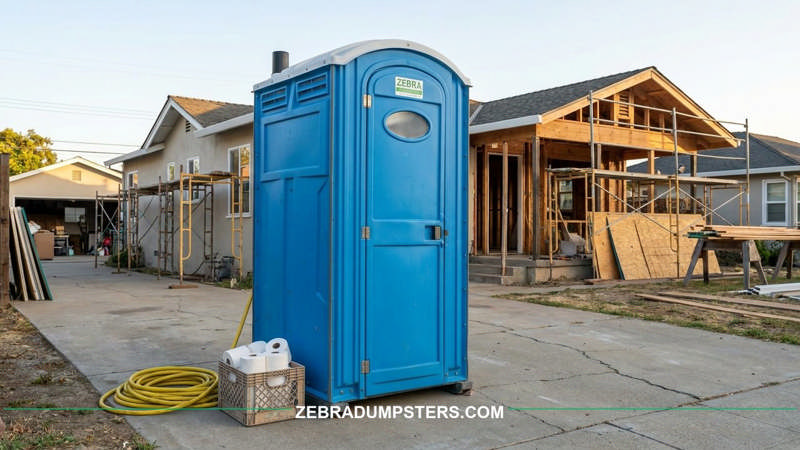
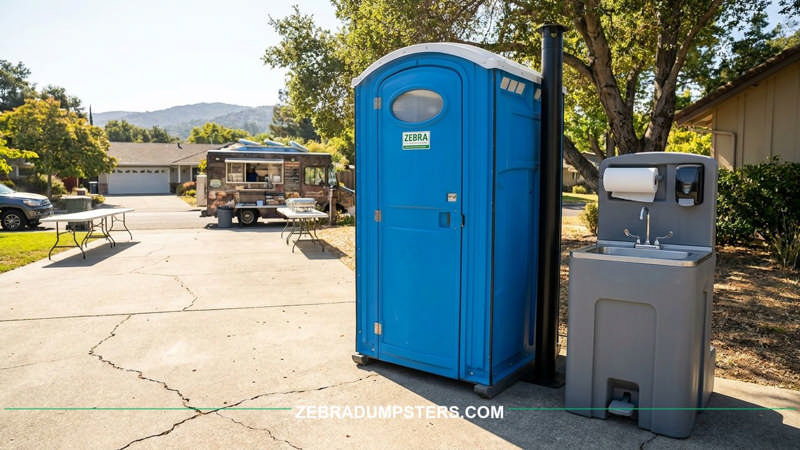
The question came from a Saratoga homeowner hosting a 120-person school fundraiser with a taco truck in the driveway. She had booked two porta potties and assumed she was done. The caterer asked where the handwash station was going, and the county's temporary event permit asked the same thing in writing. She had never heard of a standalone handwash station and had no idea the toilet's built-in sink would not count for the food area.
That gap is common. The rules on handwashing at Bay Area events and job sites are written by county health departments and Cal/OSHA, not by rental companies, and they are stricter than most people expect. The short version is that wherever there is food or a paid crew, an inspector expects a place to wash hands with soap and running water. The longer version is worth ten minutes, because getting it wrong shows up as a failed inspection on the morning of the event.
Wherever there is food, an inspector expects a sink
The California Retail Food Code requires handwashing facilities at temporary food facilities, which is the category that covers a food truck at a private party, a booth at a church festival, or a caterer plating outdoors. In Santa Clara County, the Department of Environmental Health issues the temporary event permits, and the application asks how food handlers will wash their hands. "Hand sanitizer" is not an accepted answer on that form.
Here's the catch that trips up event hosts. The food vendor's own handwash setup covers the vendor's booth, and many inspectors expect warm water at that station. A portable foot-pump handwash station supplies cold water, so it is not the right tool for the food-prep side. What it is the right tool for is everyone else: guests coming out of the porta potties, volunteers serving plates, kids at a face-painting table. Inspectors look for that guest-facing station near the toilets, and health departments in the South Bay have sent hosts back to their vendor to add one before opening.
The reality is that a 100-plus guest event with food almost always needs both. The vendor handles the booth. The host handles a standalone station near the porta potties. The event porta potty rental setup that passes inspection in the South Bay is usually two or three units plus one handwash station placed between the toilets and the food line.
Job sites: Cal/OSHA wants washing facilities near the toilet
Construction is the other place the rules bite. Cal/OSHA's construction safety orders, Title 8, Section 1527, require washing facilities on the job site, and inspectors expect them within a short walk of the toilet. On a site with no plumbed water, which describes almost every ground-up build and most ADU projects before rough plumbing is in, a portable handwash station or a porta potty with a built-in handwash is how contractors satisfy that requirement.
Agricultural work has its own rule. Title 8, Section 3457 sets one toilet and one handwashing facility per 20 workers, within a quarter mile of where they are working. That matters for orchard and vineyard crews on the edges of the South Bay.
In our experience, the citation almost never comes from a site with no handwash at all. It comes from a site that had one during framing, let the water run dry, and never refilled it. An empty handwash station is worse than none, because it shows the inspector you knew the rule. The construction site toilet rental option with the built-in handwash avoids that failure mode because the water and soap get restocked on every cleaning visit.
Job site with no plumbing
One unit with built-in handwash, from $135
The sink inside the door adds $10 per 28 days and gets soap, water and towels restocked on every cleaning visit. That covers Cal/OSHA washing facilities for a crew up to about six.
Built-in handwash vs the standalone station: $10 vs $140
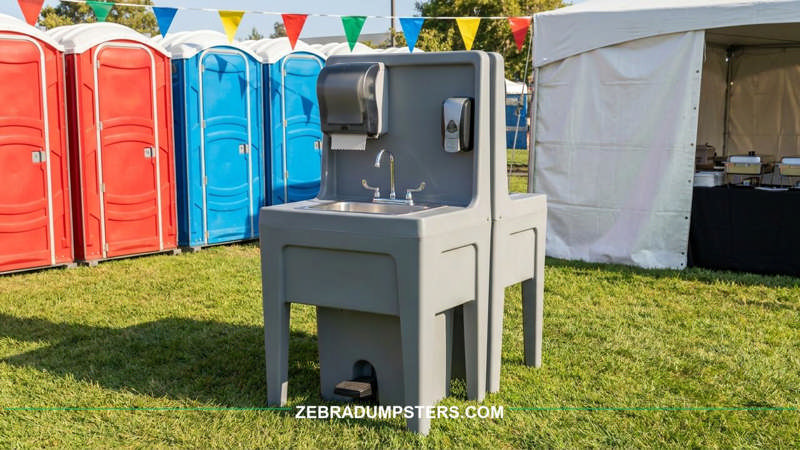
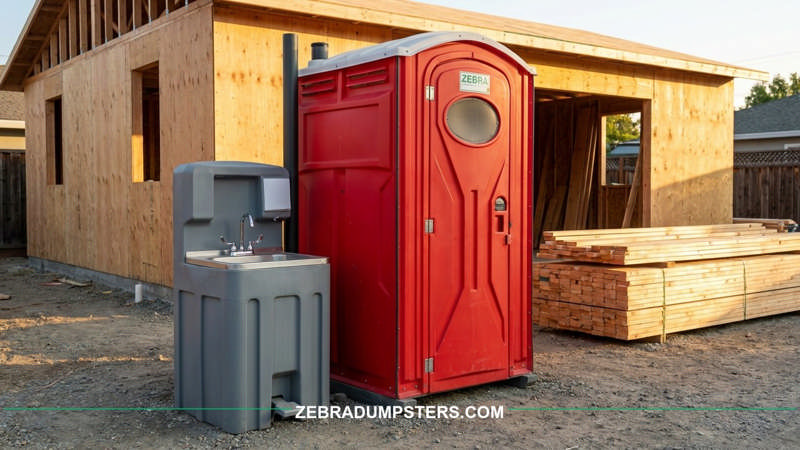
There are two ways to put handwashing on a site, and they solve different problems. The built-in handwash is a small sink inside the porta potty door with a foot pump, soap, and paper towels. It adds $10 to the unit price per 28-day period. The standalone station is a separate chest-high cabinet with its own basin, foot pump, and dispensers, and it rents for $140 per 28-day period. Prices subject to change. Verify current rates at zebradumpsters.com/toilet-rental before booking.
| Option | Price per 28 days | Best for |
|---|---|---|
| Standard unit, no handwash | $125 biweekly / $145 weekly | Small crews with a hose bib nearby |
| Standard unit with built-in handwash | $135 biweekly / $155 weekly | Crews of 2 to 6, remodels, ADU builds |
| Standalone handwash station | $140 | Events with food, crews of 8 or more, multi-unit setups |
The built-in version is the better value for most job sites. One person at a time uses the toilet, so one person at a time uses the sink, and there is no line. Where it falls apart is events. Fifty guests coming out of two porta potties in the ten minutes after a toast do not want to wait for the person inside to finish washing up. A standalone station outside the units handles that surge. It also sits where an inspector can see it, which matters more than people think.
The common mistake we see is the reverse: contractors renting a standalone station for a three-person crew because it sounds more official. It is $130 more per month than the built-in option and does the same job for that crew size. Spend that on weekly cleaning instead. For most porta potty rental in San Jose bookings, the built-in handwash at $135 or $155 is the right default, and the standalone station is the upgrade for food and crowds.
Hand sanitizer is not a substitute, with one exception
Sanitizer dispensers are cheap, easy, and inspectors ignore them when a handwashing facility is required. Sanitizer does not remove the grime a framing crew carries, and it does nothing for a food handler who just touched raw chicken. Health codes treat it as an extra, not a replacement.
The one place it earns its keep is a short private gathering with no permit, no vendor, and no paid crew. A 30-person backyard birthday with a home-cooked buffet and one porta potty does not need a $140 station. A sanitizer pump on a folding table next to the unit is fine. The moment a food truck, a caterer, or a permit enters the picture, that stops being true.
Three setups that pass inspection
A 150-guest church festival in Santa Clara with three food booths books three standard units with the built-in handwash at $135 each, plus one standalone station placed between the toilet row and the food line. The booths bring their own warm-water setups for the vendor permit. Total for the toilets and station comes to $545 plus the $80 delivery, and the inspector's walkthrough takes five minutes.
A six-worker ADU build in Campbell with no plumbing until month four books one unit with built-in handwash on weekly cleaning at $155. That one unit covers Cal/OSHA for the whole crew, and the sink gets restocked every week with the cleaning. Adding a $140 standalone station here would be money spent to feel compliant rather than to be compliant. A porta potty rental in Campbell with the built-in option is the whole answer for a crew that size.
A backyard wedding in Los Gatos with 90 guests and a caterer books two units and one standalone handwash near the catering tent, at $390 plus delivery for the weekend. The caterer covers their own prep station. Guests wash at ours.
If your event has a permit or your job site has a crew, and you are not sure which of these you are, call the San Jose office at (408) 495-3006. Describe the food situation and the headcount and we will tell you whether the built-in handwash covers it or the station is worth the $140.
Event with food or a permit
Add the standalone station for $140
Two or three units plus one handwash station between the toilets and the food line is the setup that passes a Santa Clara County walkthrough. Delivery and pickup are a flat $80 for the whole order.
Frequently Asked Questions
Do I need a handwash station for a porta potty at an event?
If the event has a temporary food facility permit, a food truck, or a caterer, yes. Santa Clara County health inspectors expect a guest-facing handwash station near the toilets in addition to the vendor's own booth setup.
Does Cal/OSHA require handwashing on construction sites?
Yes. Title 8, Section 1527 requires washing facilities on the job site, close to the toilet. A porta potty with a built-in handwash or a standalone station both satisfy it as long as the water and soap are kept stocked.
What is the difference between a built-in handwash and a standalone station?
The built-in is a small sink inside the porta potty for $10 more per 28-day period. The standalone is a separate cabinet with its own basin and dispensers for $140 per 28-day period, and it handles crowds and food areas that the built-in cannot.
Is hand sanitizer enough instead of a handwash station?
Not where a handwashing facility is required by a permit or by Cal/OSHA. Sanitizer is fine only for a small private gathering with no vendor, no permit, and no paid crew.
How much does a handwash station rental cost in the Bay Area?
$140 per 28-day period as a standalone unit, or $10 added to a porta potty for the built-in version. Delivery and pickup are a flat $80 for the whole order.