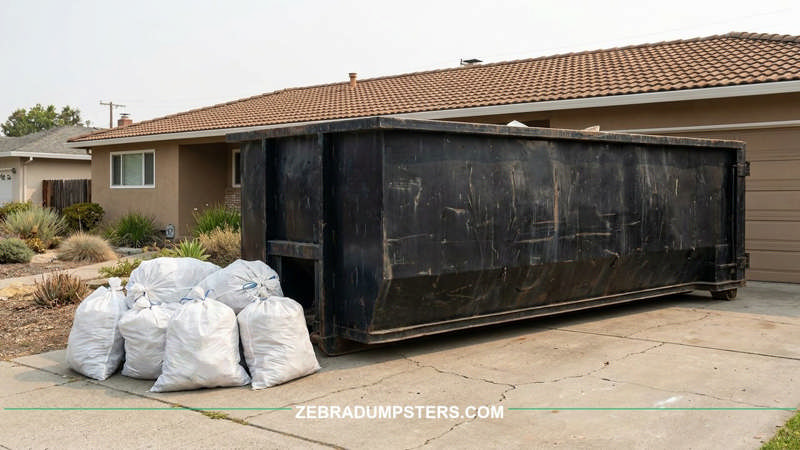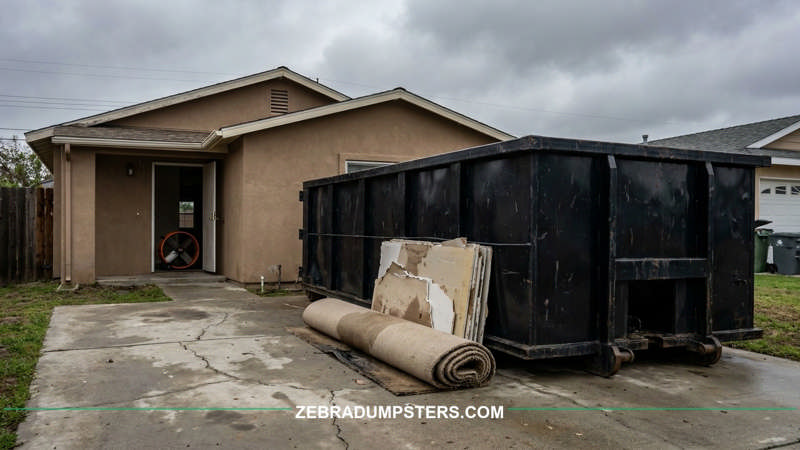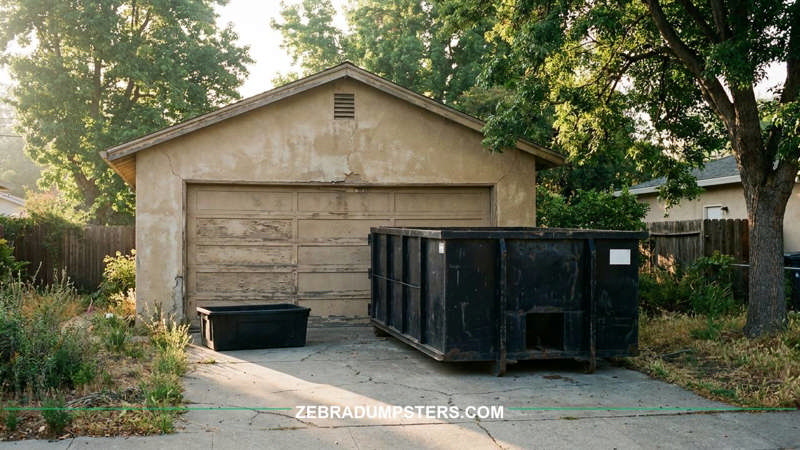
The old garage at the back of the lot is usually the first thing to go when a Bay Area family decides to build an ADU, add a pool, or just get its yard back. Most people price the demolition crew and forget the rest. Then the quote lands and half of it is a line called "haul-off," and nobody can explain why the concrete costs more than the walls.
We are the company that hauls that debris away, so this guide starts where most cost guides stop. It covers what garage demolition costs in the Bay Area, what the slab really weighs, which dumpsters a teardown needs, and the San Jose permit steps that decide whether you get your deposit back.
What Garage Demolition Costs in the Bay Area
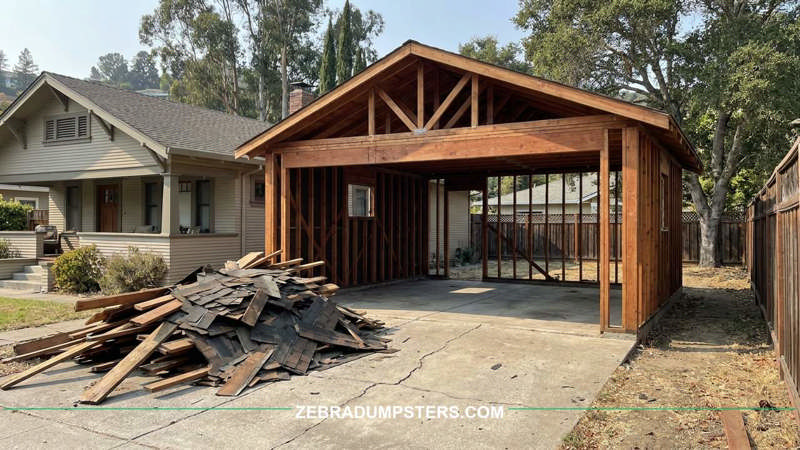
National cost guides do not agree on one number, and that disagreement tells you something. Thumbtack reports a typical range of about $790 to $2,460 for garage demolition. Fixr puts a 24 by 24 foot detached garage at $1,600 to $6,000, with an average near $3,500, and roughly $4 to $8 per square foot. Angi's 2026 guide gives $2,000 to $10,000. California demolition contractors quote higher: one California contractor's guide puts most two-car garages in the state between $4,500 and $8,500.
The spread comes from three things: the size of the garage, whether the concrete slab comes out, and how the debris is handled. Labor in the Bay Area runs above national averages, so plan from the upper half of any national range.
How much does it cost to demo a 24x24 garage?
A 24 by 24 garage is 576 square feet, a generous two-car. At Fixr's $4 to $8 per square foot, the teardown alone runs about $2,300 to $4,600 before slab removal. Fixr adds up to $1,500 for breaking out the slab. Start from the California range for a two-car garage and add the slab, and a complete Bay Area job with haul-off is reasonable to budget at roughly $5,000 to $9,000, more for an attached garage.
Attached versus detached
Detached garages are the cheaper job. The crew can pull the roof, push the walls in and load. An attached garage shares a wall and often a roof line with the house, so the work slows down: the shared wall has to be cut, shored and finished as an exterior wall, and the permit usually counts it as an alteration of the house. Fixr's numbers put the same 576 square feet at $2,300 to $3,450 detached and $3,500 to $4,600 attached.
Is it cheaper to demolish and rebuild?
Only if the old structure has nothing to save. Rebuilding a garage runs in the tens of thousands, and Fixr puts a demolish-and-rebuild job at roughly $24,000 to $70,000. If the slab is sound and level and the walls are straight, converting or repairing usually costs less. If the slab is cracked, the framing is rotted, or you need the space for an ADU with its own foundation, tearing it down is the cleaner path.
| Source | What it covers | Range |
|---|---|---|
| Thumbtack | Typical garage demolition, national | About $790 to $2,460 |
| Fixr | 24x24 detached, national | $1,600 to $6,000, average about $3,500 |
| Angi | Garage demolition, national, 2026 | $2,000 to $10,000 |
| California contractor guide | Two-car garage, California | Most between $4,500 and $8,500 |
The Concrete Slab Is the Part Nobody Prices Right
Here's the catch with garage demolition: the walls and roof are bulky, but the slab is heavy. Concrete weighs about two tons per cubic yard. A two-car slab of 20 by 20 feet at four inches thick is about 133 cubic feet of concrete, close to five cubic yards solid. That is roughly 10 tons. Broken into chunks, it bulks up to about six or seven cubic yards.
A single-car slab of 12 by 20 feet is about three cubic yards solid, or roughly six tons. Slabs with thickened edges or old footings come in heavier, so treat these as the floor, not the ceiling.
Now look at what happens to that weight in the wrong dumpster. A general debris bin includes a set tonnage: three tons on our 30-yard. Put a 10-ton two-car slab in it and you are seven tons over, at $155 a ton in San Jose. That is about $1,085 in overage on top of the rental, for one load.
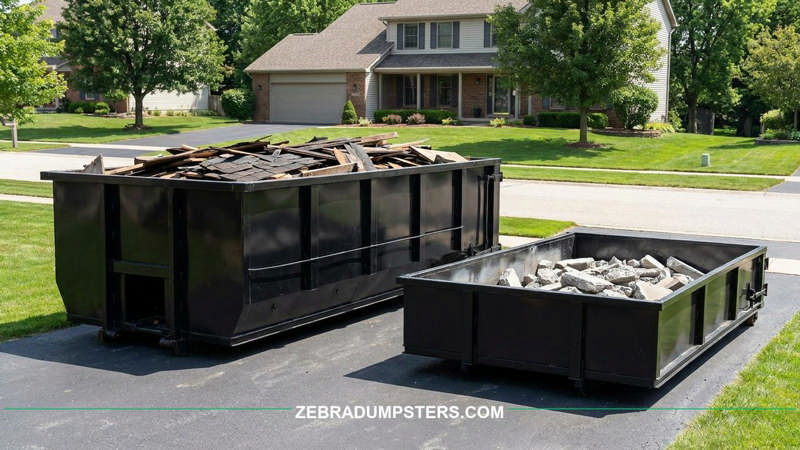
The cheaper route is a separate inert dumpster for the concrete. Our inert bins take clean concrete, brick, asphalt and dirt with no weight limit at all, because that load goes to a recycler, not a landfill. In San Jose a 10-yard inert bin is $640 and a 5-yard is $585, and that is the whole bill. A two-car slab fits in one 10-yard inert bin. A single-car slab usually fits in a 5-yard.
Prices subject to change. Verify current rates at zebradumpsters.com/weight-limits-and-fees.
The rule that makes this work is cleanliness. Wood, roofing, wire or trash mixed into the concrete turns the load into general debris with general debris weight limits. Keep the slab chunks separate from the start, and break the slab into pieces under 3 feet before loading. Stucco from the walls never goes in the inert bin. Our concrete and dirt dumpster page lists exactly what an inert bin accepts.
Garage slab removal
10-yard inert dumpster in San Jose, $640 with no weight limit
Clean concrete, brick and asphalt from a two-car slab in one bin, with no overweight charge. Enter your delivery ZIP to see your city's price.
What Size Dumpster a Garage Teardown Needs
For the structure itself, size by weight first and volume second, because siding makes a huge difference. Much of the Bay Area's older housing stock has stucco garages, and three-coat stucco weighs around 10 pounds per square foot of wall. A wood-sided garage is far lighter.
We worked out typical loads from standard material weights: asphalt shingles at about 230 to 250 pounds per 100 square feet for three-tab, roof sheathing, framing lumber, the door, and either wood siding or stucco on the walls. These are planning numbers, not a quote, and the slab is counted separately in the inert bin.
| Garage | Structure debris (estimate) | General bin | Slab bin | San Jose bins total |
|---|---|---|---|---|
| Single-car, wood siding, 12x20 | About 1.5 to 2 tons | 20-yard ($630, 2 tons included) | 5-yard inert ($585) | About $1,215 |
| Single-car, stucco, 12x20 | About 3 tons | 30-yard ($786, 3 tons included) | 5-yard inert ($585) | About $1,371 |
| Two-car, wood siding, 20x20 | About 2.5 to 3 tons | 30-yard ($786, 3 tons included) | 10-yard inert ($640) | About $1,426 |
| Two-car, stucco, 20x20 | About 5 tons | 40-yard ($910, 4 tons included) plus about 1 ton over at $155 | 10-yard inert ($640) | About $1,705 |
Prices subject to change. Verify current rates at zebradumpsters.com/weight-limits-and-fees.
What surprises most people is how much of a garage quote those two bins explain. On a $5,000 to $7,000 job, $1,400 to $1,700 of disposal is a real share. If a quote does not say which bins are included and who pays the overweight, ask before you sign. Each bin includes seven days, extra days are $45, and the 30 yard dumpster page lists the dimensions so you can check the driveway first.
Do You Need a Permit to Tear Down a Garage in San Jose?
Yes, for most garages. The City of San José's demolition page says removing a detached garage, shed or other accessory building needs a building permit unless the structure is 120 square feet or smaller. A one-car garage is roughly twice that, so plan on the permit.
The steps the city lists are worth knowing before you hire anyone:
- A Bay Area Air District job number and a PCBs screening form before the application goes in.
- A plot plan showing the structure, property lines and anything nearby, such as a pool.
- Gas service removed by PG&E, requested at least 30 days before the demolition date.
- A refundable Construction and Demolition Diversion Deposit, collected when the permit is issued.
You can read the full list on the City of San José demolition permit page.
The deposit you only get back with weight tickets
That diversion deposit is where the dumpster choice matters again. The city refunds it when you show the debris went to a certified recycling facility, and the proof is the weight tickets. Clean concrete in an inert bin is the easiest diversion there is, which is one more reason to keep the slab separate. Ask your hauler before the job starts whether they can send the weight tickets, and keep them with the permit.
Check for asbestos and lead before anything comes down
Garages built before the 1980s can carry asbestos in stucco, roofing felt, old siding or textured finishes, and paint applied before 1978 may contain lead. The Air District's rules for homes call for sampling of materials like stucco before they are disturbed. Asbestos never goes in a roll-off. Any material that tests positive leaves with a licensed abatement contractor.
Bay Area Air District asbestos FAQ (PDF)
When the Garage Is Coming Down for an ADU
A lot of Bay Area garage teardowns are really the first phase of an accessory dwelling unit. California's ADU law helps here. Under the 2022 changes from SB 897, a city still requires a demolition permit to replace a detached garage with an ADU, but it has to issue that permit together with the ADU building permit, and it cannot require written notice to neighbors or a posted placard outside a historic district. A summary of the SB 897 changes explains the details.
The bigger decision comes earlier: convert the garage or tear it down. A conversion keeps the slab, walls and roof, so the debris is mostly interior: drywall, the garage door, some framing. A 20-yard general bin usually covers it. A teardown for a new detached ADU needs both bins from the table above, and often a second inert bin if the site work digs out soil for new footings.
Where does demolition sit in the whole ADU budget? Maxable's 2026 Bay Area ADU guide puts garage conversions at about $120,000 to $150,000 and detached units at roughly $250,000 to $500,000. Against those numbers, a $5,000 to $9,000 garage teardown is small, but it is the first invoice, it sets the schedule, and it is the easiest one to get wrong. If the lot also has an old shed in the way, our guide to shed demolition and disposal covers the smaller version of this job.
How to Tear Down an Old Garage Without Paying Twice
The reality is that most of the money lost on garage teardowns is lost in the order of operations, not the price of the crew.
Disconnect first. Electrical from the house, any water line, and the gas meter through PG&E with the 30-day lead time. A crew that shows up before PG&E has finished is a crew you pay to wait.
Test before you break. Sample the stucco and any old roofing or siding in a pre-1980 garage. Finding asbestos after the walls are on the ground turns a two-day job into a cleanup.
Salvage what is worth taking. Garage doors, openers, windows and good lumber can go to a reuse store. It saves space in the bin and occasionally pays for lunch.
Order two bins, not one. General debris for the structure, inert for the slab. If space is tight, take the general bin first and swap it for the inert bin when the slab work starts.
Keep the concrete clean. No wood, roofing scraps, loose metal or trash in the inert bin, and no stucco: stucco goes in the general bin. Rebar or wire mesh in the concrete is fine as long as nothing sticks out more than 3 inches, and every piece has to be under 3 feet.
Keep every weight ticket. They are the receipts for the diversion deposit and the record if an overweight charge is disputed.
Garage teardown
Book the general bin and the inert bin together
Every rental includes delivery, pickup, seven days and a weight allowance. Same-day delivery when capacity allows. Outside San Jose and Campbell, same-day service adds a $100 fee.
Frequently Asked Questions
How much does it cost to demolish and remove a garage?
National guides put most garage demolitions between about $1,600 and $6,000, and California two-car jobs often run $4,500 to $8,500. In San Jose, the dumpsters alone for a two-car teardown with slab removal come to about $1,400 to $1,700.
Can garage debris and the concrete slab go in the same dumpster?
They can, but it costs more. Mixed with wood and roofing, the concrete counts against the general bin's weight limit. A clean inert bin for the slab has no weight limit in San Jose, as long as the pieces are under 3 feet, nothing protrudes more than 3 inches, and no stucco or trash goes in with it.
Do I need a permit for a small garage or shed?
In San José, an accessory structure of 120 square feet or less can be removed without a building permit. Anything larger, including almost every garage, needs a demolition permit.
How long does it take to tear down a garage?
A detached wood garage usually comes down in one or two days, and slab removal adds another day. The permit, the air district job number and the 30-day PG&E gas notice take longer than the work.
Can I demolish a garage myself?
Homeowners can pull an owner-builder permit in San José, but a detached structure is heavy, overhead work. Most people hire the teardown and save money by renting the bins themselves and keeping the concrete separate.