A construction waste management plan is the document a city asks for before and after a building project: what debris you expect, where each material will go, and, once the job is done, the weight tickets proving how much of it was recycled. In most Bay Area cities that plan lives online in Green Halo, and the target is usually CalGreen's 65% or the city's own figure, such as 50% for San Jose's deposit program.
Here is how it usually goes wrong. A contractor wraps up a remodel, every trade inspection has passed, and the call to book the final comes back with a problem. The work is fine. What is missing is a report: the weight of every load that left the site, uploaded to a website most of the crew never opened. In a growing list of Bay Area cities, that website is Green Halo.
Contractors ask us about it more and more, usually with the same frustration. The Green Halo waste management plan is not hard once you see its shape. It is a plan at the start, a ticket per load in the middle, and a close-out at the end. The tickets come from the dumpster side of the job, which is why we wrote this down.
Prefer to listen? Here is a five-minute AI-narrated summary of this guide.
Listen to this article
--:-- · narrated
Which Bay Area Cities Run C&D Reporting on Green Halo
Green Halo is the software. Each city sets its own rules on top of it, and the differences matter more than the logins. These are the cities where we confirmed the requirement on the city's own website.
| City | Where you file | Diversion target | The detail people miss |
|---|---|---|---|
| San Jose, alterations and demolition (CDDD deposit) | Waste Tracking San Jose (Green Halo), or email the CDD application | 50% | Residential alterations from $2,000 and non-residential from $5,000 pay a deposit by square footage. Tickets must come from a City-Certified facility and show the project address or permit number. Refund request within 365 days of the final |
| San Jose, new construction and tenant improvements of $200,000 and up | CDD Review and Final in Waste Tracking San Jose | Set by the CDD review (CalGreen 65% floor) | Submit the project in Green Halo before scheduling the final building inspection. No deposit, a flat review fee instead |
| Santa Clara | SantaClara.WasteTracking.com | 65% | Tickets due two weeks before occupancy, and Green Halo projects must use Mission Trail's debris box app |
| Sunnyvale | Green Halo plan before permit | 65% for commercial demolition and for residential jobs removing half or more of the exterior walls | A shortfall is charged per square foot: 2,045 sq ft at four points under target came to $818 in the city's own example |
| Mountain View | MountainView.WasteTracking.com, before permit approval | 65%, or 50% for demolition-only jobs of 5,000 sq ft and up | Recology is the city's exclusive roll-off hauler |
| Palo Alto | Green Halo, for deconstruction projects | Set by the deconstruction ordinance | Material must go to approved facilities listed in Green Halo |
| Saratoga | saratoga.wastetracking.com | 65% | Diversion must be met before the final can be scheduled |
| Berkeley | Berkeley Waste Tracking (Green Halo) | 65%, plus 100% of concrete, asphalt and excavated soil | Give the project number to the weighmaster at the scale |
| San Mateo | wastetracking.com/city/sanmateo | Set by city ordinance | Documentation at final releases the deposit |
Checked on each city's website in October 2026. Your permit conditions are the final word.
What surprises most people is the last column. Two of those rules decide who can even haul your debris. In Mountain View the city has named one exclusive roll-off hauler, and in Santa Clara a Green Halo project has to run its boxes through the franchise hauler's app. San Jose is the opposite case. Its C&D diversion deposit program still lets you email the application instead of using the portal, and its program is a deposit you get back, so the deadline that matters is 365 days after the final building inspection.
What is Green Halo?
Green Halo Systems is the private company whose waste-tracking software the cities license. Each city gets its own portal at a wastetracking.com address, and your project, plan and tickets live there, not on a city server. The software is the same everywhere. The rules in the table are the city's.
How do I create a Green Halo account?
Go to your city's portal (for example sanjose.wastetracking.com), choose the contractor or property owner registration, and enter the permit number once the city issues it. The account and the plan are free. The costs come from the city, such as San Jose's deposit, Sunnyvale's per-square-foot shortfall charge or a review fee on the permit. Create it when you apply for the permit, because Mountain View and Sunnyvale want the plan approved before the permit is.
Four Moments That Make or Break the Report
Most of the trouble we hear about comes from treating Green Halo as a close-out chore. It is really four separate checkpoints spread across the job.
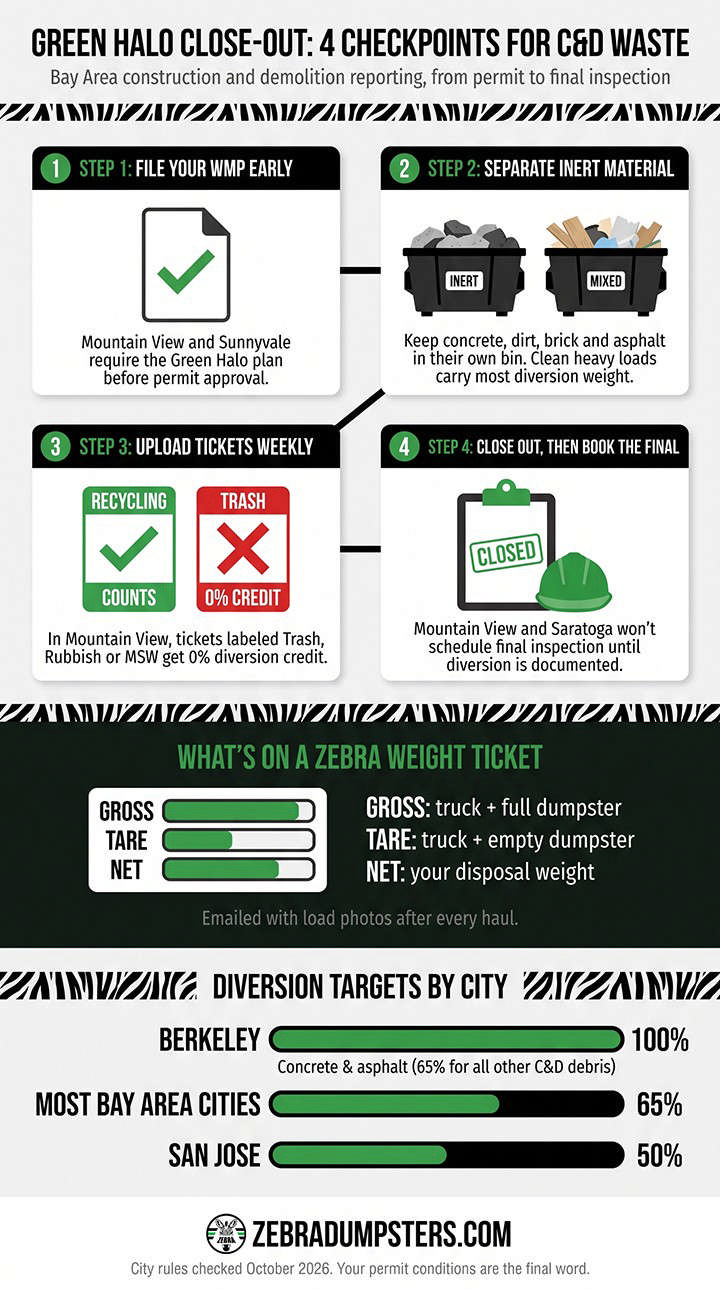
Before the permit. Mountain View and Sunnyvale want the plan filed before the permit is approved. The plan asks what you expect to generate and where it will go. Ten honest minutes here saves an hour of fixing later, because the facilities you name become the facilities the system expects to see on your tickets.
When you order bins. This is the decision that sets your percentage. A clean load of one material is easy to credit. A box with drywall, lumber, a sofa and a bag of lunch trash is the hard case. Plan at least one inert bin if the job breaks concrete, and keep general debris separate.
After every haul. Each load produces a weight ticket. Upload it that week, not at the end. Mountain View gives zero credit to tickets marked Trash, Rubbish or MSW, and San Jose does not count Alternative Daily Cover toward the rate. A mislabeled ticket found in week two is a phone call. Found in month six, it is a missed final.
Before you call for the final. Mountain View and Saratoga will not schedule the final inspection until the diversion is documented. Santa Clara wants every ticket in two weeks ahead of occupancy. Close the project in Green Halo first, then book the inspector.
Construction and remodel jobs
Disposal and weight tickets for every load you haul with us
Gross, tare and net weight from the facility scale, available on request for your Green Halo report. Bins from 5 to 40 yards, priced by delivery ZIP.
Inert Loads Are Where the Percentage Is Won
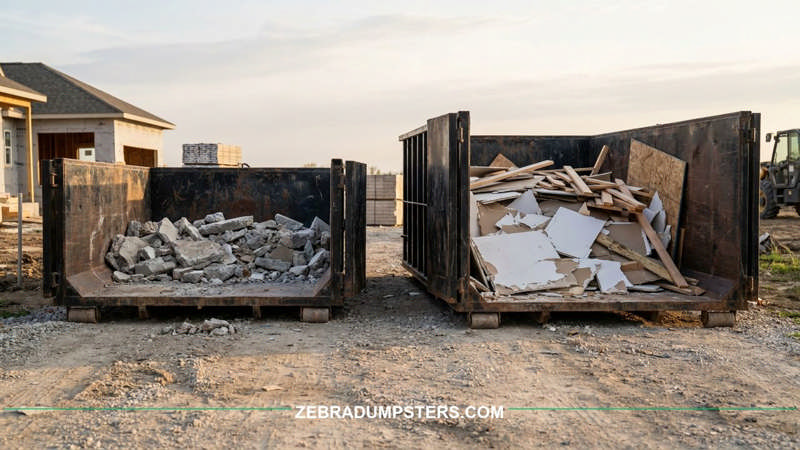
Diversion is measured by weight, and that changes the strategy. A 10-yard load of brick and concrete mix typically weighs 10 to 12 tons. A box of drywall and framing scrap weighs a fraction of that. When the heavy material goes out clean, it can carry the whole project over 65% almost by itself.
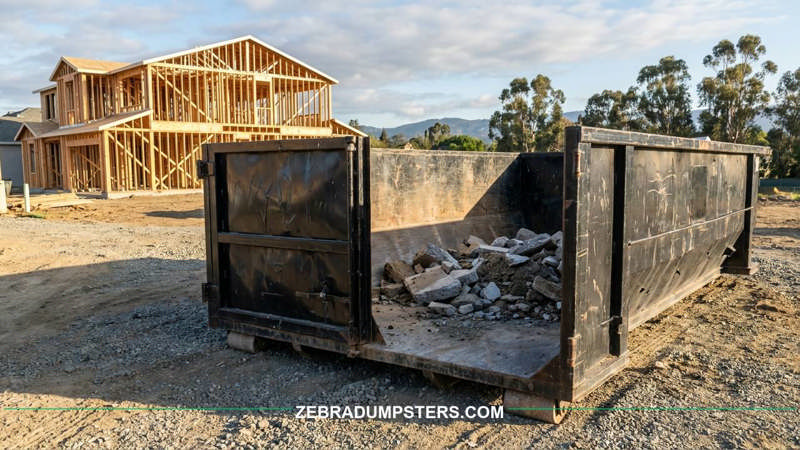
That is why we keep inert bins strict. Ours take clean concrete, dirt, brick and asphalt, nothing else. If general debris makes up more than 5% of the load, it is reclassified as general debris, and anything other than those four materials triggers a $300 cleaning fee. Contractors sometimes see that as fussiness. The reality is that it keeps the load clean enough to count as recycled.
Two pricing details are worth knowing before the job starts. When weight receipts are required, an inert bin includes up to 5 tons on the 10-yard and 2.5 tons on the 5-yard, and every ton beyond that is $155 in San Jose. Some projects also need special recycling, such as a Green Halo certificate for dirt, and those can carry added fees. Both are on our weight limits and fees page, which is worth a look before you price the haul-off. Prices subject to change. Verify current rates at zebradumpsters.com/weight-limits-and-fees.
The lesson we would pass on: if your city demands 100% of concrete, as Berkeley does, a single mixed box with a few broken slabs in it can sink the number. Separate it at the source, and if you are weighing the options for the slabs themselves, our guide to how to dispose of concrete chunks covers the facilities.
Where the Weight Tickets Come From
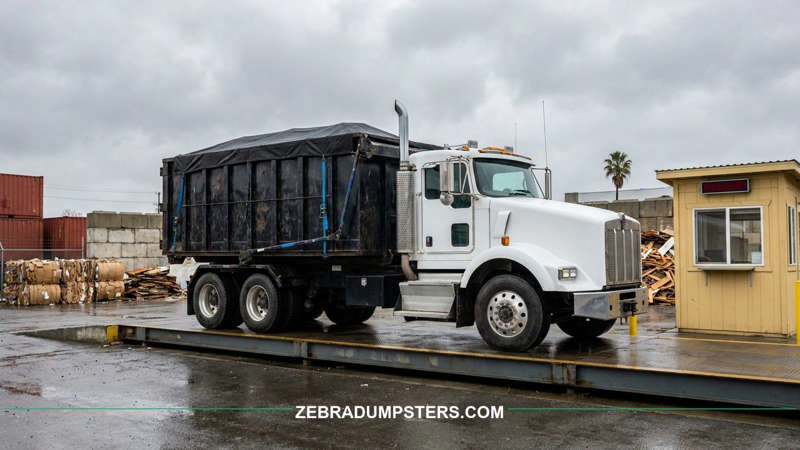
Every load we haul is weighed in full and out empty at the facility, and the receipt shows gross, tare and net. The net is the figure your report needs. Zebra Dumpsters makes construction debris disposal simple by providing the disposal and weight tickets you need for Green Halo reporting. Customers are responsible for uploading their documents and completing the reporting process directly through Green Halo. Give us the job site address, a contact and any special disposal or recycling needs when you order, keep household and non-recyclable material out of the bin (a load full of it is not accepted in Green Halo), and request the tickets after each haul. Providing them is part of our regular service at no separate charge. What the ticket shows, how to read it and what to do when one is wrong is covered in our guide to dumpster rental weight tickets.
The Week Before Final Inspection
Open the project in Green Halo and count tickets against hauls. A missing ticket is the most common gap, and it is far easier to request a copy in October than in March. Then look at every label. If one says Trash or MSW and should not, fix it now. Close the project, wait for approval, and only then call the inspector.
Concrete, dirt, brick, asphalt
Inert bins that keep heavy material clean and countable
5-yard and 10-yard inert dumpsters with no weight limit on standard loads, and disposal tickets available for every haul.
Frequently Asked Questions
What is a Green Halo waste management plan?
It is the online plan many Bay Area cities require for construction and demolition projects. You list the expected debris and destinations, upload a weight ticket for each load, and close it out to prove the city's diversion target was met.
What is a construction site waste management plan?
A construction waste management plan estimates the debris a project will produce by material, names the facility each material will go to, and sets the diversion percentage the project must reach. Cities on Green Halo collect it online. Elsewhere it is a form attached to the permit.
Is there a construction waste management plan template?
In Green Halo the plan form is the template. It asks for the project address and permit number, square footage, each material type with an estimated tonnage, the destination facility for each, and whether it will be reused, recycled or disposed. Fill those fields and the diversion percentage is calculated for you.
Who uploads the weight tickets to Green Halo?
The permit holder or their contractor. We provide the disposal and weight tickets for the loads we haul, and customers upload them and complete the reporting directly through Green Halo.
Which Bay Area cities use Green Halo?
Confirmed on city websites in October 2026: San Jose, Santa Clara, Sunnyvale, Mountain View, Palo Alto, Saratoga, Berkeley and San Mateo. Rules and diversion targets differ by city.
Does concrete count toward the diversion rate?
Yes, when it goes to a recycling facility as a clean load. Berkeley requires 100% of concrete and asphalt to be recycled, so keep it out of mixed debris bins.