A dumpster weight ticket is the receipt the disposal facility prints when the truck crosses the scale: once full on the way in, once empty on the way out. The difference between the two is the net weight of your load, and that net weight is the number a Green Halo report is built from. Zebra Dumpsters makes construction debris disposal simple by providing the disposal and weight tickets you need for Green Halo reporting. Customers are responsible for uploading their documents and completing the reporting process directly through Green Halo.
This guide is the practical half of that sentence. What the ticket shows, how it reaches you, what to tell us when you order so the ticket comes out right, and the one load rule that decides whether the ticket counts at all. If you need the city rules and the plan itself, start with our guide to the Green Halo waste management plan and come back here for the tickets.
What a Dumpster Weight Ticket Shows
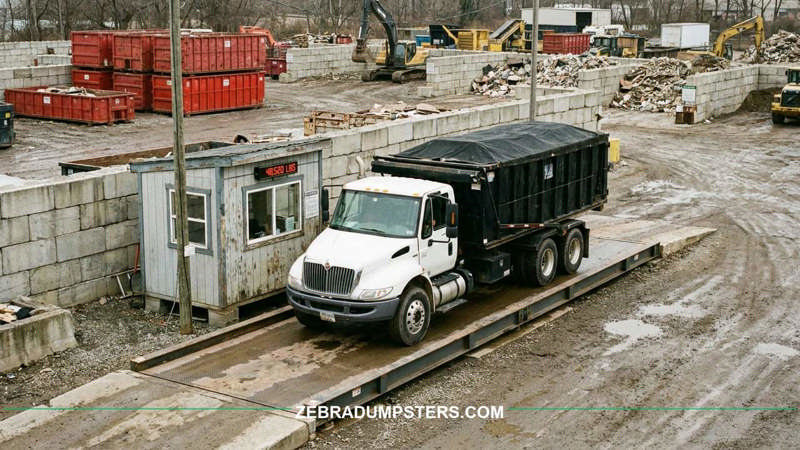
Every scale ticket carries the same four things, whatever facility prints it. The facility's name and the date of the haul. The gross weight, which is the loaded truck. The tare weight, which is the same truck after it has dumped. And the net, which is gross minus tare and is the only line most reports care about. Many tickets also carry a material description, such as mixed C&D or inert, and that label matters as much as the weight, because a ticket marked trash or MSW earns no diversion credit in San Jose or Mountain View.
Our tickets come from the facility that receives the load, and we add our own record of the haul: the job site address you gave us, the bin size, and photos of the load as it was dumped. Keep both. The city reads the facility ticket, and our record settles any question about which load went where.
What is a certified weight ticket?
A certified ticket is one printed from a scale that the state has inspected and sealed, which is true of every licensed disposal and recycling facility in California. The word certified refers to the scale, not to the hauler. San Jose adds its own layer: for the deposit program, the ticket has to come from a facility on the city's certified C&D list and show the project address or permit number. Those are city rules about which facilities count, and your city's list is the final word.
When and How the Ticket Reaches You
The ticket exists the moment the truck leaves the scale, so the only question is when you ask for it. Request the disposal and weight tickets after each haul rather than at the end of the job. Providing them is part of our regular dumpster service, with no separate charge, and a ticket requested the same week is easy to match to a load. One requested six months later, after the bin number and the driver have both changed, takes longer to find.
Here is the catch: we do not log in to your Green Halo project, upload the tickets, or close the project out. The account belongs to the permit holder, and the city expects the permit holder to submit it. What we provide is the supporting record, every time, for every load.
Who uploads the ticket to Green Halo?
You do, or whoever on your side holds the permit. In Waste Tracking San Jose that means opening the project, adding a ticket under the facility named in your plan, and attaching the image. If the facility is not in the plan's menu, San Jose's instructions say to upload the ticket under the Files tab instead. The city's close-out page walks through the tabs.
When a ticket is wrong
Tickets go wrong in three ways: the address is missing or misspelled, the material label does not match the load, or the ticket never reaches the project at all. If a ticket contains incorrect information from our disposal records, we can help review it against the haul record and the load photos. The customer manages any rejected submission in Green Halo, because the city's review conversation happens inside the permit holder's account.
Check the first ticket of every job against the address on the permit before the second load goes out. A wrong address found in week one is a phone call. The same mistake found at final inspection is a ticket the city may not accept.
What to Tell Us When You Order
A ticket is only as good as the information attached to it, and most of that information is set on the phone when you order the bin. Four things make the difference.
| Give us this when you order | Why Green Halo needs it |
|---|---|
| The job site address, exactly as it appears on the permit | San Jose requires the project address or permit number on the ticket, and the plan in Green Halo is tied to that address |
| A contact who can answer questions about the load | When a facility asks what is in a bin, or a ticket needs a second look, we need someone on your side who was there |
| Any special disposal or recycling requirement | If your plan names a specific facility or needs a clean concrete load, the routing has to be set before the truck is dispatched, not at the scale |
| Whether the load is inert or mixed C&D | Inert bins and mixed bins go to different stalls and come back with different labels on the ticket |
The one thing we do not need is your Green Halo login. We do not manage your reporting, so there is nothing for us to do with it.
Construction and remodel jobs
Disposal and weight tickets for every load you haul with us
Gross, tare and net from the facility scale, available on request for your Green Halo report. Bins from 5 to 40 yards, priced by delivery ZIP.
One Load Rule: Keep Household and Non-Recyclable Material Out
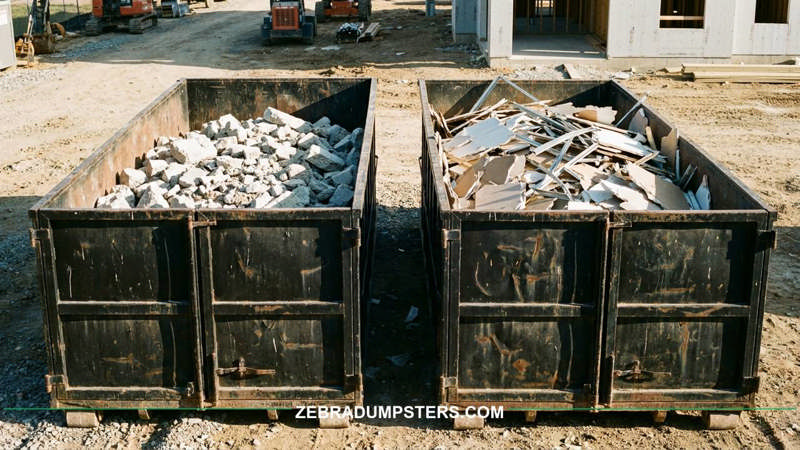
What surprises most people is that a ticket can be perfect and still count for nothing. A load that is full of household and non-recyclable material is not accepted in Green Halo as diverted, whatever the scale says. The facility sorts the bin, labels the ticket accordingly, and the city gives credit by the label. A bin of drywall and framing with a sofa, carpet and bagged lunch trash on top comes back as mixed debris at best and trash at worst.
The reality is that the percentage is decided when the bins are ordered. Put concrete, dirt, brick and asphalt in their own inert bin, keep the construction debris in the mixed bin, and keep everything that is not construction debris out of both. A clean inert load typically weighs several times a mixed load of the same size, so it does most of the work on the diversion rate by itself.
Where We Can and Cannot Deliver
Dumpster availability and hauling depend on city regulation, including exclusive hauling agreements. Several Green Halo cities have given one company the exclusive right to haul roll-off debris, and in those cities the franchise hauler is the only one who can legally place a bin, so the ticket has to come from them. Check your city's page before you call anyone. Where we do serve, which is San Jose and the South Bay and Peninsula cities listed on our construction dumpster rental guide, the tickets come with the service. Prices subject to change. Verify current rates at zebradumpsters.com/weight-limits-and-fees.
Concrete, dirt, brick, asphalt
Inert bins that keep heavy material clean and countable
5-yard and 10-yard inert dumpsters, and disposal tickets available for every haul.
Frequently Asked Questions
What is a dumpster weight ticket?
It is the scale receipt printed by the disposal or recycling facility when the hauler weighs in loaded and out empty. It shows gross, tare and net weight, the facility and the date, and usually the material type. The net weight is what a Green Halo report uses.
Does Zebra upload my tickets to Green Halo?
No. Zebra Dumpsters provides the disposal and weight tickets you need for Green Halo reporting. Customers are responsible for uploading their documents and completing the reporting process directly through Green Halo.
Is there a charge for weight tickets?
Providing the available disposal and weight tickets is part of our regular dumpster service. Green Halo account management and document uploading are not services we offer.
Which loads are not accepted in Green Halo?
A load full of household and non-recyclable material is not accepted as diverted. Tickets labeled trash or MSW earn no credit in San Jose or Mountain View, and San Jose does not count alternative daily cover either. Keep construction debris and inert material in their own bins.
How much does a 30-yard dumpster weigh?
It depends on what is in it. A 30-yard of mixed construction debris usually lands between 2 and 4 tons, while the same bin filled with concrete would be far over the road limit, which is why inert loads go in 5-yard and 10-yard bins. The included tonnage for each size is on our dumpster weight limits page.