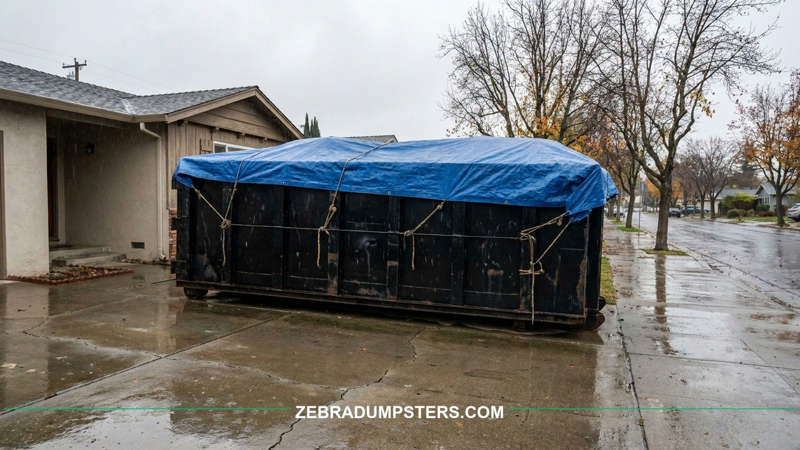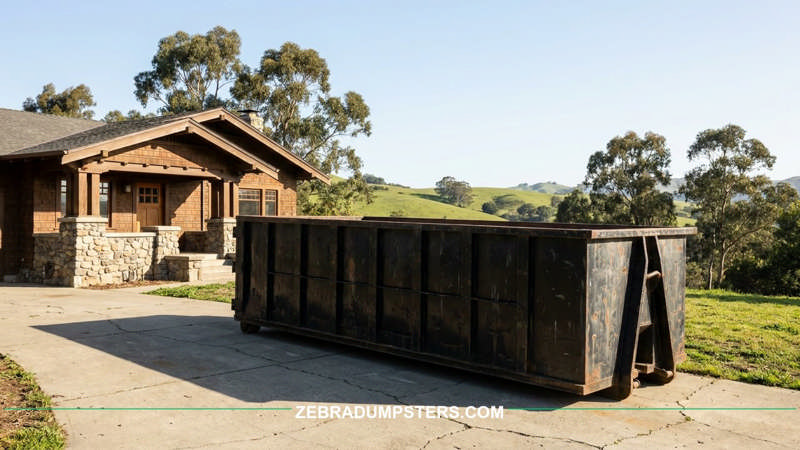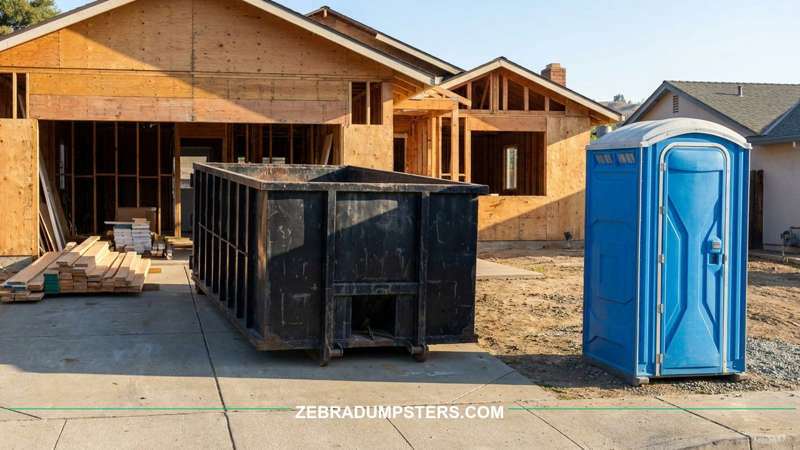
A general contractor in Sunnyvale called us last spring after a wasted morning. He had booked a roll-off from one company and a toilet from another. The toilet arrived first, and the delivery driver set it exactly where it looked tidy, at the top of the driveway. Two hours later our truck showed up with the bin and had nowhere to put it. Nobody had done anything wrong. Nobody had drawn the site either.
A dumpster and a porta potty are the first two things on almost every Bay Area job, and they compete for the same few square feet. We rent both, which means we see both sides of that problem every week. Here is how we would set up a typical residential or light commercial site.
Draw the Site Before You Book Anything
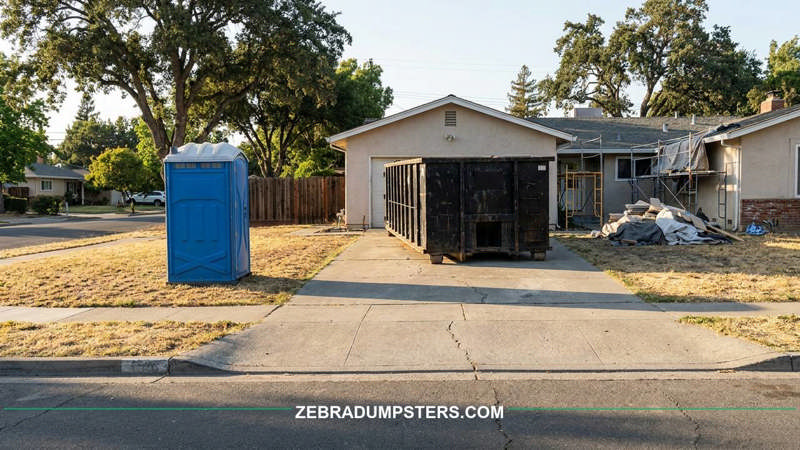
Start with the bin, because it is the less flexible of the two. A roll-off truck backs in on a straight line and slides the box off its bed, so it needs a clear approach behind the drop spot and nothing low overhead. Our 20-yard bin is 16 feet long and 6.6 feet wide on the ground. The 30 and 40-yard bins are 22 feet by 7.5 feet. Measure the driveway or the lot before you pick a size, and remember the truck has to come back for that bin at least once, maybe several times.
The toilet goes second, and the rule is that it never sits in the truck's lane. Put it on firm, level ground, close enough to the work that the crew uses it and not the neighbor's hedge, with the door facing away from the street. A spot near the bin but not in front of it usually works. Our porta potty placement and site prep guide covers the details, including when a street spot needs a permit.
Then send both locations with the bookings. A photo of the driveway with two marks on it saves more trouble than any amount of explaining on the phone.
How Many Toilets, How Big a Bin
The toilet count is set by law, not by guesswork. Cal/OSHA requires at least one toilet for every 20 employees or fraction of 20 of each sex, and all-gender single-user units count toward that total. When fewer than five people work on site, one all-gender single-user unit is enough. For most remodels that means one toilet. A crew of 25 needs two. Our page on construction site toilets has the full ratio table.
The bin is a judgment call based on the job. In our experience a single bathroom fits a 10-yard, a kitchen remodel fills a 20-yard, and a whole-house gut or a roof tear-off needs a 30 or 40. In San Jose those run $430, $550, $680 and $780, each with seven days and a weight allowance included. Heavy tear-out like tile and plaster eats the allowance fast, so for a demo with a lot of masonry, ask about a separate inert bin for the concrete and brick.
Prices subject to change. Verify current rates at zebradumpsters.com/weight-limits-and-fees.
Here's the catch. Contractors almost always size the toilet correctly and the bin too small, because they picture the finished pile, not the loose debris. If you are torn between two sizes, the bigger bin usually costs less than a second haul.
Job site setup
Dumpsters from $409 and porta potties from $125, from one company
Book the bin and the toilet with the same team, and tell us both spots once. Enter your delivery ZIP to see your city's dumpster price.
Weekly or Biweekly Service Follows the Crew, Not the Calendar
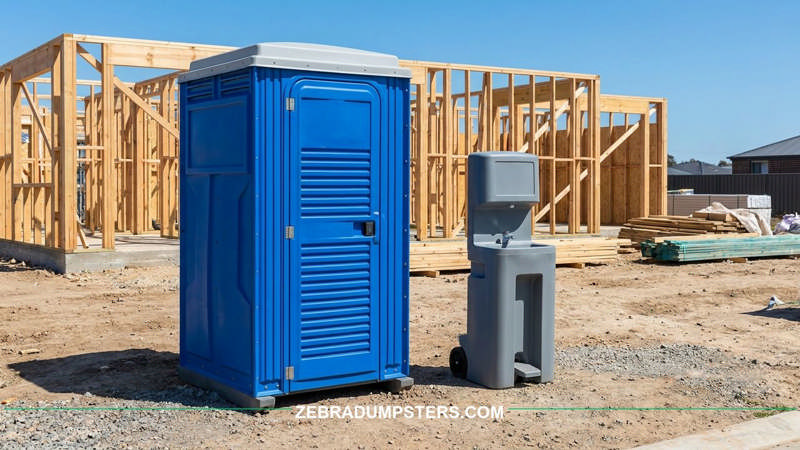
Every toilet we rent is billed on a four-week cycle, and the price is the same in every city we serve. A unit with biweekly cleaning is $125, weekly cleaning is $145, and a built-in handwash sink adds $10 to either. Delivery and pickup is a flat $80 for the whole rental. Cleaning, sanitizing, toilet paper and seat covers are included.
The choice between weekly and biweekly is about headcount and hours. Two or three people on a short day can live with biweekly service. A full framing crew, or any site where the toilet is also the only option for subcontractors coming and going, needs weekly. The cheapest unit is not cheap if the crew starts driving to a gas station twice a day.
Handwashing is the other decision. Cal/OSHA's toilet rule does not set a sink requirement on its own, but most general contractors we work with want one, and it is the single upgrade crews notice. Our guide to porta potty handwash station requirements explains when a separate station makes more sense than the built-in sink.
Book the Toilet for the Job and the Bins in Waves
The two rentals run on different clocks, and planning around that is where the savings are. The toilet stays for the whole project, four weeks at a time, so book it once for the full schedule. If the job runs past a few months, our long term porta potty rental guide is worth a read.
Dumpsters work better in waves. A bin includes seven days, extra days are $45 each, and pickup happens within one to three days of your call. On a typical remodel that means one bin for demolition, picked up as soon as it is full, then a second bin weeks later for the finish trades. Leaving one bin parked for six weeks costs more in daily fees than a second delivery, and it takes up the space the crew needs.
What surprises most people is how much the order of deliveries matters. Set the dumpster first and the toilet after, never the reverse, so the bin lands in its spot and the toilet fills in around it.
Portable toilets
Construction porta potty from $125 per four weeks, flat in every city
Cleaning, toilet paper and seat covers included. $80 flat delivery and pickup. Weekly service and handwash options for full crews.
What Both Rentals Cost on a Real Remodel
Take a six-week kitchen and bath remodel in San Jose with a crew of four. One toilet with weekly cleaning and a built-in sink is $155 per four-week cycle, so two cycles plus the $80 delivery comes to $390. Two 20-yard bins, one for demolition and one for the finish work, are $550 each. If both loads stay inside their two-ton allowance, the whole site costs about $1,490 for six weeks of waste and sanitation.
The same job outside San Jose changes only the dumpster line, because bin prices follow the delivery ZIP while toilet prices do not. Our construction dumpster rental page lists the price for every size and city.
The reality is that the money on a job site is rarely lost on the rental price. It is lost on a dead run because a toilet blocked the truck, on a bin that sat two extra weeks, or on a crew that left for coffee every time nature called. Draw the site, book both with the spots marked, and most of that disappears.
Frequently Asked Questions
How many toilets and what size bin does a four-person remodel need?
One toilet covers it, because Cal/OSHA allows a single all-gender unit when fewer than five people work on site. For the bin, a kitchen remodel usually fills a 20-yard and a single bathroom fits a 10-yard. Weekly cleaning is the better choice for a full-day crew.
Can I rent a dumpster and a porta potty from the same company?
Yes. Zebra Dumpsters rents roll-off dumpsters from 5 to 40 yards and portable toilets with or without handwash sinks. Book both and send us both locations so the bin and the toilet land in the right spots.
Where should the porta potty go on a job site?
On firm, level ground close to the work, with the door facing away from the street, and never in the lane the roll-off truck uses to drop or pick up the dumpster.
How much does a construction porta potty cost?
Our units are $125 per four weeks with biweekly cleaning or $145 with weekly cleaning, plus $10 for a built-in handwash sink and a flat $80 for delivery and pickup. Prices are the same in every city we serve.
What size dumpster do I need for a remodel?
A single bathroom usually fits a 10-yard, a kitchen remodel a 20-yard, and a whole-house gut or roof tear-off a 30 or 40-yard. If you are unsure, the larger bin usually costs less than a second haul.