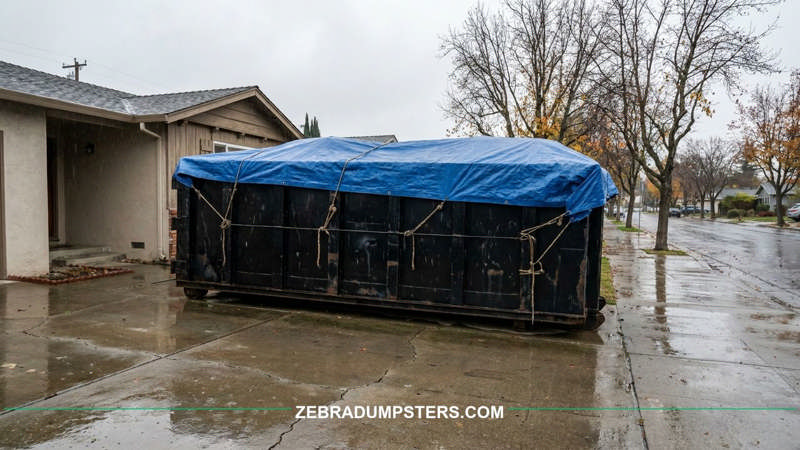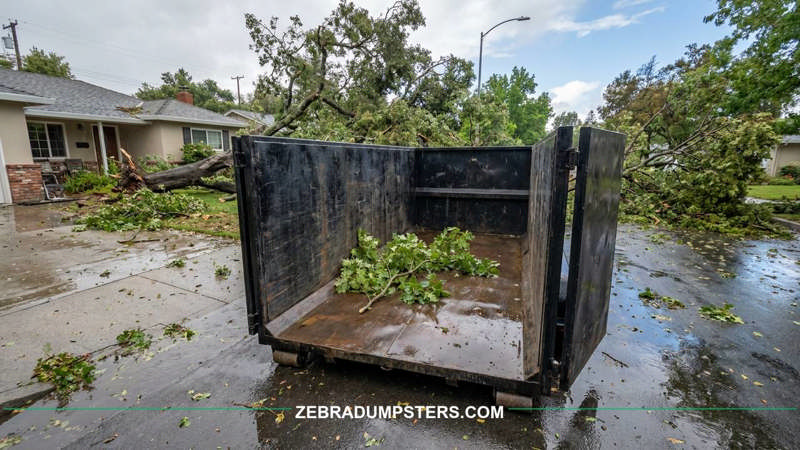
The first big atmospheric river of the season hit the South Bay on a Sunday night in January 2023, and by Monday morning we had 40 calls before 9 AM. Not one of those callers wanted to talk about dumpster sizes. They wanted to know one thing: can you get a bin here today, and will the tree in my driveway fit in it? Storm debris cleanup in the Bay Area is a different job from a garage cleanout: the debris is wet, heavy, oddly shaped, and it arrived without warning.
Here is what eight winters of hauling fallen-tree debris from San Jose to Oakland have taught us.
A Fallen Tree Weighs More Than Your Whole Garage
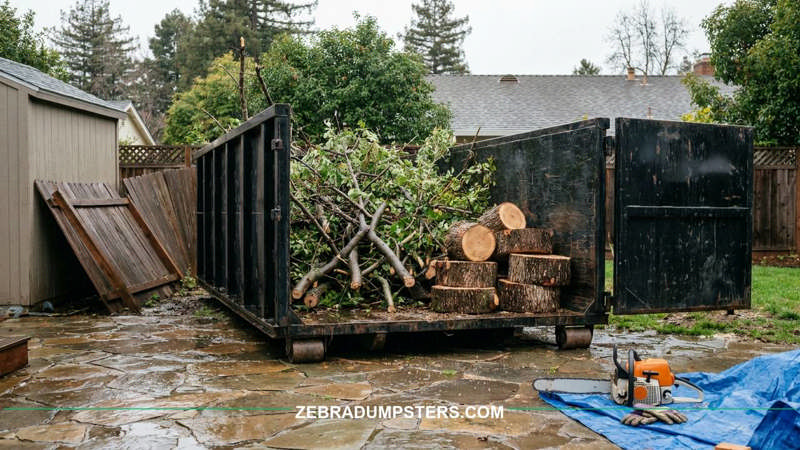
Green wood is mostly water. A freshly fallen oak or eucalyptus limb runs roughly 50 to 65 pounds per cubic foot of solid wood, and after three days of rain the bark is holding even more. Compare that with a typical garage cleanout, where a full 20-yard bin lands around 1.5 tons. A 20-yard bin packed tight with wet branches and trunk rounds can hit 2.5 tons without looking full.
Here's the catch. The 20-yard general debris dumpster includes 2 tons, and every ton over that costs $155 in San Jose. So the bin that looks half empty from the street can still come back with an overweight line on the invoice. The fix is loading smarter, not a bigger bin.
What surprises most people is how little the trunk matters. Branches with leaves still on them are the volume problem. The trunk rounds are the weight problem. A Willow Glen customer last February had a 60-foot Monterey pine come down across the back fence. The branches filled a 20-yard bin. The trunk sections went in a second 10-yard bin and weighed almost as much as the first load.
What Goes in the Bin, and the Three Things That Never Do
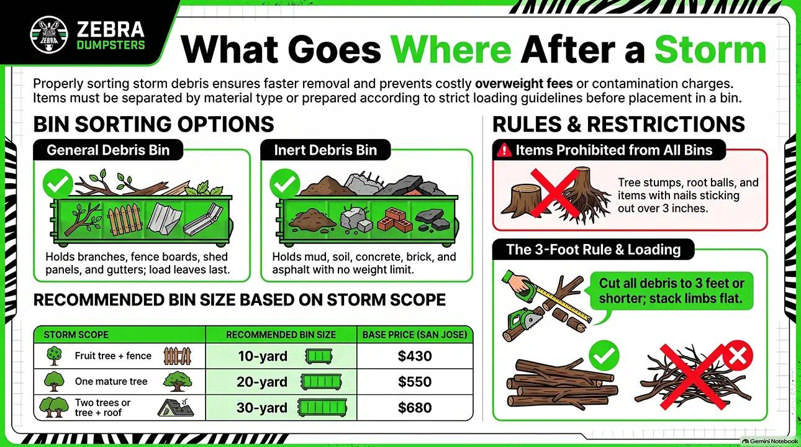
Branches, trunk rounds, fence boards, shed panels, torn-off gutters and shingles all go in a general debris bin together. After a storm, yard waste is most of what we haul.
Three things cause trouble every year. First, large tree stumps are on the prohibited list, because a root ball with soil packed into it cannot be processed as green waste and can exceed the bin's floor load on its own. Cut the trunk flush and leave the stump for a grinder. Second, pieces over three feet long are restricted. A twelve-foot limb tossed in whole traps air and blocks everything else. Third, mud. When a hillside lets go and takes a retaining wall with it, the soil and broken block belong in an inert dumpster for concrete and dirt, which has no weight limit, not in the general debris bin where every shovelful of wet clay counts against your tonnage.
The question we hear most often is whether the storm-damaged fence and the tree that crushed it can go in together. Yes. Wood is wood. Just pull the nails that stick out more than three inches, and keep the concrete footings out of that bin.
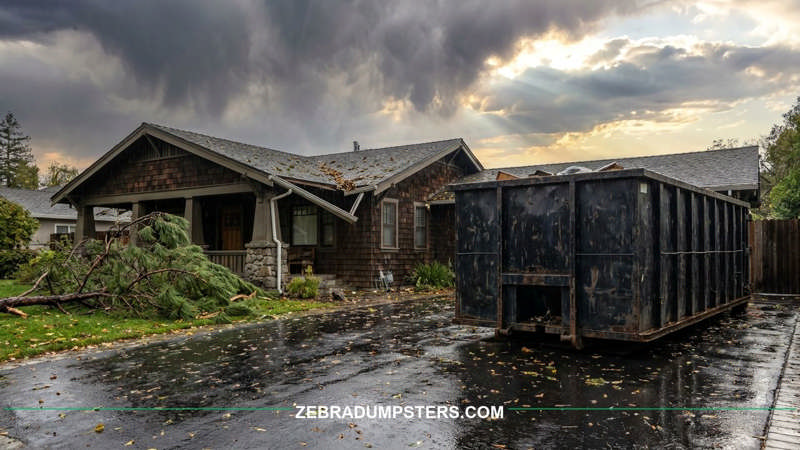
Tree down this morning?
Same-day delivery on a 20-yard bin, from $630 in San Jose
Order before 9 AM and the truck usually lands the same day for a $100 rush fee. Two tons included, seven days to load it, and the yard waste gets recycled.
Why the Wrong Size Is Usually Too Small, Not Too Big
In our experience, roughly two out of three storm cleanups ordered as a 10-yard bin end up needing a second haul. A 10-yard holds about three pickup-truck loads and includes 1 ton, which covers a downed fruit tree and a section of fence. It does not cover a mature oak.
Prices below are San Jose delivery and include 7 days.
| What came down | Bin | Included | San Jose price |
|---|---|---|---|
| Fruit tree, fence section, scattered limbs | 10-yard | 1 ton, 7 days | $472 |
| One mature tree (oak, pine, eucalyptus), or tree plus fence | 20-yard | 2 tons, 7 days | $630 |
| Two trees, or a tree plus roof and gutter damage | 30-yard | 3 tons, 7 days | $786 |
| Mudslide, broken retaining wall, saturated soil | 5 or 10-yard inert | No weight limit | From $585 |
Prices subject to change. Verify current rates at zebradumpsters.com/weight-limits-and-fees. Delivery outside San Jose is priced by city.
The reality is that a second haul costs you a full second rental, while the step from a 20 to a 30-yard is $156. If you are standing in the yard trying to decide, and the tree is bigger than your car, take the larger bin.
Load It Like a Hauler, Not Like a Homeowner
Storm debris is the one job where loading order changes your bill. A Campbell crew got 1.4 tons into a 30-yard bin in an afternoon. The neighbor's identical bin, loaded by tossing whole limbs over the side, came back at 1.1 tons with half the branches still on the lawn.
Cut everything to three feet or shorter before it goes in. Stack limbs parallel, butt ends toward the tailgate, and walk on the pile every few layers to crush the leafy ends. Trunk rounds go on the floor first, spread out, never stacked in one corner. Leaves and small brush go in last to fill gaps.
One more thing about the driveway. After a week of rain the ground is soft, and a loaded bin on a soggy lawn will sink and leave ruts. Keep it on the concrete or asphalt, put plywood under the rails if the driveway is old, and clear a straight 60-foot approach for the truck. A blocked drop costs a $250 dead-run fee.
Insurance, City Programs, and the Week After
Most homeowner policies cover tree removal only when the tree hit something insured, the house, the garage, the fence, and the debris removal portion is commonly capped somewhere around $500 to $1,000 per tree. A tree that fell harmlessly across the lawn is usually your cost. Photograph everything before the bin arrives, keep the dumpster receipt, and call the adjuster the same day. Several of our customers have had claims paid faster because the invoice showed the tonnage hauled.
City yard-waste programs help with the small stuff. San Jose and Oakland both run curbside green bins, and after major storms some cities announce extra bulky-pickup days. Those programs suit a wheelbarrow of twigs, not a tree, because crews will not take pieces over the bin size and pickup can be weeks out. A bin on the driveway for storm debris dumpster rental in Oakland or the East Bay hills is usually there within a day.
The common mistake is waiting. Wet debris gets heavier the longer it sits, mold starts inside a week, and after the second storm everyone else is calling too. The customers who book the bin the same morning the tree comes down are the ones who are done by the weekend. If it is an ongoing landscaping project rather than one storm, our guide to yard waste dumpster rental for landscaping jobs covers the slower version of this work.
Storm cleanup, priced upfront
10, 20 and 30-yard bins, delivered across the Bay Area
Flat price by city, tonnage included, no surprise fees. Book online in two minutes or call and we will tell you which size the tree needs.
Frequently Asked Questions
Can I put a whole fallen tree in a dumpster?
The branches and trunk, yes, once they are cut to three feet or shorter. The stump and root ball cannot go in a general debris bin. Cut the trunk flush and have the stump ground separately.
What size dumpster do I need for storm debris?
One mature tree, or a tree plus a section of fence, is a 20-yard bin. Two trees or a tree plus roof damage is a 30-yard. A single fruit tree and scattered limbs fit a 10-yard. When in doubt, go one size up rather than paying for a second haul.
Does wet debris cost more?
It can, because the bin is weighed at the recycling facility. A 20-yard bin includes 2 tons and each extra ton is $155 in San Jose. Cutting limbs short and stacking them flat gets more debris in for the same weight, and keeping mud and soil out of the general bin avoids the heaviest material of all.
Can mud and soil from a slide go in the same bin?
No. Soil, broken concrete and retaining wall block go in an inert dumpster, which has no weight limit and starts at $585 in San Jose. Mixing dirt into a general debris bin adds weight fast and can lead to a contamination charge.
How fast can a dumpster arrive after a storm?
Orders placed before 9 AM usually land the same day for a $100 rush fee. After a major storm demand spikes, so the customers who call the same morning get the earliest slots.
Will my insurance pay for the dumpster?
Often only when the tree damaged an insured structure, and the debris portion is commonly capped per tree. Photograph the damage before cleanup starts and keep the dumpster invoice, which shows the tonnage hauled.