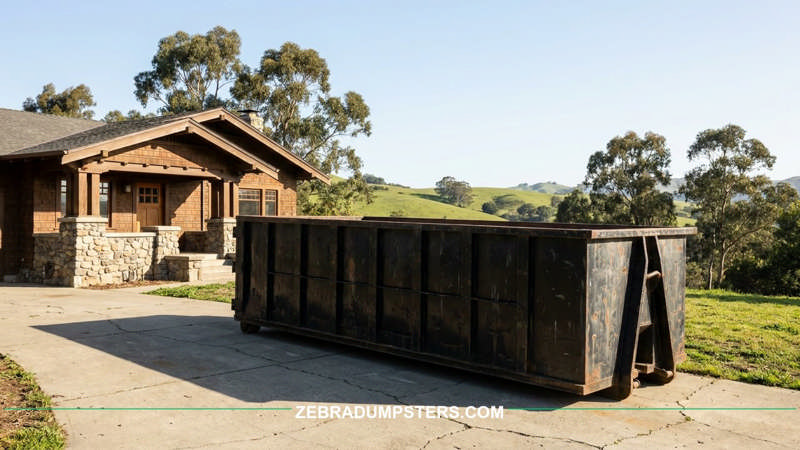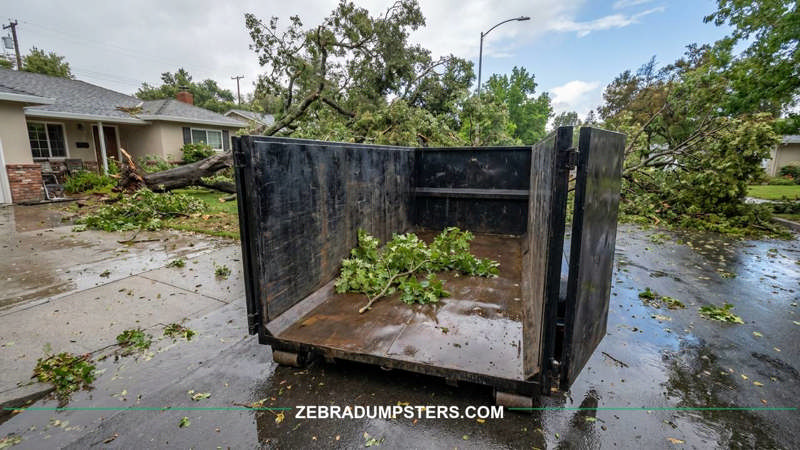
The first real storm of the season usually lands sometime in late October, and every year it teaches somebody the same lesson. A homeowner in Willow Glen had a 20-yard bin in the driveway for a flooring job, left it open over a wet weekend, and called us on Monday asking why the old carpet felt twice as heavy as it had on Friday. It was. Carpet pad holds water like a sponge, and so does drywall, cardboard and insulation.
Rain does not have to raise your bill. It just changes a few habits between delivery and pickup. Here is what Bay Area winters have taught us.
One Inch of Rain Weighs More Than You Think
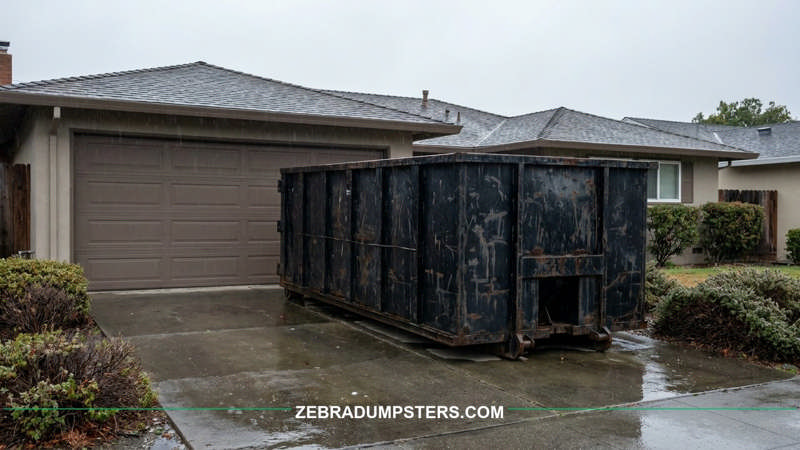
Do the math once and you will never leave a bin uncovered again. Our 20-yard general debris dumpster is 16 feet long and 6.6 feet wide, so its open top is about 105 square feet. One inch of rain over that area is close to 9 cubic feet of water, and water weighs about 62 pounds per cubic foot. That is roughly 550 pounds landing in the box from a single ordinary storm. A 30 or 40-yard bin is 22 feet by 7.5 feet, which puts the same inch of rain at around 860 pounds.
Not all of it stays. Some drains out at the seams and the door. What stays is the water that soaks into the load, and that depends entirely on what you are throwing away. Lumber, metal and tile shed most of it. Carpet and pad, drywall, cardboard, paper, insulation and upholstered furniture drink it in and hold it until the scale at the transfer station reads it as debris.
That matters because every general debris bin comes with a set weight allowance: half a ton on a 5-yard, one ton on a 10-yard, two tons on a 20-yard, three on a 30 and four on a 40. Past that, the overage is billed per ton, $150 in San Jose and most of the South Bay and East Bay, and up to $200 in the Diablo Valley. The full table by city is on our dumpster weight limit page. A load that was going to come in at 1.8 tons dry can cross the line once it has sat through two storms.
Prices subject to change. Verify current rates at zebradumpsters.com/weight-limits-and-fees.
Cover the Bin Every Night, Not Just When It Pours
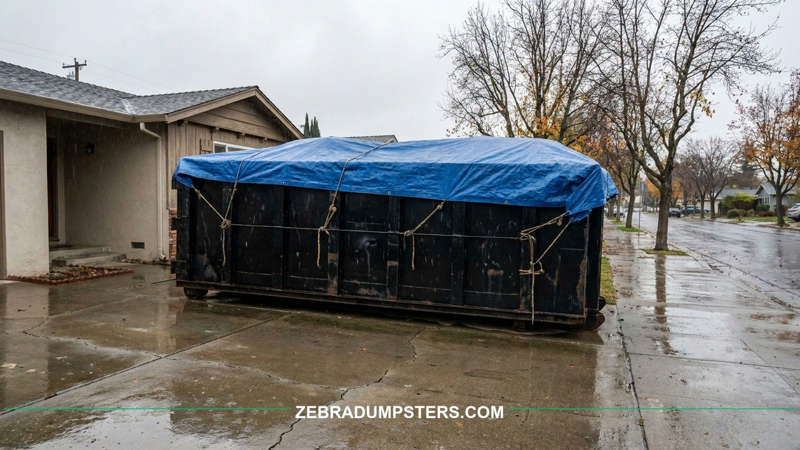
A tarp is the cheapest insurance a wet-season rental can have. Buy one a little larger than the top of the bin, a 12 by 20 foot tarp for a 10-yard and something closer to 20 by 30 for the big sizes. Tie it to the side rails with rope or bungee cords so the wind cannot peel it back, and let it sag slightly in the middle so water runs off the sides instead of pooling on top.
The habit that actually works is covering it every evening, whether or not rain is in the forecast. Bay Area storms often arrive overnight, and nobody wants to be out at 2 a.m. wrestling plastic sheeting in the wind. On the last day, fold it and toss it in with everything else.
There is a second reason to cover the load, and it has nothing to do with your bill. Rain that runs through construction debris picks up drywall dust, paint residue and dirt, then flows to the street. The stormwater program shared by the Santa Clara Valley cities tells contractors to cover and maintain dumpsters, check them for leaks and never hose them out on site, because storm drains carry water straight to the creeks and the Bay with no treatment.
SCVURPPP construction site stormwater guidance (PDF)
Wet-season rentals
20-yard dumpster in San Jose, $550 with 2 tons and 7 days included
Book it, cover it at night and call us as soon as it is full. Enter your delivery ZIP to see your city's price before you book.
Where the Bin Sits Matters More in November
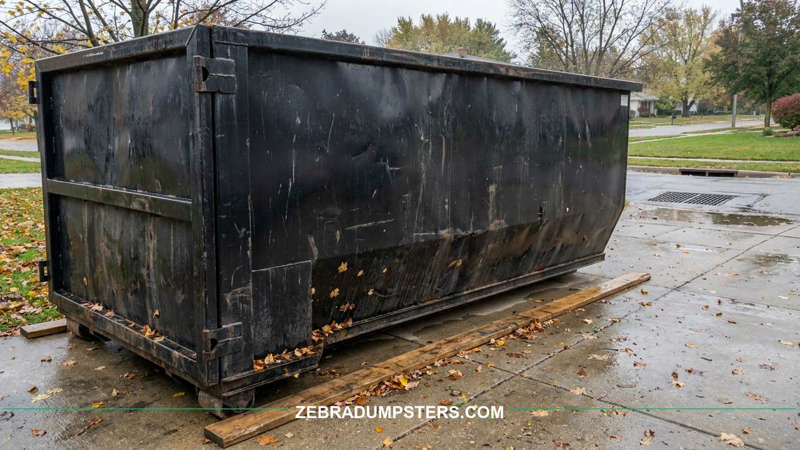
A roll-off truck with a loaded bin is heavy, and soft lawn or a gravel shoulder that held up fine in summer will rut, or worse, swallow a wheel. Our advice is simple. Keep the drop on pavement or concrete in the wet months, and if the only option is a strip of dirt, talk to us before delivery day rather than after.
Protecting the surface under the bin is the customer's job under our rental terms, and rain makes that more important. Lay two long planks or sheets of plywood where the rails will sit. They spread the weight and keep the steel from grinding wet grit into the concrete.
Look at the curb too. If the bin is going on the street, do not park it on top of or right beside a storm drain inlet, and leave the gutter clear so water can still flow past. Street placement also needs a permit in most Bay Area cities, and our guide to dumpster placement laws covers how that works in San Jose. If the driver arrives and cannot set the bin down because the ground is too soft or the spot is blocked, the trip is billed as a dead run, $250, or $350 north of Millbrae or Oakland.
Load Smart and Call for Pickup Early
What surprises most people is that timing saves more money than tarping. Pickup happens within one to three days after you tell us the bin is ready, and every day past the included seven costs $45. In dry months a slow week only costs rental days. In wet months every extra day is also another chance for rain to add weight. Watch the forecast, and if a big storm is coming and the bin is nearly full, call for pickup before it arrives.
Load the thirsty material last and cover it the moment it goes in. If you are not sure how close you are to the allowance, our dumpster weight estimation guide walks through the densities we use for common debris.
Here's the catch with heavy material bins. Clean concrete, dirt, brick and asphalt have no weight limit with us, so rain does not change the price. The exception is a job that needs weight receipts for a recycling report, where up to 5 tons is included on a 10-yard and 2.5 tons on a 5-yard. Muddy soil that has sat under open sky weighs noticeably more than dry fill, so cover those loads too.
Before the next storm
Need a bin this week? Same-day delivery when capacity allows
Every rental includes delivery, pickup, seven days and a weight allowance. Pick your size, enter your ZIP and book online in two minutes.
A Wet-Season Remodel, Start to Finish
Take a kitchen and family room job in San Jose in mid-November. The contractor ordered a 20 yard dumpster rental at $550, set it on two sheets of plywood at the top of the driveway and kept a tarp tied over it every night. Cabinets and framing went in during the first three days, carpet and pad on day five, and he called for pickup the same afternoon because rain was due that weekend. The load came in at 1.9 tons, inside the allowance, and the invoice matched the quote.
The same job with an open bin over two storms would very likely have crossed two tons, and every ton past the line is another $150. The reality is that wet-season rentals are not riskier, they are just less forgiving of the habits that get away with it in July.
If your crew is on site through the winter, the same thinking applies to the toilet. We wrote a separate guide on porta potty rental in rain and wind for exactly that.
Frequently Asked Questions
Will rain make my dumpster overweight?
It can. One inch of rain over an open 20-yard bin is about 550 pounds of water, and carpet, drywall, cardboard and insulation hold much of it. Covering the bin and calling for pickup as soon as it is full keeps most wet-season loads inside the included tonnage.
Can I put a tarp over a rented dumpster?
Yes, and we recommend it. Tie it to the side rails so wind cannot lift it, let it sag so water runs off, and fold it into the bin on the last day. Santa Clara Valley stormwater guidance also asks contractors to keep dumpsters covered.
Does rain change the price of a concrete or dirt dumpster?
Usually not. Heavy material bins for clean concrete, dirt, brick and asphalt have no weight limit with us. The exception is a job that needs weight receipts, where 5 tons is included on a 10-yard and 2.5 tons on a 5-yard.
Can I drain the water out of the dumpster?
Not into the street. Water that has run through debris counts as polluted runoff, and local rules prohibit letting it reach a storm drain or hosing a bin out on site. Covering the load is the practical fix.
How long can I keep a dumpster during the rainy season?
Every rental includes seven days, and extra days are $45 each. Pickup happens one to three days after you call, so in wet weeks it pays to call as soon as the bin is full.